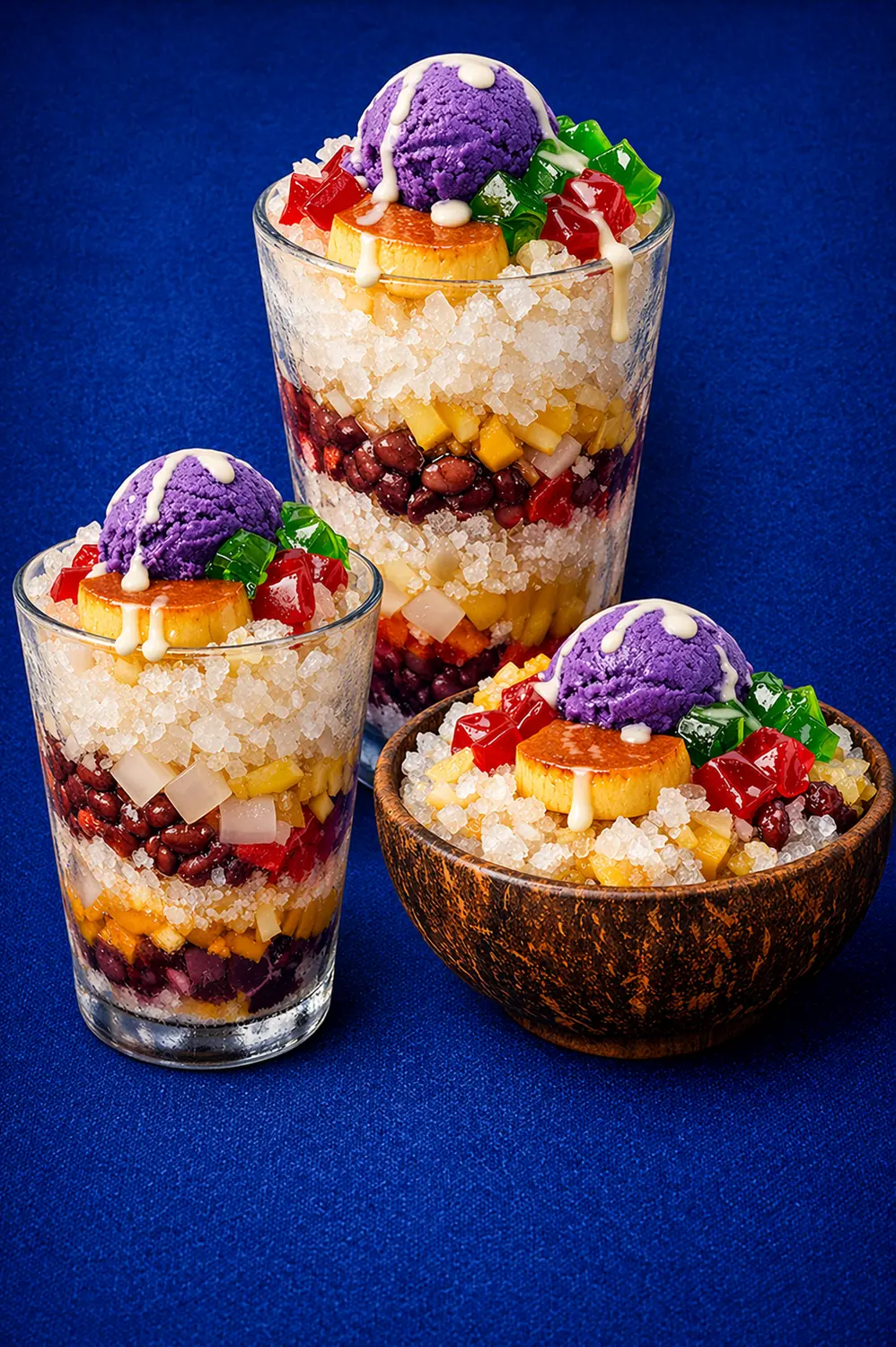
This halo halo recipe is a classic Filipino dessert made by layering finely shaved ice, sweetened beans, colorful tropical fruits, nata de coco, colorful jellies, creamy milk, ube ice cream, and silky leche flan that is perfect for hot afternoons and festive gatherings. Festive desserts work in small glasses. Harvard's Nutrition Source shares celebration-dessert notes.
The name “halo-halo” literally means “mix-mix” and is mostly about assembling components, chilling them properly, and striking a balance.
Some elements, like leche flan or sweetened beans, can be made from scratch, while others can be prepared ahead of time or purchased ready-made.
In the Philippines, halo halo dessert is a classic warm-weather treat, but it is also a celebration dessert. You will see it at family gatherings, fiestas, roadside eateries, dessert shops, and special weekends when people want something cool and cheerful.
A great halo halo ice cream should be icy, creamy, soft, chewy, and slightly crisp in the shaved ice all at once. The ice should feel fine and fluffy, not chunky and heavy, and the toppings should stay distinct enough to notice individually, yet melt together beautifully when mixed.
If you are wondering how to make halo halo at home, the answer is simpler than it looks. Once you understand the structure, it becomes one of the easiest showstopper desserts you can make.
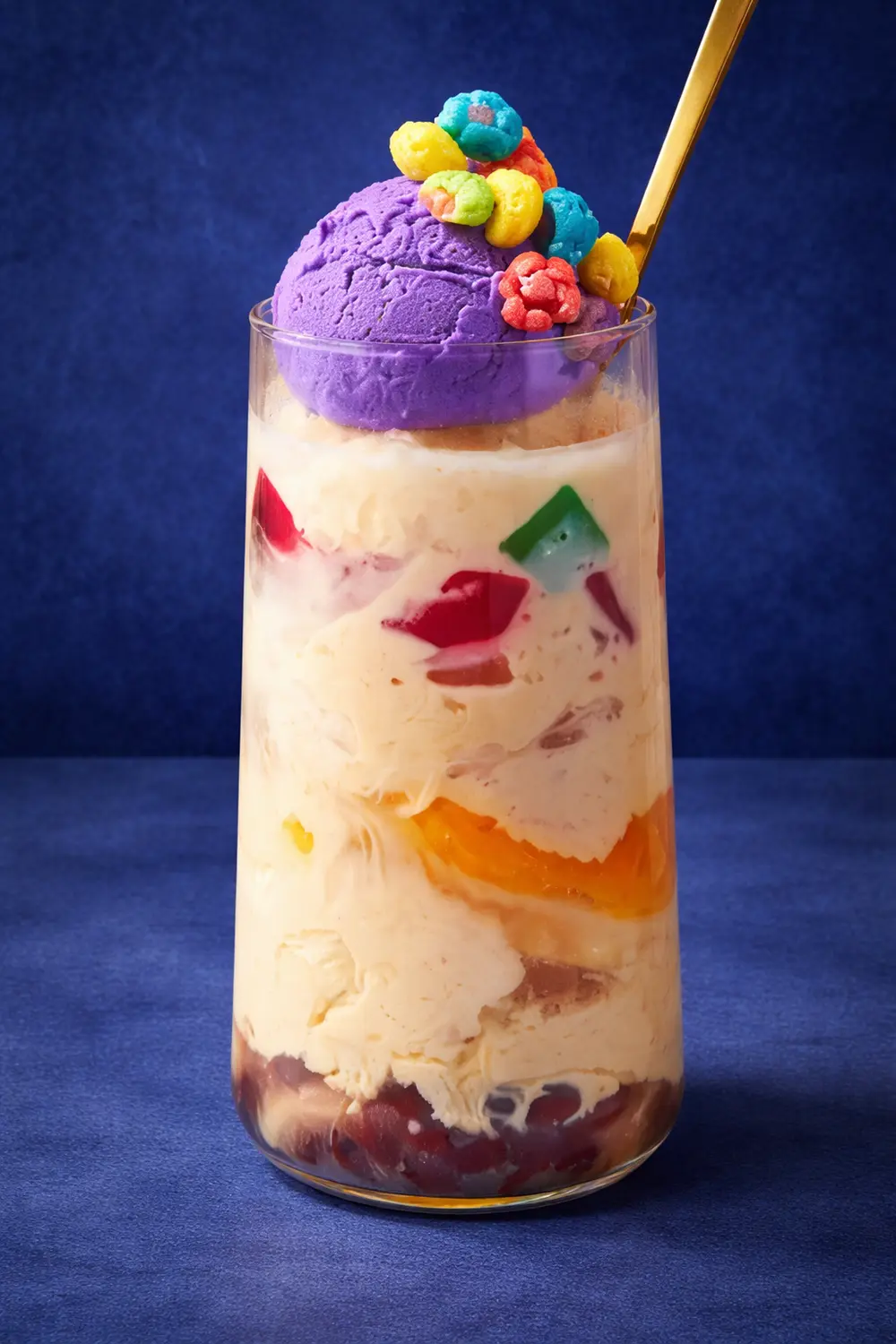
Key Ingredients of This Halo Halo Recipe
Let’s talk about what goes into the glass. Authentic halo halo is defined by its “bottom” ingredients, the surprises you find as you dig through the ice.
1. Shaved Ice
- Do not use cubed ice from your fridge dispenser. The ice must be “shaved” or finely crushed. Large chunks will melt too slowly and won’t absorb the milk.
- Use a manual ice shaver or a high-powered blender with a “crush” setting. The goal is a fluffy, snow-like texture.
2. Ube Halaya (Purple Yam Jam)
- Ube is a purple yam with a nutty, vanilla-like flavor. It is not taro (gabi), and it is not food coloring.
- The jam is thick, sweet, and vibrant purple. You can buy jarred ube halaya at an Asian grocery store or make it from scratch.
3. Leche Flan (Creamy Caramel Custard)
- This Filipino halo halo version of crème caramel is denser, richer, and has more egg yolks than its Western cousin.
- Cutting chunks of this silky, golden custard into the shaved ice is what takes your halo halo ice cream game to the next level.
4. Sweetened Beans & Chickpeas
- This surprises many Westerners, but beans belong in dessert! Kidney beans (red munggo) and garbanzos (chickpeas) are cooked in sugar syrup until tender and sweet.
- They add a hearty, earthy chewiness that contrasts beautifully with the ice.
5. Macapuno (Coconut Sport)
- This is a mutant coconut with a soft, jelly-like, gelatinous flesh. It is sweeter and softer than regular coconut.
- If you can’t find it, substitute young coconut strips (buko) tossed in a little sugar syrup.
6. Nata de Coco (Coconut Gel)
- These are chewy, translucent, jelly cubes made from fermented coconut water.
- They add a bouncy, fun texture.
7. Kaong (Sugar Palm Fruit)
- These are bright red or green chewy balls.
- They are mostly for color and a sweet pop of sugar.
8. Saba Bananas & Langka (Jackfruit)
- Halo-halo often includes saba bananas, or a mix of sweet preserved fruit. Saba bananas are chubbier and starchier than Cavendish bananas.
- Langka (jackfruit) adds a distinct, floral, tropical sweetness that is unmistakable in a Filipino halo halo.
- These fruits add brightness and freshness, and they keep the dessert from feeling too heavy.
9. Evaporated Milk & Pinipig
- Evaporated milk gives halo-halo its creamy, cool finish. It is less sweet than condensed milk, which helps the dessert stay balanced.
- Pinipig is toasted, flattened rice, like Rice Krispies. It adds a subtle toasted flavor and a light crunch. It is optional, but it is a lovely finishing touch if you want more texture.
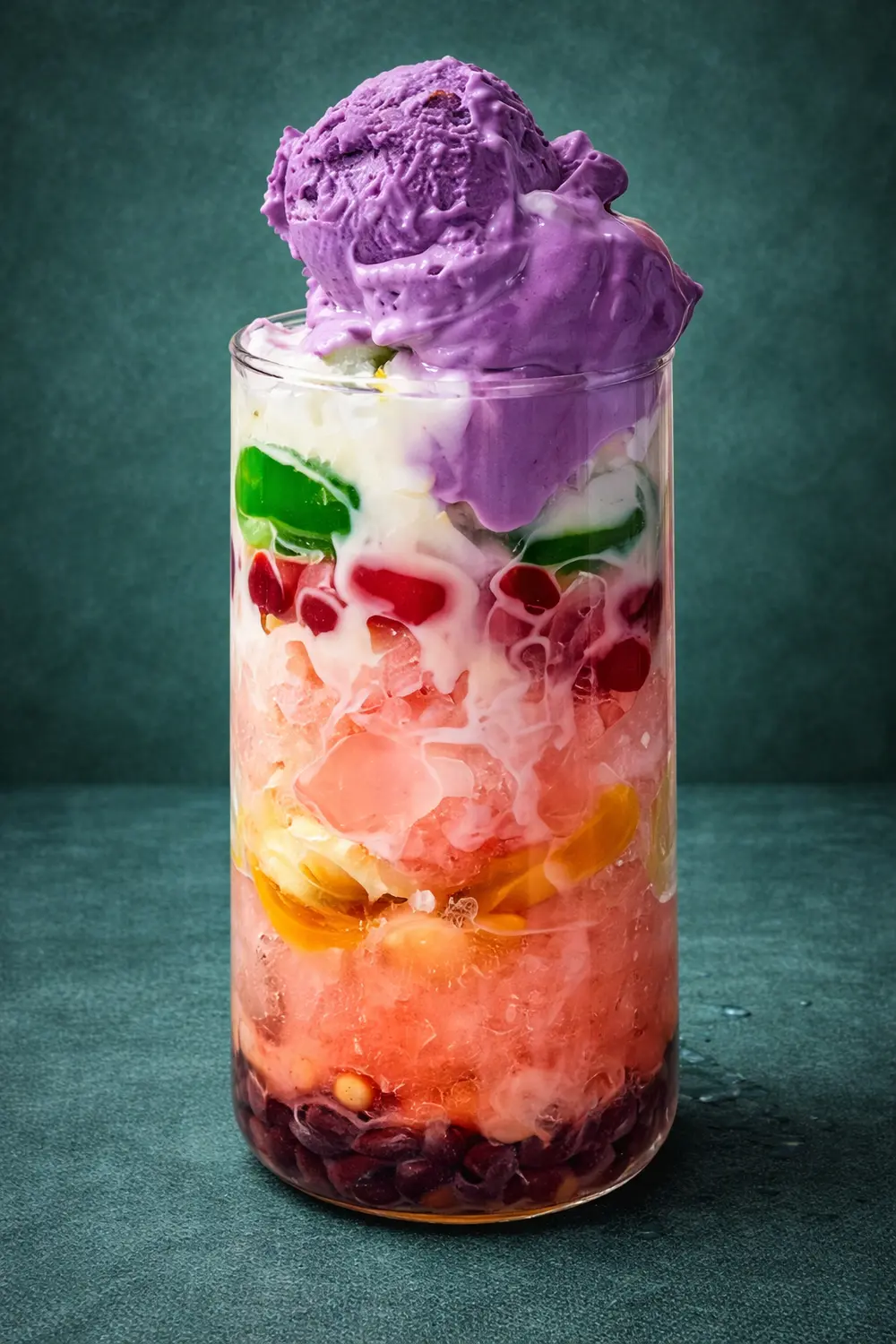
Equipment You’ll Need for Making This Halo Halo Dessert
You don’t need a restaurant-grade kitchen to build a stunning halo halo, but having the right tools makes the difference between a perfect, snowy mountain and a soupy mess.
Here’s exactly what I reach for every time I make this Filipino dessert at home.
1. Ice Shaver (Manual or Electric)
This is the single most important tool. A good ice shaver produces fluffy, dry, snow-like ice, not wet chunks or a slushy. Manual shavers (hand-crank) cost around $20–30 and work beautifully for home use.
Electric shavers are faster but unnecessary unless you’re serving a crowd. Avoid using a standard blender on “crush” mode unless you have a high-end model (Vitamix/Ninja) and you pulse carefully.
2. Tall Glasses (12–16 oz capacity)
Traditional halo halo is served in tall, clear glasses often called parfait glasses or old-fashioned soda glasses. Chill them in the freezer for 10 minutes before assembling to slow down melting.
The height allows you to layer ingredients at the bottom, pack ice on top, and still have room for leche flan and ice cream.
3. Long-Handled Spoons (Iced Tea or Buko Spoons)
Regular teaspoons are too short to reach the bottom of a tall glass. You need a spoon that is at least 8–10 inches long.
Filipino buko spoons (often made of stainless steel with a long, narrow handle) are perfect.
These allow your guests to dig all the way down and truly “mix-mix” the hidden beans, jackfruit, and ube.
4. Blender (If You Don’t Have an Ice Shaver)
In a pinch, a high-powered blender works. Fill the blender halfway with ice cubes, add 1/4 cup of cold water (this helps the blades grab the ice), and pulse in 1-second bursts.
Stop as soon as the ice looks like fresh snow. Immediately pour the ice into a fine-mesh strainer to drain excess water. Never use pre-crushed bagged ice from a gas station because it’s too wet and melts instantly.
5. Fine-Mesh Strainer or Colander
You will use this constantly. Drain your nata de coco, kaong, macapuno, and canned beans so they don’t water down the dessert. Most importantly, use the strainer to drain your freshly shaved ice.
Even the best shaver produces some water. Letting that water drip away for 30 seconds is the secret to a creamy shaved ice milk concoction that doesn’t turn into soup after two minutes.
6. Small Saucepan
Unless you buy everything pre-sweetened (which is fine, no judgment), you’ll need a small saucepan to simmer your garbanzos, kidney beans, or saba bananas in sugar syrup.
A 1–2 quart pan is plenty. Use it to dissolve brown sugar for the bananas or to reduce a simple syrup for the beans. Homemade syrups beat pre-sweetened jars. Sugar-role explainers from Healthline walk through balanced plates.
7. Steamer or Llanera Molds (for Homemade Leche Flan)
If you’re making leche flan from scratch (highly recommended for the best halo halo dessert), you need either a traditional steamer or a set of aluminum llaneras (oval flan molds) that fit inside a larger pot with a lid.
The flan must cook in a water bath (bain-marie) over low heat to achieve that silky, caramel-topped texture. A pressure cooker is not recommended, as it will create bubbles and ruin the smoothness.
8. Ice Cream Scoop
A spring-loaded ice cream scoop gives you that perfect, round dome of ube ice cream (or vanilla) on top of the shaved ice.
It looks professional and melts evenly. If you use a spoon, you’ll get ragged edges that melt faster.
9. Measuring Cups & Small Pitcher
You’ll need a liquid measuring cup (1 cup or 2 cup size) for the evaporated milk. A small glass pitcher with a spout helps you drizzle the milk slowly and evenly over the ice mountain without collapsing it.
10. Cutting Board & Sharp Knife
For cubing leche flan (dip the knife in hot water first to prevent sticking) and slicing jackfruit strips or saba bananas. A serrated knife works well for jackfruit, which can be fibrous.
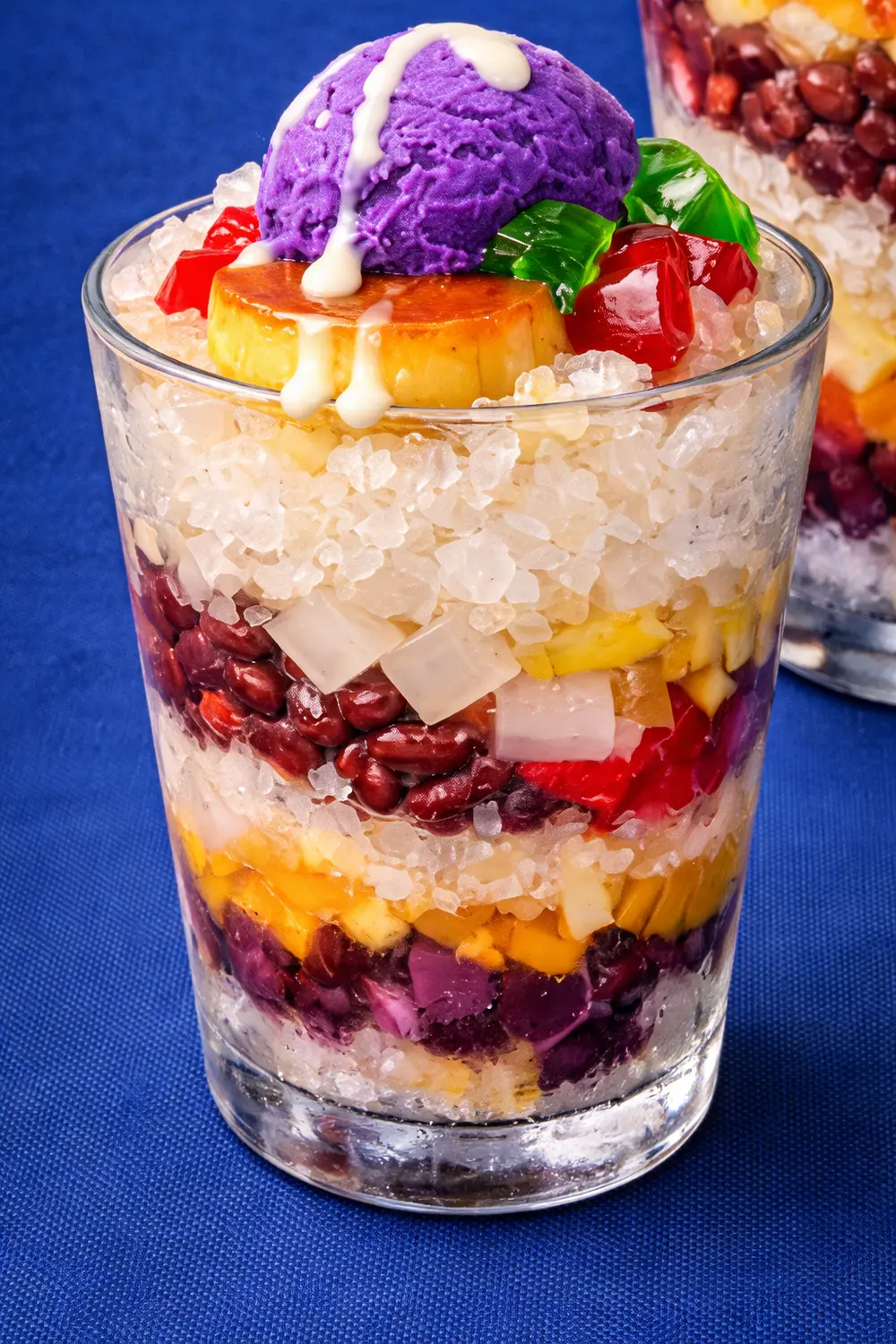
Nutritional Benefits of Halo Halo
Halo halo is unapologetically a celebration dessert, and enjoyed in small glasses it brings more than just joy. Here is the honest nutritional picture.
- Calcium from Dairy: Milk, leche flan, and ube ice cream contribute around two hundred twenty milligrams of calcium per serving for everyday bone maintenance. For background, see the festive dessert calcium notes on PMC.
- Fiber from Beans and Fruit: With six grams of fiber from sweetened beans, saba bananas, and tropical fruits, this dessert digests more gently than pure-sugar treats.
- Real Fruit Inside: Jackfruit, mango, and coconut add vitamin C plus potassium alongside their sweetness, genuine fruit nutrition in every spoonful.
- Portion Is the Strategy: Served fiesta-style in small parfait glasses, one modest serving satisfies completely without turning dessert into dinner.
Why You’ll Love This Filipino Halo-Halo Recipe
While halo halo is undeniably a dessert, it isn’t entirely devoid of nutritional value, especially if you use fresh or homemade ingredients.
- Digestive Health: The combination of beans and coconut provides a surprising amount of dietary fiber. Fiber aids in digestion and helps regulate blood sugar spikes, softening the impact of the sugar.
- Energy Boost: Let’s be honest, sometimes you need a sugar rush. The carbohydrates from the rice, beans, and sugar provide a quick source of energy, perfect for a midday slump (though we call it a siesta).
- Antioxidant Rich (Ube): Purple yams get their vibrant color from anthocyanins, the same antioxidants found in blueberries and acai. These compounds help fight oxidative stress and inflammation in the body.
- Bone Health (Leche Flan): The leche flan is packed with egg yolks and milk, providing a dose of Vitamin D and Calcium. It’s a delicious way to support bone density.
- Electrolytes (Coconut): Macapuno and buko (young coconut) are rich in potassium and magnesium, essential electrolytes that help keep you hydrated during hot weather.
- No Oven Required (Mostly): While we make leche flan on the stovetop/oven, the main assembly is completely heat-free, making it the perfect activity for a sweltering day.
- Nostalgic & Impressive: Serving halo halo in tall glasses with a scoop of ice cream on top looks like you spent hours in the kitchen, even if you just opened a few cans (I won’t tell).
- Make-Ahead Friendly: Almost all the halo halo ingredients (beans, ube, flan, coconut) can be made or prepped days in advance.
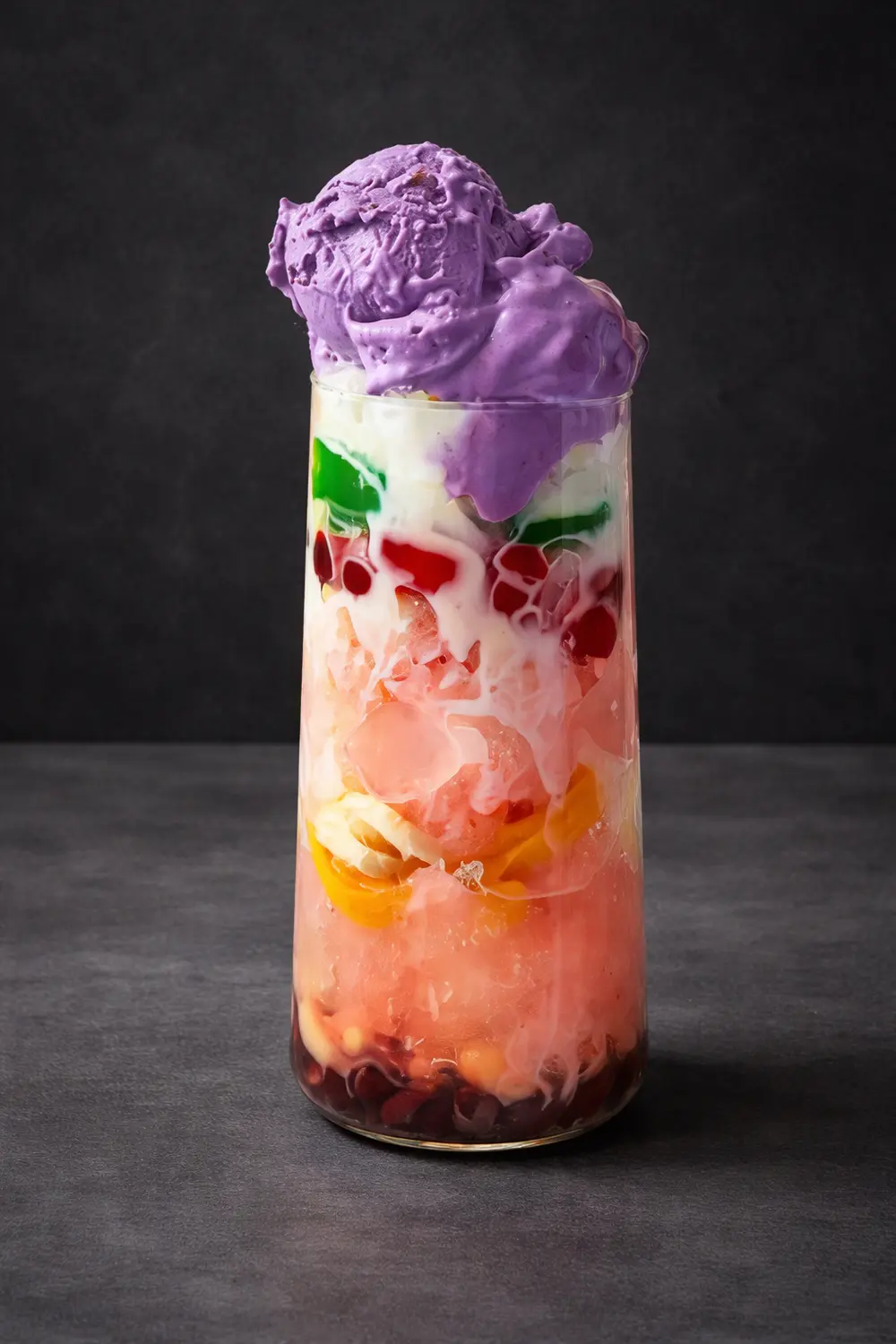
What to Serve with Halo Halo
Icy halo halo lands best right after something hot, savory, and grilled. Plan the meal backwards from dessert and the whole spread clicks.
- Grilled Filipino Barbecue: Smoky pork or chicken skewers straight off the grill make the cold, sweet dessert that follows taste even better.
- Pancit Noodles: A big tray of pancit feeds the crowd first and leaves everyone happily ready for something sweet and cold.
- Lumpia Rolls: Crisp fried lumpia brings the salty crunch that makes the creamy shaved ice feel like a true reward.
- Fresh Fruit Platter: Mango, pineapple, and watermelon keep the tropical theme going for guests who want something lighter.
Chef Tips for Making the Best Halo Halo
After making hundreds of these, here is my insider advice.
1. The “Snow” Secret
The biggest mistake people make is wet ice. Dry your ice cubes! If you are crushing ice in a blender, pour the crushed ice into a mesh strainer and let the water drain out for 30 seconds. Wet ice dilutes the milk and makes the bottom watery.
2. Chill the Glasses
Place your tall glasses in the freezer for 15 minutes before assembly. A cold glass keeps the ice from melting too fast on contact. This ensures you have time to eat it before it turns into soup.
3. Don’t Mix Too Early (The Social Rule)
The name means “mix-mix,” but let your guests do the mixing. Present the halo halo as a pristine mountain. Give everyone their spoon and let them dig to the bottom. The joy is in discovering the beans under the ice.
4. Ube Ice Cream Substitute
If you can’t find halo halo ice cream (which is usually ube-flavored), use plain vanilla or coconut ice cream on top. The heat of the ice cream melting into the shaved ice creates a “creamy shaved ice milk concoction” that is divine.
5. The Syrup Balance
Do not use generic red “snow cone” syrup. It is too artificial. Your sweetness should come from the ingredients (ube jam, sweetened beans, leche flan).
The milk adds the creaminess, and a simple drizzle of simple syrup (1 cup sugar: 1 cup water boiled) is optional. Usually, the jam is sweet enough.
6. Make-Ahead Assembly
You can fill glasses with the dry ingredients (beans, nata, kaong, jackfruit, macapuno) and keep them covered in the fridge for a day. When guests arrive, just add the ice, milk, and toppings.
Final Remarks
This halo-halo recipe is a vibrant, refreshing Filipino dessert made with shaved ice, sweet beans, tropical fruits, jellies, leche flan, and ube ice cream, perfect for hot summer days, gatherings, or a fun, indulgent treat.
Feel free to customize it to your taste; swap in your favorite fruits, adjust the sweetness by reducing condensed milk, or add extras like mango, pandan jelly, or even a scoop of vanilla ice cream for a different twist.
Serve it after a hearty meal or enjoy it on a hot afternoon alongside grilled Filipino dishes or light snacks for the ultimate cooling dessert experience that never fails to impress.
If you give this halo halo recipe a try, we’d love to hear how it turned out. Share your version or drop your thoughts in the comments!
Keep exploring with our lemongrass-soy grilled chicken and a healing turmeric broth, alongside maple-glazed salmon fillets, Gorgonzola steak Alfredo, and tarragon cream chicken, with an after-dessert sugar reset and a hot-day summer spread over on Santiago Maricel.
This article is for information only and is not medical advice. Read our full disclaimer.