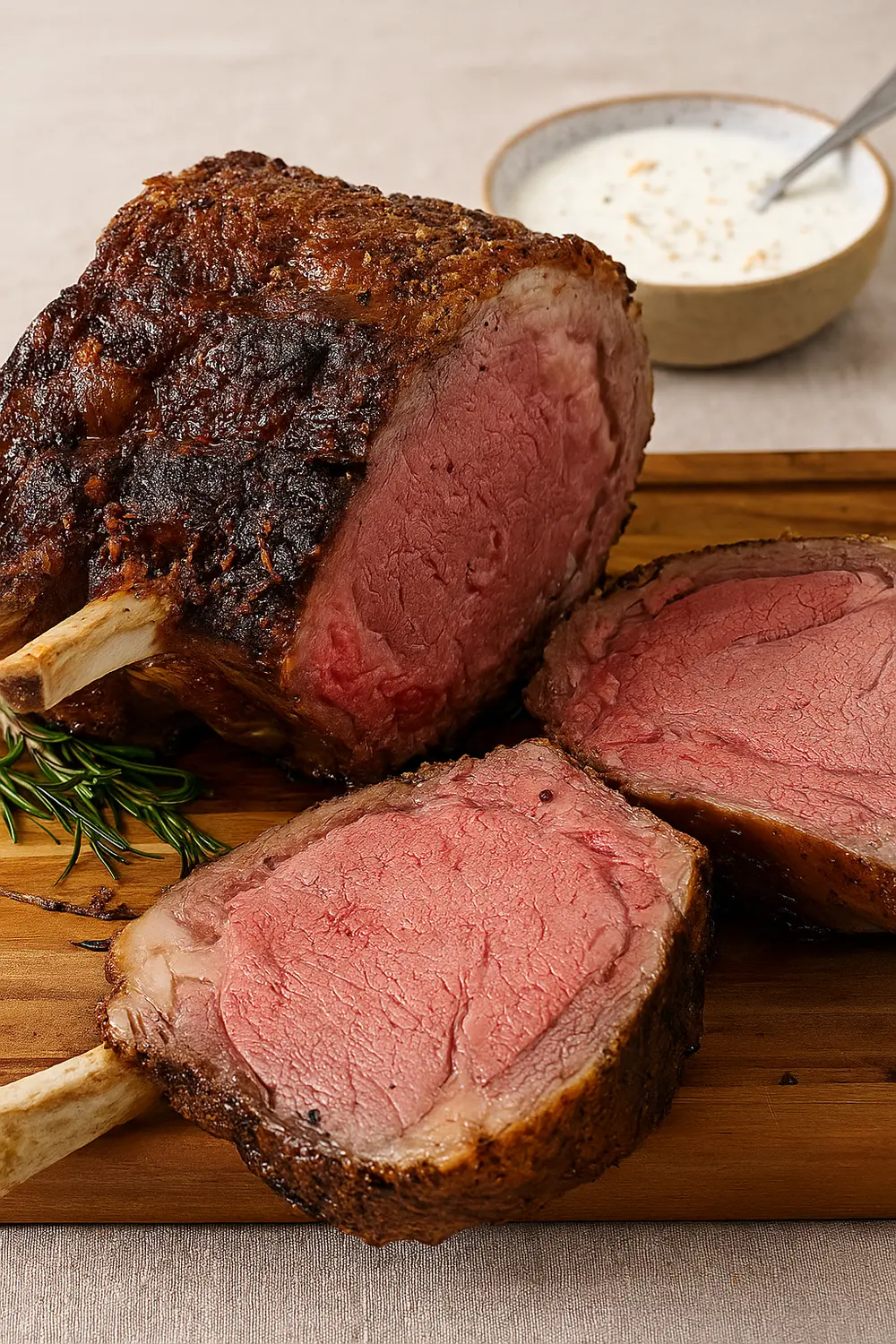
A prime rib, also called a standing rib roast, is a large cut of beef from ribs six to twelve, and while “prime” refers to the highest USDA grade, the term is often used more generally for any rib roast.
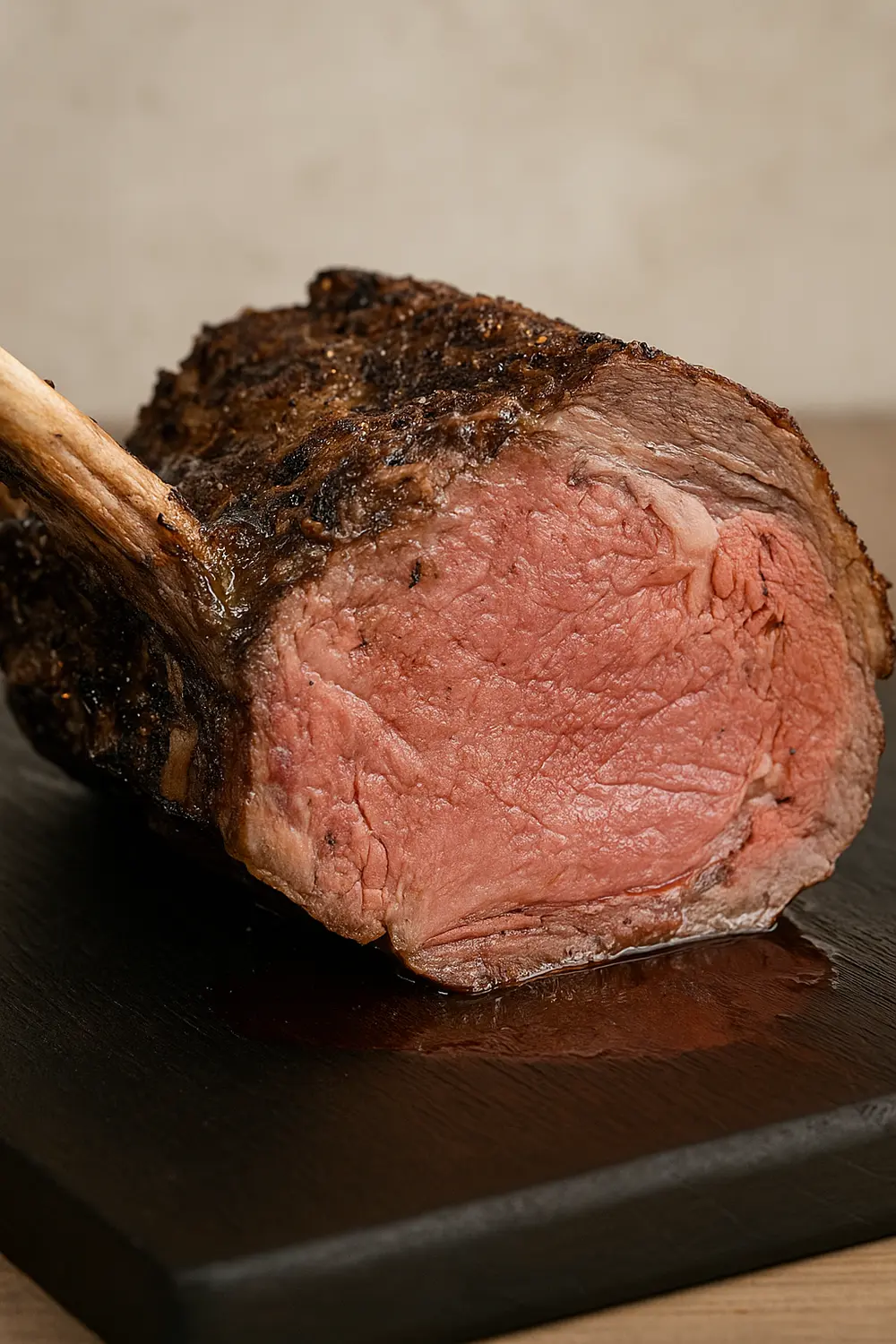
This prime rib roast recipe features a bone-in prime rib slow-roasted in the oven to perfection, developing a tender, succulent interior and a crisp, flavorful crust with an edge-to-edge medium-rare finish. A roast like this centers protein. Harvard's Nutrition Source shares centerpiece protein notes.
In this prime rib recipe, we use the reverse sear method, starting with gentle, even heat and finishing with a high-heat oven sear to lock in juices and create that ideal balance of texture and flavor.
The result is beautifully marbled roast beef with rich fat that renders slowly, forming a golden crust on the outside and melt-in-your-mouth tenderness within.
This prime rib roast is surprisingly easy to make, serves ten, and is perfect for festive gatherings like Thanksgiving or Christmas, weekend feasts, or even a holiday barbecue when you want to serve something truly special.
Serve it with smoked scalloped potatoes, roasted asparagus, or blanched green beans, along with a cooling, creamy horseradish sauce and a rich, savory au jus made from the pan drippings.
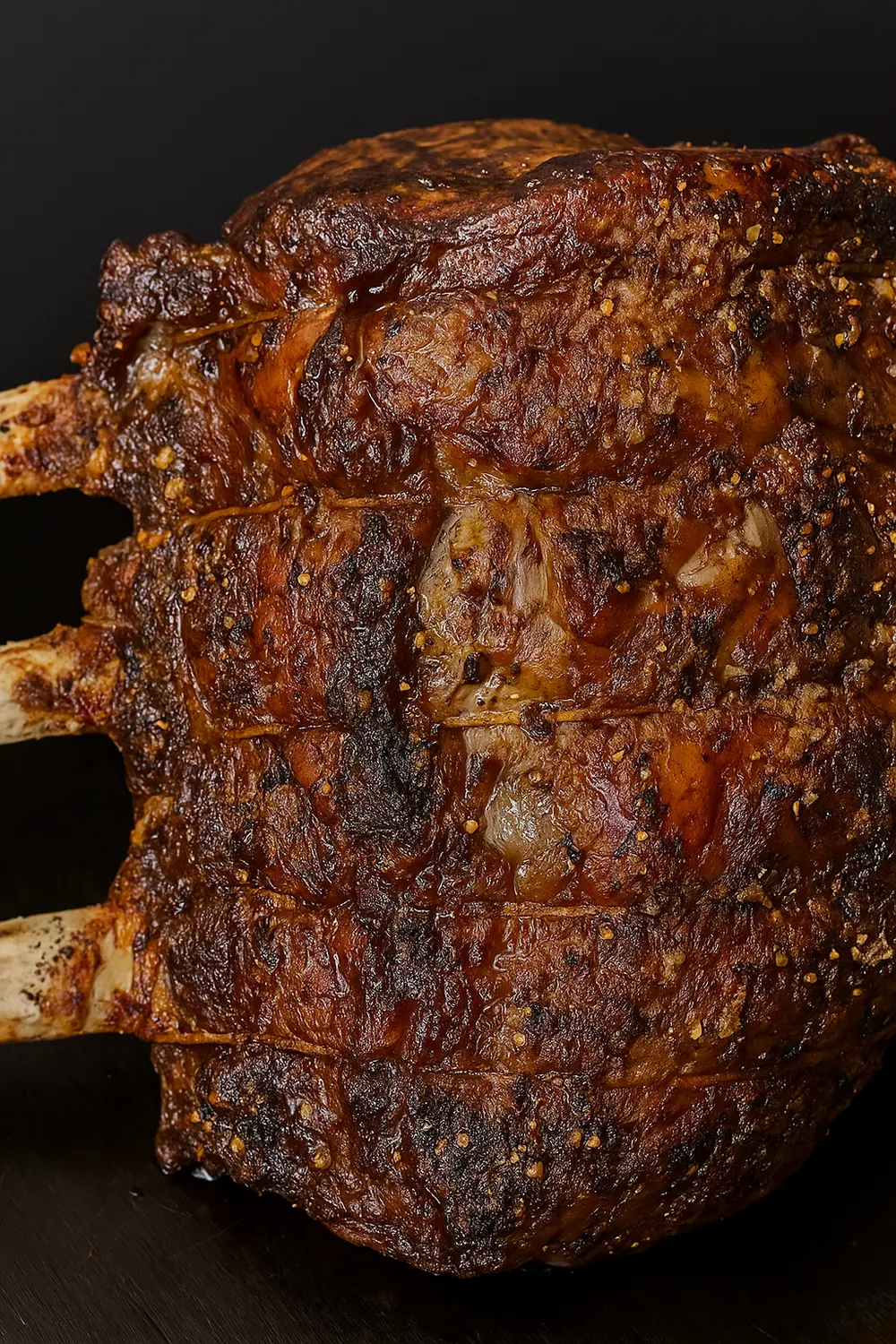
Key Ingredients of This Prime Rib Roast Recipe
The quality of the final prime rib roast is highly dependent on the raw ingredients, with each serving a specific role in developing the crust and the concentrated beef flavor.
1. Prime Rib Roast
- We prioritize a bone-in standing rib roast, as the bones act as natural insulation and a roasting rack during the low, slow cook.
- Look for USDA prime or high-choice grade, identifiable by the generous amount of marbling, the intramuscular fat that melts during cooking.
- This marbling is crucial because it self-bastes the meat, ensuring maximum tenderness and an incredibly rich, beefy flavor.
2. Kosher Salt
- Far more than just seasoning, the coarse kosher salt is used in the dry brine process to remove moisture from the surface of the meat.
- This is a critical prerequisite for achieving the ultimate, crunchy crust during the high-heat reverse sear.
3. Dry Rub Blend
- The combination of freshly cracked black pepper, smoked paprika, garlic powder, dried rosemary, and thyme creates a robust, savory, and aromatic crust.
- Smoked paprika lends a rich color and depth of flavor that complements the high heat of the final sear, forming a textural barrier against the tender meat.
4. Prepared Horseradish
- This root vegetable provides the signature aromatic heat and sharpness needed to cut through the extreme richness of the roasted prime rib.
- It is the essential, traditional contrast to the deep, savory roast beef.
5. Au Jus
- The au jus is a natural, concentrated sauce derived from the flavorful fat and caramelized brown bits left in the roasting pan.
- High-quality beef broth and a dry red wine (like Cabernet Sauvignon) are added to deglaze the pan, creating a simple, pure beef reduction that is poured generously over the carved slices.
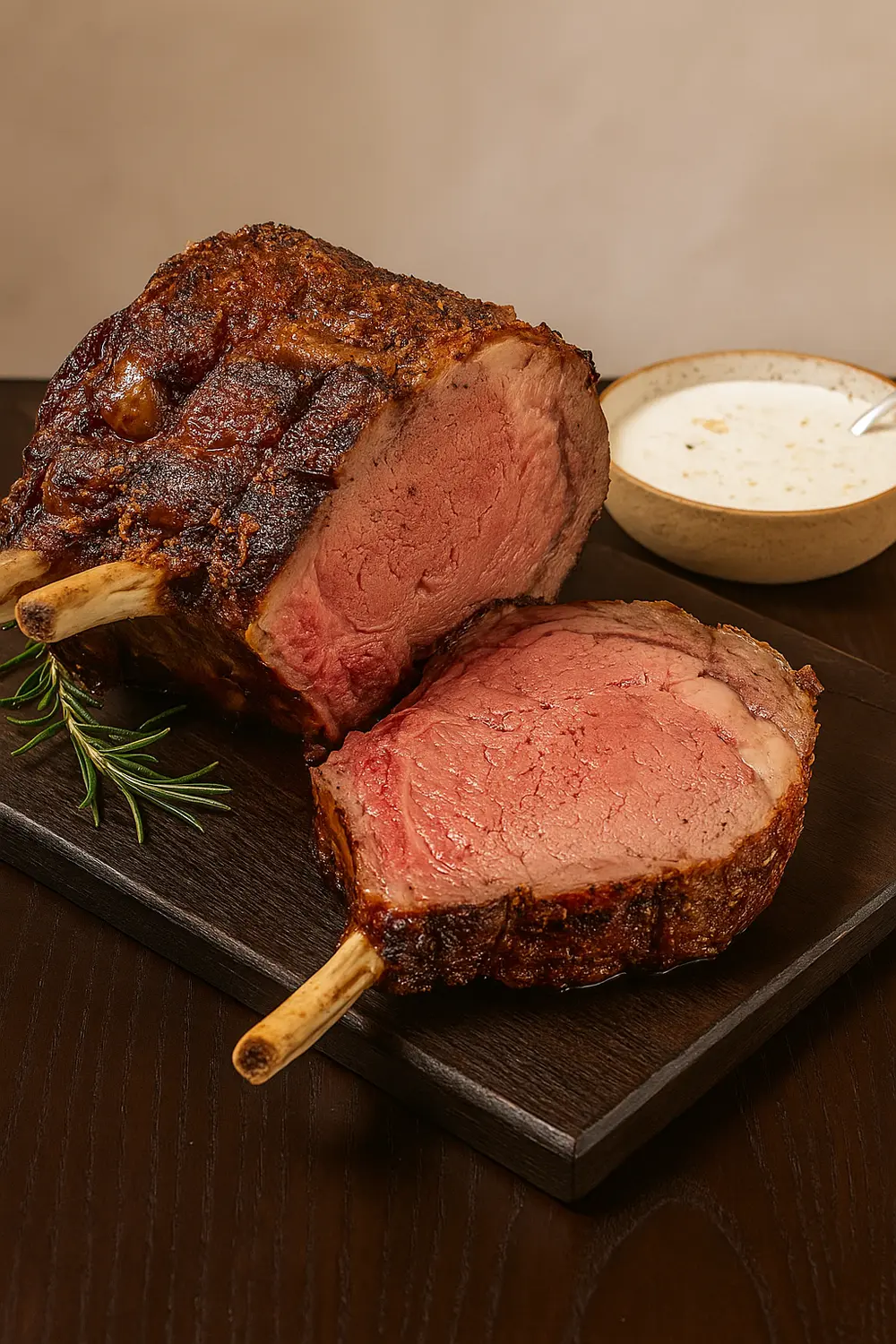
Essential Tools for Making This Slow Roasted Prime Rib Recipe
A prime rib roast requires precision cooking and the right kitchen tools to monitor and control the process.
- Digital Probe Thermometer: This tool lets you insert a probe deep into the roast to monitor the internal temperature without opening the oven, ensuring accurate cooking of prime rib.
- Heavy-Duty Roasting Pan and Rack: A sturdy pan is needed to support the weight of a large roast and catch flavorful pan drippings for the au jus, while a V-rack or roasting rack elevates the prime rib, allowing heat to circulate evenly underneath.
- Sharp Carving Knife and Honing Steel: A long, sharp knife ensures clean, precise slices against the grain to maximize tenderness, while a honing steel keeps the blade razor-sharp for perfect cuts.
- Butcher’s Twine: Essential for trussing the roast, tying ensures it maintains a uniform, compact shape during the long cook, promoting even heating even if the bones are still attached.
- Instant-Read Thermometer: Ideal for quick final checks immediately after removing the prime rib roast from the oven or after the final sear, verifying the carryover temperature before carving.
Nutritional Benefits of Prime Rib Roast
A holiday showpiece first, but far from empty indulgence. Slow-roasted prime rib brings old-fashioned nourishment with its grandeur.
- Twenty-Five Grams of Protein: Each serving delivers around twenty-five grams of complete protein for holiday stamina and muscle maintenance. For background, see the special-occasion protein records on PubMed.
- Zero-Carb Centerpiece: With virtually no carbohydrates, the roast itself fits effortlessly into low-carb holiday plates.
- Iron and Zinc: Red meat remains among the most absorbable sources of iron and zinc, minerals that carry oxygen and support immunity.
- Savor It Slowly: Rich, satisfying slices mean reasonable portions genuinely satisfy, especially beside lighter vegetable sides.
Why You’ll Love with this Oven Roasted Prime Rib
This specific reverse-sear prime rib recipe is guaranteed to change how you approach roasting large cuts of meat forever.
- The Flawless Doneness: Cooking slowly at a low temperature with the reverse sear method ensures the roast heats gently, eliminating the gray ring of overcooked meat and delivering a perfect, edge-to-edge medium-rare.
- Crunchy Crust: A final blast of 500°F heat creates a crackling, flavorful crust that contrasts beautifully with the tender interior, while dry brining ensures the surface is perfectly dry for maximum crispiness.
- Incredibly Tender: Slow roasting the prime rib allows it to remain in the “tenderization zone” below 122°F, where natural enzymes break down tough muscle fibers, resulting in exceptionally succulent meat.
- High-Quality Protein: Beef is an excellent source of complete protein, which is crucial for building and maintaining muscle mass, promoting satiety, and supporting overall bodily repair.
- Iron Rich: Prime rib roast is a good source of highly bioavailable iron, which is essential for the production of hemoglobin, the protein that carries oxygen throughout the body.
- B Vitamins Powerhouse: Beef provides a range of B vitamins, including Thiamin (B1), Riboflavin (B2), Niacin (B3), B6, and B12, which support energy production, nerve function, and red blood cell formation.
- Essential Minerals: Beef contains important minerals such as zinc for immune support, as well as potassium and magnesium.
- Zero Carbs: Naturally, beef contains no carbohydrates and no sugar, making this prime rib recipe ideal for low-carb diets or ketogenic diets.
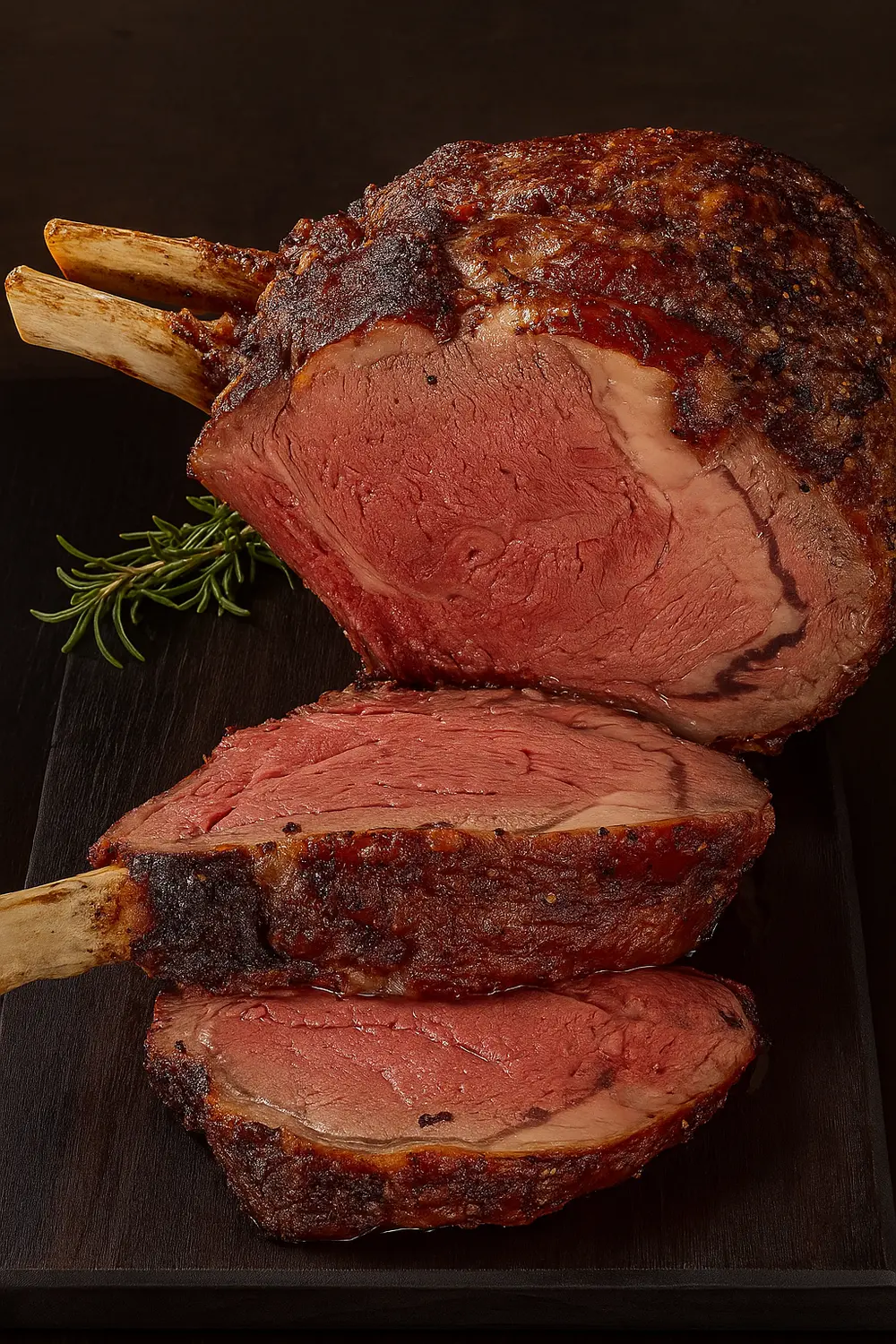
What to Serve with Prime Rib
The rich, savory, and decadent nature of prime rib requires side dishes that offer texture, temperature, and flavor contrast.
- Whipped Potatoes: Light, fluffy, and buttery, perfect for soaking up every drop of rich au jus.
- Cheesy Scalloped Potatoes: Thinly sliced potatoes baked in a creamy, cheesy sauce for a rich and indulgent side.
- Smoked Scalloped Potatoes: Potatoes layered with a subtle smoky flavor, creating a savory, aromatic twist that complements the beef.
- Crisp Vegetables: Vegetables like roasted asparagus, blanched green beans, or roasted cauliflower provide a fresh, slightly acidic, and flavorful contrast that balances the richness of prime rib.
- Bread: Warm, soft dinner rolls soak up the rich Au Jus, while sweet potato rolls add a touch of sweetness that perfectly balances the savory beef.
- Creamy Horseradish Sauce: Its pungent, fiery aromatic heat and acidity provide a sharp counterpoint, cutting through the heavy fat and richness of the beef.
- Hot Au Jus: Served piping hot, this concentrated beef broth enhances the flavor of the roast slices while also acting as a crucial warm liquid accompaniment.
How to Reheat Leftover Prime Rib Roast
Leftover prime rib is a delicious bonus, and when reheated the right way, it stays just as juicy, tender, and flavorful as when it first came out of the oven.
To reheat it perfectly, use the low and slow method, warming the meat gently at a low temperature so it heats through evenly while retaining its natural moisture and buttery texture.
- Slice the leftover prime rib into thick portions, about ½ inch each.
- Place the slices in a shallow baking dish.
- Add about ¼ cup of beef broth or reserved au jus to the bottom of the pan to create steam and keep the meat moist.
- Cover the dish tightly with aluminum foil to trap the steam and moisture.
- Then reheat in a preheated 300°F (150°C) oven for 20 to 30 minutes, depending on the thickness of the slices.
What to Do with Leftover Prime Rib
Leftover prime rib can easily be transformed into new, flavorful dishes that are just as satisfying as the original roast.
- Philly Cheesesteak: Thinly slice the leftover prime rib and sauté it quickly with onions and bell peppers, then pile it onto a warm roll with melted provolone.
- Beef Stroganoff: Cube or slice the cooked beef and incorporate it into the creamy, mushroom-heavy sauce during the final minutes of cooking.
- Prime Rib Hash: Chop the meat roughly and crisp it alongside diced sweet potatoes or regular potatoes, onions, and spices, topped with a fried egg, for an extraordinary breakfast or brunch.
- Prime Rib Salad: For a lighter option, thinly slice the beef and layer it over a crisp salad, like a grilled wedge or arugula salad, and finish with a tangy vinaigrette or creamy blue cheese dressing.
- Prime Rib Tacos: Shred the leftover beef and warm it gently in a skillet with a splash of broth, lime juice, and spices, and serve it in soft tortillas topped with pico de gallo, avocado slices, and a drizzle of chipotle crema.
- Creamy Prime Rib Pasta: Slice the beef into thin strips and toss it into a skillet with garlic, mushrooms, and a rich cream sauce, and serve over fettuccine or pappardelle.
How To Cook Prime Rib Roast Like a Pro
These advanced tips help you achieve perfect flavor and texture, ensuring your prime rib roast turns out tender, juicy, and restaurant-quality every time.
1. Always Temper the Meat
Before roasting, let the prime rib sit at room temperature for 2 to 3 hours so that the meat cooks evenly from edge to center.
This prevents a tough, overcooked outer layer while allowing the interior to reach a perfect, consistent medium-rare.
Starting with cold meat can shock the roast in the oven, causing uneven doneness and compromising both texture and flavor.
2. Don’t Fear the Dry Brine
Generously rub the prime rib with coarse kosher salt and the dry rub seasonings 12 to 24 hours before cooking for the flavors to penetrate deeply.
This not only deeply seasons the meat but also dries the surface, creating a perfectly crisp, flavorful crust during the final sear.
3. Monitor the Temperature
For perfectly cooked prime rib, remove the roast from the oven at the following pull temperatures and let it rest 20 to 30 minutes.
Keep in mind that the USDA recommends a minimum safe internal temperature of 130°F (54°C) for whole cuts of beef.
- For Rare: Pull at 125°F (52°C)
- For Medium-Rare: Pull at 134°F (57°C)
- For Medium: Pull at 140°F (60°C)
- For Medium-Well: Pull at 145°F (63°C)
4. Rest the Prime Rib Roast
Never cut into the roast immediately after it comes out of the oven. When meat is sliced too soon, the juices spill out onto the cutting board, leaving the slices dry.
The 30-minute rest allows the muscle fibers to relax and reabsorb these flavorful juices, ensuring every slice is moist and tender. Carryover cooking finishes the job gently. Roast safety basics from Healthline cover safe temperatures.
5. Use Little Oil for the Sear
Use a light oil to boost the sear when browning your prime rib. During the final 500°F sear, the surface may brown more slowly than desired, especially if the meat is thick or slightly moist.
Spritzing the roast lightly with a high-heat oil, such as canola or grapeseed, helps maximize heat transfer and encourages the surface to brown evenly.
Final Remarks
This slow roasted prime rib delivers tender, juicy meat with a deeply flavorful, crispy crust that’s sure to impress your guests for Christmas, Thanksgiving, or any special occasion.
Pair it with creamy mashed potatoes, crisp vegetables, soft rolls, and sauces like creamy horseradish, savory au jus, or a tangy red wine reduction to create a complete, restaurant-quality meal right at home.
Feel free to customize the dry rub to your taste and experiment with different sides or sauces to suit your flavor preferences.
If you try this prime rib recipe, we’d love to hear how it turned out. Share your experience or drop your thoughts in the comments.
You’ll find the full cooking instructions and the full list of ingredients just below.
Keep exploring with our salt-crusted grilled chicken and kaong-filled dessert cups, alongside zesty picnic pasta, a berry-layered celebration cake, and chilled graham cracker cake, plus a meat-only month guide and an iron-support eating week on Santiago Maricel.
This article is for information only and is not medical advice. Read our full disclaimer.