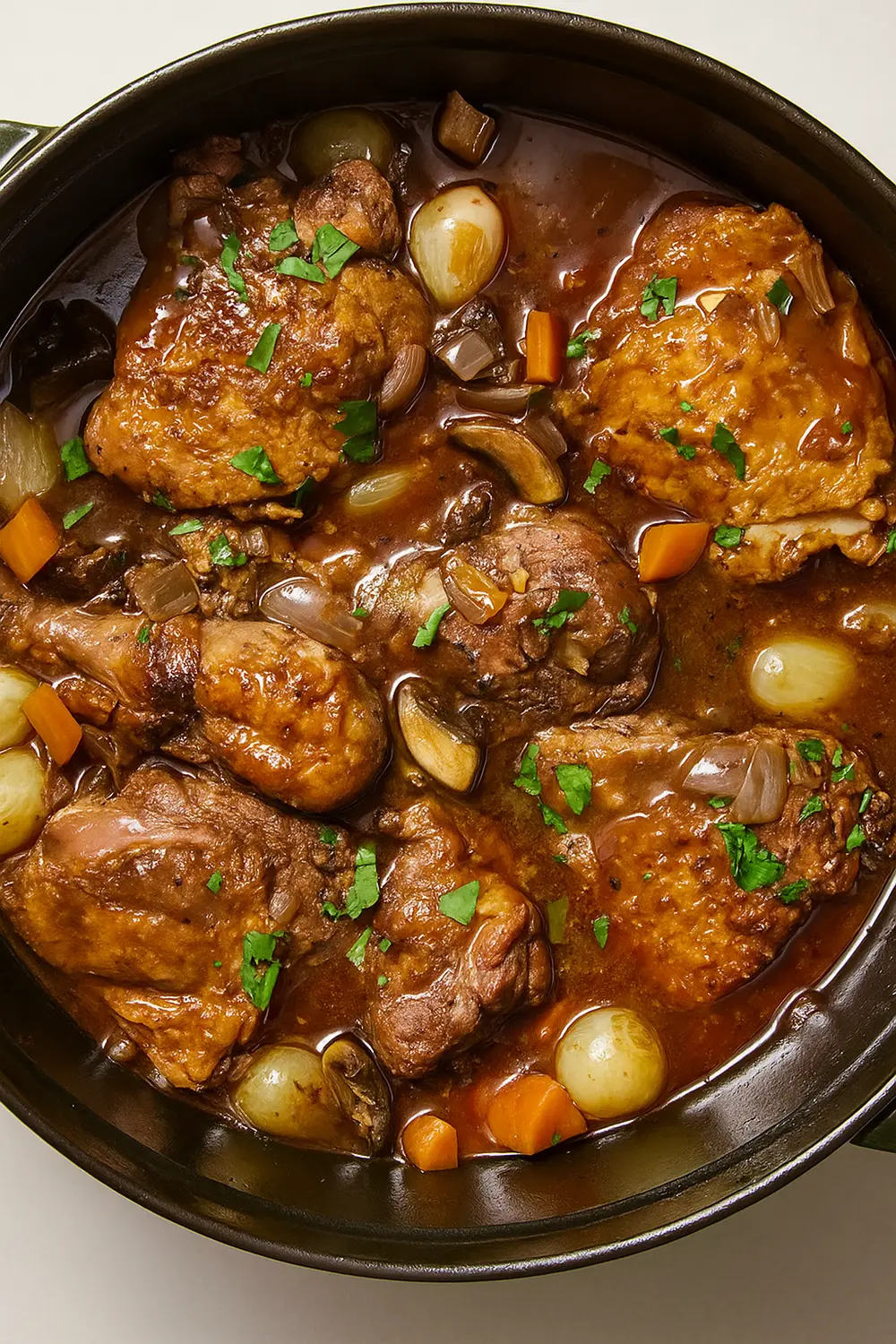
Coq au vin is a classic French dish that literally means “rooster in wine,” featuring chicken slowly cooked in red wine with mushrooms, onions, lardons or bacon, garlic, and aromatic herbs for a rich, comforting flavor.
Its origins trace back to French farmers who found a clever way to make use of an older, tougher rooster by slowly braising it in wine until it became wonderfully tender and deeply flavorful.
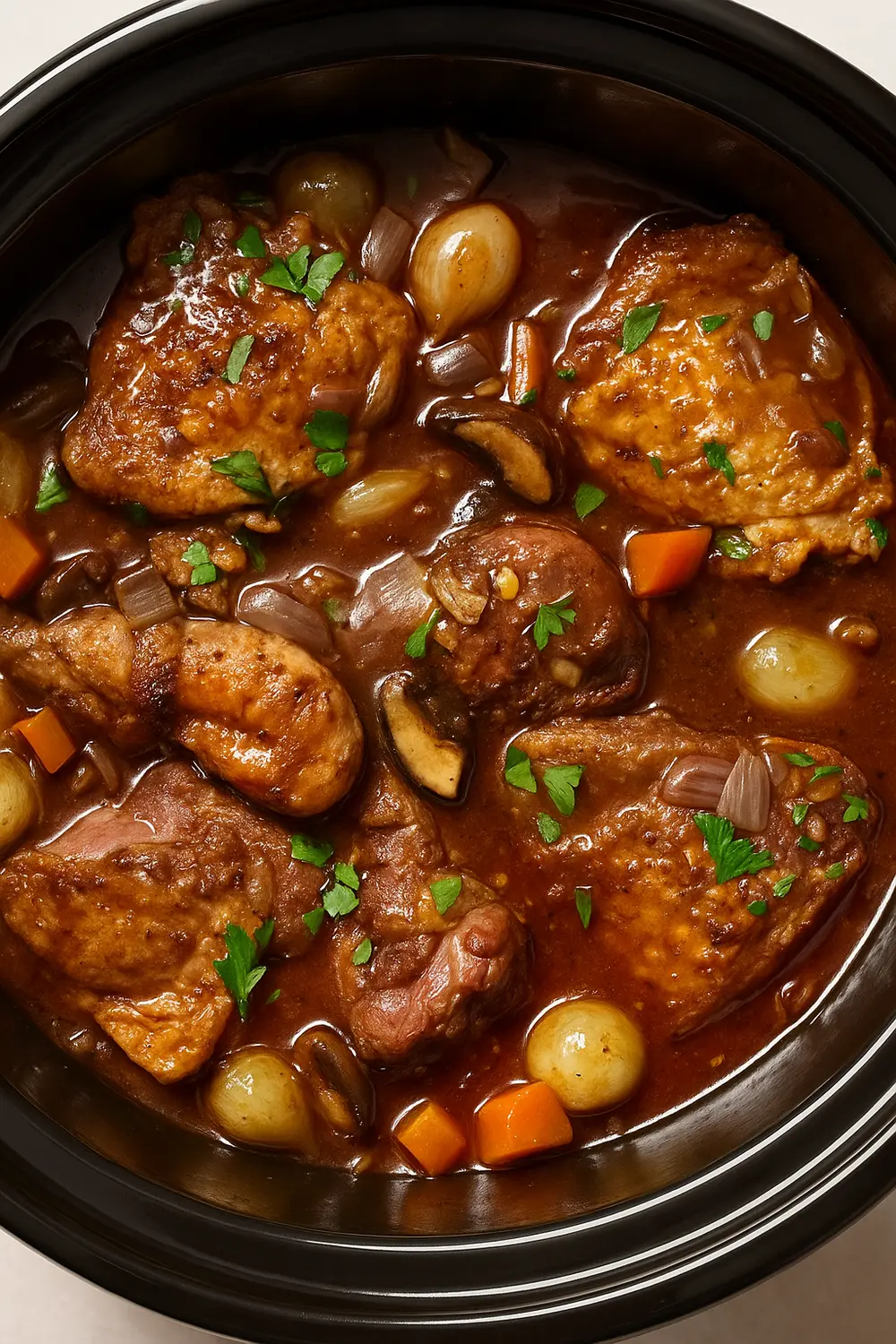
This traditional coq au vin recipe features tender chicken slowly braised in dry red wine with lardons, earthy mushrooms, onions, and fragrant herbs, creating a rich, glossy sauce that’s pure comfort in every bite.
In this recipe, we use a dry, young red wine like Pinot Noir and finish with a touch of beurre manié to create a glossy, stable, and luxuriously velvety sauce.
Coq au vin rose to worldwide fame largely thanks to Julia Child, whose iconic recipes and cookbooks brought this quintessential French country classic into the heart of the American kitchen.
This chicken coq au vin recipe is surprisingly easy to make, serves six, and is perfect for a cozy Sunday dinner, a romantic date night, or a festive holiday celebration like Christmas, Thanksgiving, or Easter.
This classic coq au vin recipe is a true cornerstone of French country cooking, often spoken of alongside timeless dishes like Boeuf Bourguignon and the slow-simmered Cassoulet.
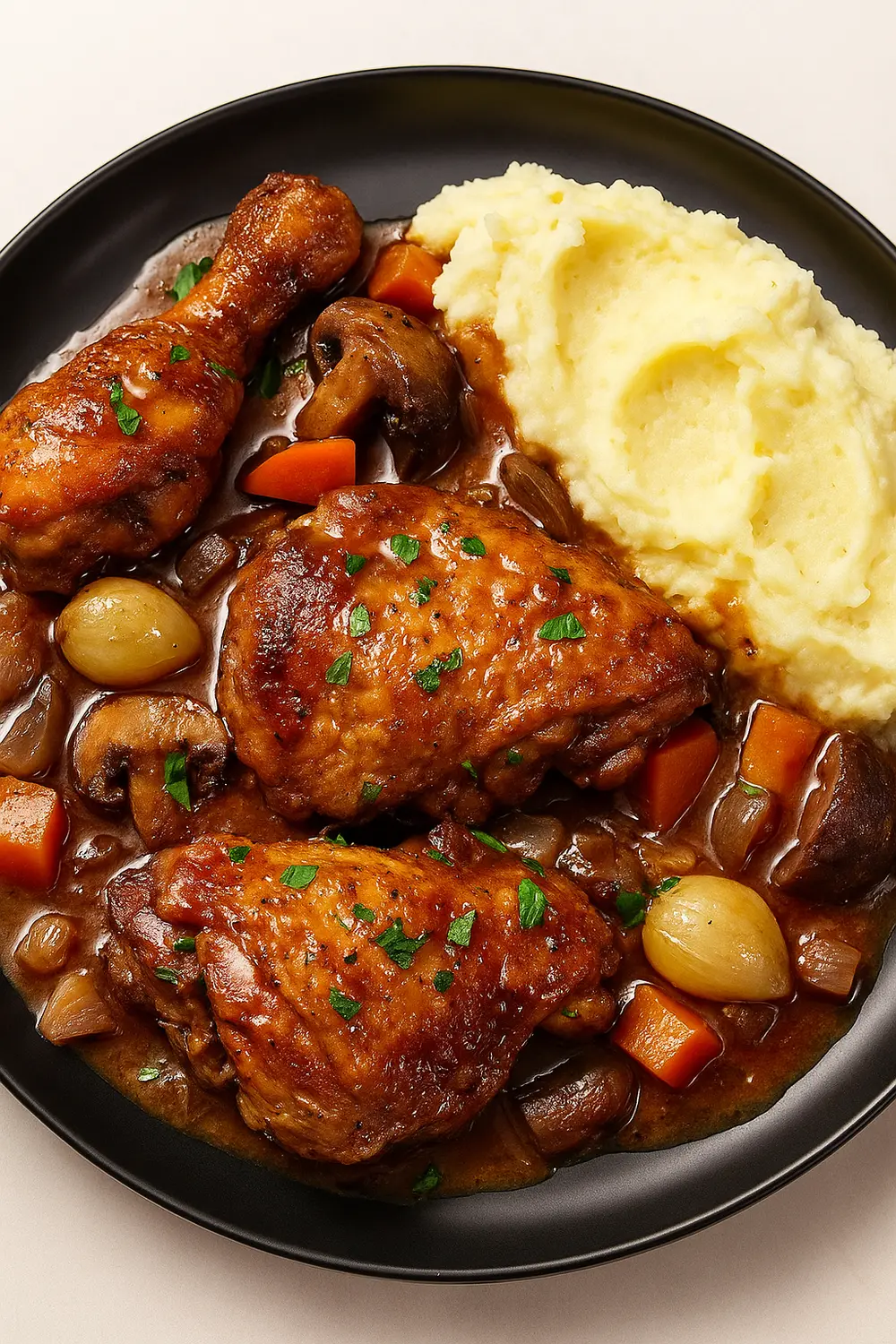
Key Ingredients for This Traditional Coq Au Vin Recipe
The quality of the final dish depends directly on the ingredients chosen, as each one plays a distinct and essential role in shaping the dish’s overall character and flavor.
1. Chicken
- While the dish historically used tough old rooster (coq), modern chicken coq au vin recipes use the bone-in, skin-on thighs and drumsticks for the best flavor and tenderness.
- Dark meat, such as thighs and drumsticks, is preferred for its higher fat content and rich flavor, which allows it to endure long braising without drying out and create a perfect pull-apart tenderness.
2. Lardons
- Lardons are small strips or cubes of thick-cut slab bacon or salt pork, essential not just for their smoky flavor but also for the technique they bring to the dish.
- Rendering the fat from the lardons creates the flavorful base for browning the chicken, infusing the entire dish with a rich, smoky, and subtly salty depth.
3. Dry Red Wine
- A high-quality dry red wine is, arguably, the most important ingredient, transforming the braising liquid into the deep, luscious sauce.
- The red wine must be dry and young, ideally a Pinot Noir, which is the cornerstone of Burgundy and is traditional for this dish.
- Excellent substitutes that offer similar depth and fruit structure include Zinfandel, Beaujolais, or Côtes du Rhône.
4. Fresh Aromatics
- Onions, carrots, garlic, thyme, and bay Leaves form the aromatic core of the braising liquid.
- They soften into the sauce, adding sweetness from the carrots and onions, depth from the garlic, and aromatic herbal notes from thyme and bay leaf.
5. Mushrooms and Pearl Onions
- These are the essential, classic garnishes usually sautéed separately in butter to ensure they develop a beautiful golden-brown color and intense earthy flavor.
- They provide both texture and a sweet counterpoint to the rich red wine sauce.
6. Cognac or Brandy
- Cognac or brandy is often added and briefly ignited to burn off the alcohol, leaving behind a deep, aromatic richness that adds beautiful complexity to the sauce.
- This technique leaves behind only the deep, complex aromas of the liquor, adding a subtle layer of sophistication and depth to the finished sauce.
7. Beurre Manié
- This simple mixture of flour and unsalted, softened butter is the secret to achieving a perfect, restaurant-quality sauce.
- It is whisked in at the very end to thicken the braising liquid into a silky, luscious sauce that coats the chicken without becoming heavy or starchy.
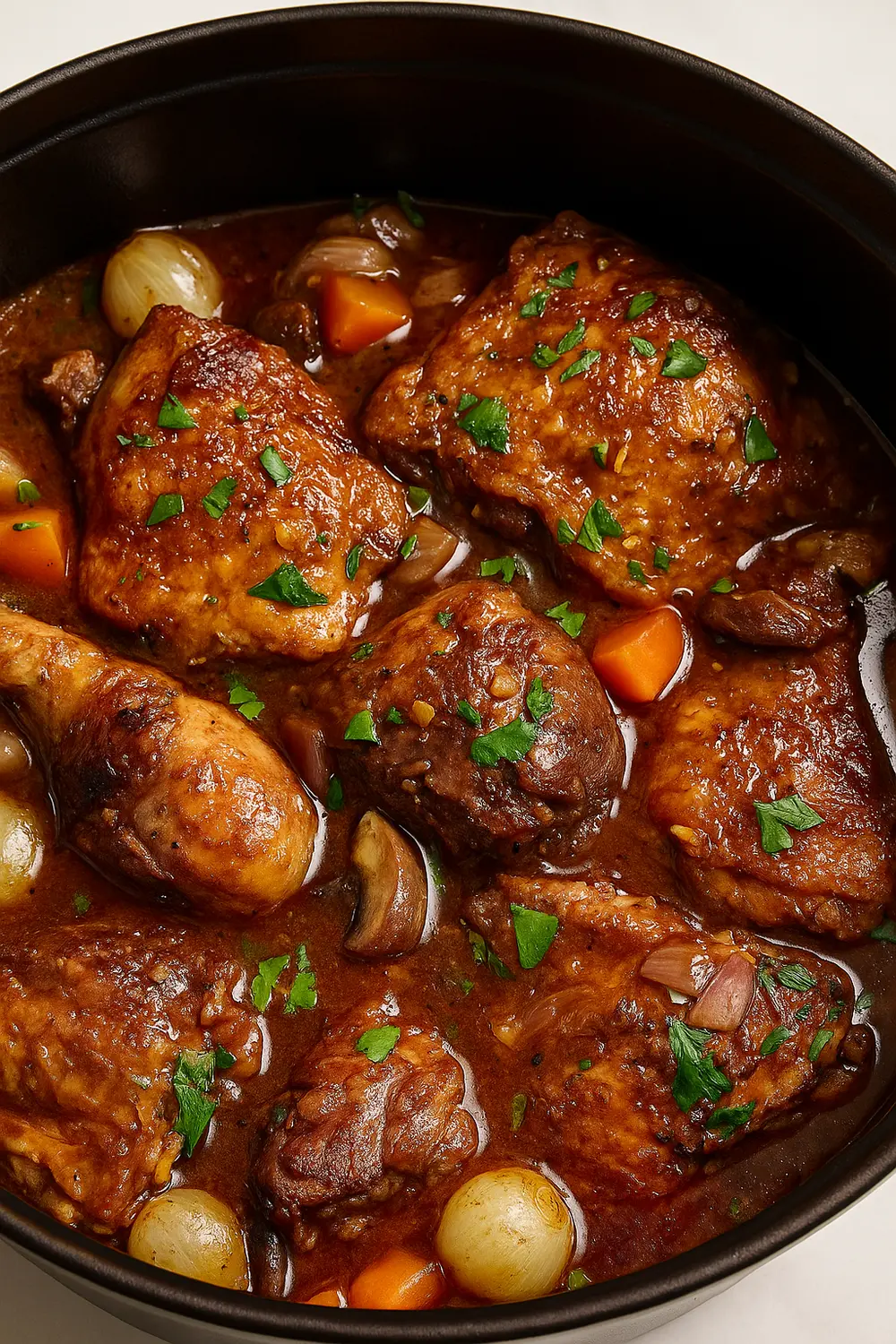
Essential Tools for This Julia Child Coq au Vin Recipe
Successful braising requires the right kitchen tools that can handle both high heat for searing and sustained, even heat for slow cooking.
- Heavy-Bottomed Dutch Oven: A large, heavy pot like cast iron or enameled cast iron ensures even heat, prevents hot spots, and maintains a gentle oven temperature for tender, perfectly braised chicken.
- Long Kitchen Matches or Lighter: This too is needed for safely igniting the Cognac during the flambé step, keeping your hands a safe distance from the flame.
- Large Sauté Pan or Skillet: While the Dutch oven is used for the main braise, a separate skillet is often required to properly sauté and brown the mushrooms and pearl onions.
- Fine-Mesh Sieve or Strainer: Used to strain the braising liquid if you opt to skim the fat immediately, or to easily remove the bay leaf and thyme sprigs before thickening the sauce.
- Slotted Spoon and Tongs: Essential for removing the crispy lardons and the seared chicken pieces from the pot.
- Small Mixing Bowl and Fork: Needed for mashing the softened butter and flour together to create the beurre manié, the quick, clump-free sauce thickener.
Nutritional Benefits of Coq au Vin
Rustic French braising turns humble chicken into something profound, and the long simmer keeps nutrition remarkably intact.
- Fifty-Eight Grams of Protein: Bone-in chicken delivers around fifty-eight grams of protein per serving, extraordinary fuel from a humble bird. For background, see the braised-poultry protein notes from Harvard.
- Collagen-Rich Broth: Slow braising melts connective tissue into silky body, the traditional source of the dish legendary comfort.
- Mushrooms and Vegetables: Pearl onions, mushrooms, and carrots contribute fiber plus B vitamins and selenium to the braise.
- Wine Cooks Off: Alcohol evaporates over the long braise, leaving complex flavor without meaningful alcohol behind.
Why You’ll Love This Chicken Coq au Vin
Here are the key reasons this easy coq au vin recipe earns its place as a weekend meal:
- Deeply Layered and Complex Flavor: The recipe uses classic French techniques, such as searing, deglazing with wine, and slow braising, to create a savory, earthy, and perfectly balanced dish that far outshines a simple stew.
- Make-Ahead Meal: Coq au vin tastes even better the next day, as resting overnight lets the chicken absorb the wine and herbs and allows the sauce to develop richer, more harmonious flavors.
- Exceptional Source of Protein: Dark meat chicken makes this dish incredibly rich in protein (often providing over 50% of the total calories), which is essential for muscle health, satiety, and energy.
- Rich in Essential Minerals: This coq au vin recette provides key minerals like iron, zinc, phosphorus, and selenium, supporting blood health, immunity, and strong bones.
- High in Vitamins: Coq au vin offers significant amounts of Vitamin A from carrots and chicken fat, along with B vitamins (B2, B3, B5, B12) that support metabolism and nerve health.
- Source of Dietary Fiber: The inclusion of root vegetables (carrots, onions) and a generous portion of mushrooms contributes a healthy amount of dietary fiber, supporting digestive health.
- Natural Ingredients, Low in Sugar: This chicken coq au vin recipe uses whole, unprocessed ingredients, with naturally low sugar coming only from the vegetables and red wine.
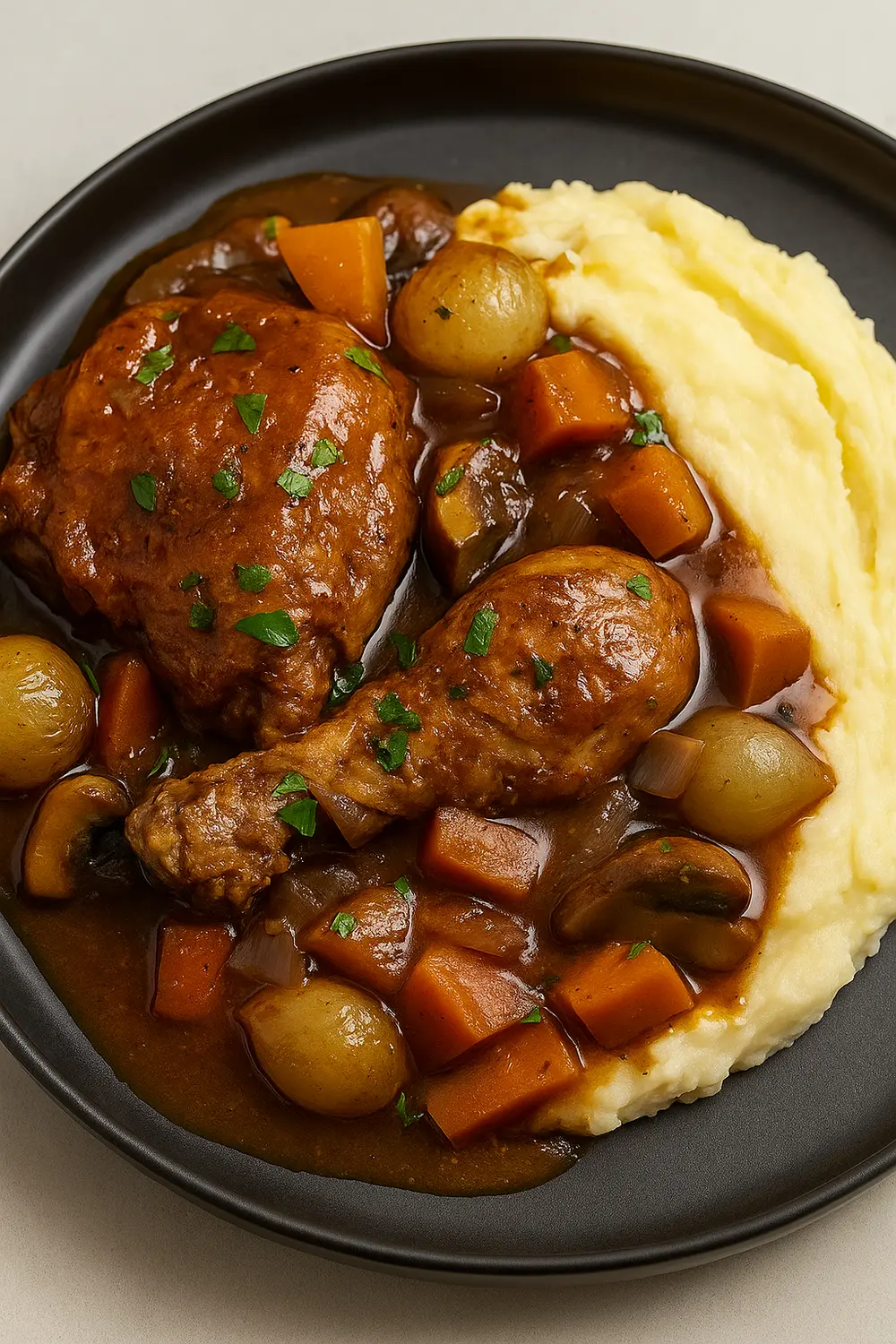
What to Serve with Coq au Vin
The intensely flavored, rich red wine chicken requires side dishes that are both neutral and absorbent to beautifully complement the luxurious sauce.
- Creamy Mashed Potatoes (Pommes de Terre Purée): Buttery, smooth mashed potatoes are perfect for soaking up the velvety chicken in red wine sauce while providing a soft texture contrast.
- Buttered Egg Noodles (Nouilles): Wide, flat egg noodles tossed in butter offer a simple, comforting base that cradles the sauce and mushrooms beautifully.
- Crusty French Baguette: A crusty baguette is essential for a true French experience, perfect for wiping up every last bit of the rich sauce.
- Blanched Green Vegetables: Bright, lightly cooked greens like green beans, asparagus, or broccoli with a touch of lemon provide a fresh, crunchy counterpoint to the rich sauce.
- Simple Green Salad: A light salad dressed with a sharp, simple vinaigrette (red wine vinegar, mustard, and olive oil) provides acidity that helps cleanse the palate between rich, savory bites of the stew.
Pro Tips for Making the Best Coq au Vin
Achieving the best coq au vin comes down to mastering a few key professional techniques:
1. Make-Ahead
The key to a perfect sauce is to make the stew 1 to 2 days ahead, then chill it overnight in the refrigerator to let the flavors meld.
The excess fat will solidify on the surface, making it incredibly easy to scrape off and discard before reheating, resulting in a cleaner, richer, and perfectly glossy sauce that is free of unsightly oil slicks. Skimming trims richness without losing flavor. Skimming guides from Healthline walk through balanced plates.
2. Use Beurre Manié
For a smooth, silky sauce, skip cornstarch or pre-cooked roux and instead use beurre manié (a paste of equal parts softened butter and flour).
Whisk this paste into the simmering sauce at the very end, one tablespoon at a time, waiting two minutes between additions.
This traditional technique allows for precise control, ensuring the sauce is luscious and velvety, never gummy or lumpy.
3. Control the Seasoning
Since ingredients like lardons and chicken stock are often high in sodium, only lightly season the chicken at the start. Sodium tracks with blood pressure. NIDDK sodium-seasoning explainers for cooks cover the connection.
Wait to adjust the salt content until the very end, after the sauce has fully reduced and thickened.
4. Flambé the Cognac or Brandy
If using Cognac or brandy, perform the flambé with an 80-proof liquor, warming it slightly and removing the pot from direct heat before igniting with a long match or lighter.
This technique concentrates the liquor’s sophisticated, aromatic flavor while eliminating the raw alcohol taste.
Final Remarks
This classic chicken coq au vin recipe is easy to make and delivers tender, flavorful chicken braised in rich red wine with mushrooms, lardons, and aromatic herbs, creating a luxurious dish that’s perfect for a family dinner or special occasion.
Feel free to swap the chicken for dark meat only if preferred, add extra mushrooms or pearl onions, or finish with a touch of fresh parsley for a pop of color and brightness.
Pair it with creamy mashed potatoes, buttered egg noodles, or a crusty French baguette to soak up every drop of the luscious sauce, and serve alongside blanched green vegetables or a simple green salad.
You’ll find the complete list of ingredients and step-by-step instructions just below.
Keep exploring with our family-size grilled chicken and fiesta cooler cups, then try jarred dulce de leche, rib roast with crisp crust, and a red-wine chateaubriand dinner, followed by a cook-from-scratch week and a slow-iron weekly table over on Santiago Maricel.
This article is for information only and is not medical advice. Read our full disclaimer.