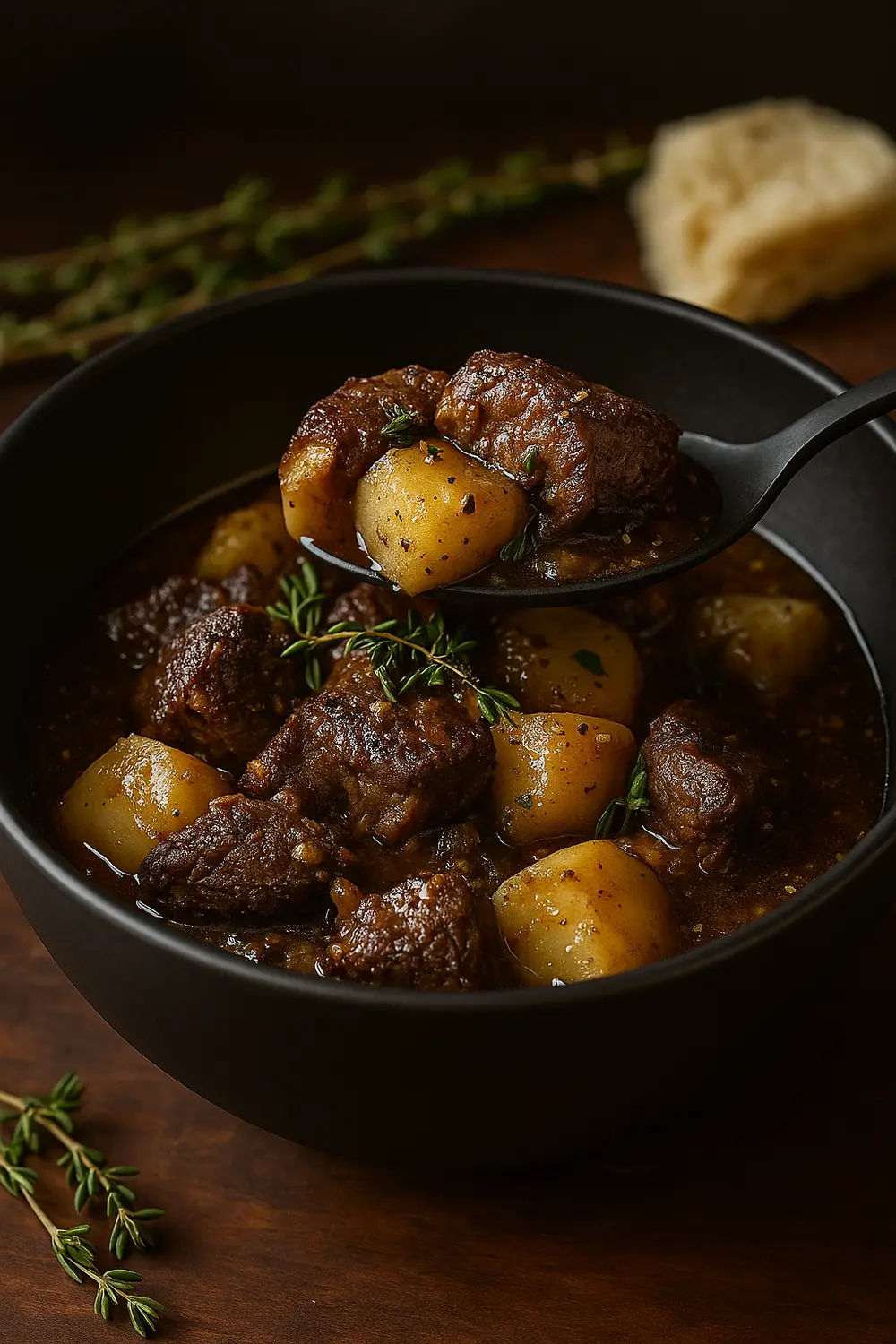
This isn’t just any beef stew recipe; it’s a soul-warming, high-protein, gluten-free, and nutrient-rich masterpiece, blending tender chuck roast, fresh root vegetables, and aromatic herbs in a deeply savory broth. One-pot cooking keeps nutrients in the bowl. Nutrient-bowl basics from Healthline walk through it.
Crafted for ease in a slow cooker, this crockpot beef stew is the ultimate healthy comfort food, perfect for busy weeknight dinners or leisurely weekends, and it tastes even better the next day.
This easy crockpot beef stew stands as a testament to culinary ingenuity, transforming humble ingredients into extraordinary meals with minimal effort.
Slow cooking is particularly advantageous for dishes like this crockpot beef stew, which benefits immensely from prolonged, gentle cooking.
Beef, especially cuts rich in connective tissue like chuck roast, contains collagen. When subjected to the sustained, low temperature of a slow cooker, this collagen slowly breaks down and melts, transforming into gelatin.
This conversion is what gives the beef its characteristic fall-apart tenderness and succulent texture, a quality that is difficult to replicate with faster cooking methods.
The result is the best crockpot beef stew that is not just edible but incredibly moist and flavorful, truly melting in the mouth.
Enjoy FREE shipping on orders $99 or more
Key Ingredients You’ll Need for this Crockpot Beef Stew
Crafting a truly exceptional crockpot beef stew begins with understanding the role each ingredient plays in building layers of flavor and achieving the desired texture.
1. Boneless Beef Chuck Roast
- This is the star of the show. While pre-cut “stew meat” is available, opting for a boneless chuck roast and cutting it into 1 to 1.5-inch cubes yourself is highly recommended.
- Chuck roast is rich in connective tissue (collagen), which, when cooked low and slow in a crock pot, breaks down into gelatin, resulting in incredibly tender, melt-in-your-mouth beef.
2. Tapioca Flour (or All-Purpose Flour)
- This is used to coat the beef cubes before searing.
- The flour helps create a beautiful brown crust on the meat, which is crucial for developing deep, savory flavors through the Maillard reaction.
- It also acts as a natural thickening agent for the stew’s gravy.
3. Aromatics (Onion, Celery, Garlic)
- These form the foundational flavor base, often referred to as a mirepoix.
- Sautéing them briefly before adding to the slow cooker helps release their aromatic compounds, infusing the entire stew with a rich, savory depth.
4. Root Vegetables (Carrots, Potatoes)
- Carrots add natural sweetness and vibrant color.
- Potatoes (Yukon Gold or red potatoes are preferred for their waxy texture) provide a hearty, satisfying element that holds its shape well during long cooking times.
5. Low-Sodium Beef Broth
- This is the primary liquid base for the stew. Using a low-sodium option is key for a healthier stew, allowing you to control the salt content and prevent an overly salty dish.
6. Tomato Paste
- A small amount of tomato paste adds a concentrated umami flavor and a touch of acidity, which brightens the overall taste of the stew and contributes to its rich color.
7. Worcestershire Sauce
- This is a secret weapon for adding a deep, savory, and complex umami flavor that truly elevates the stew.
8. Dried Herbs (Rosemary, Thyme, Bay Leaves)
- These classic herbs infuse the stew with their earthy, aromatic notes, contributing to the traditional “old-fashioned” flavor profile. Bay leaves are typically removed before serving.
9. Frozen Peas
- Added at the very end of cooking, peas provide a pop of fresh color and a tender-crisp texture, preventing them from becoming mushy during the long simmer.
Essential Equipment for Making This Crockpot Beef Stew Recipe
Having the right kitchen tools ready before beginning the cooking process can significantly streamline the experience and contribute to a successful outcome.
This list ensures that all necessary items are on hand, preventing interruptions and making the preparation of this crockpot beef stew as smooth as possible.
- 4-6 quart Slow Cooker (Crock Pot): This is the central piece of equipment, essential for the low-and-slow cooking method that tenderizes the beef and melds the flavors.
- Large Skillet or Dutch Oven: Crucial for searing the beef and deglazing the pan, steps that build foundational flavor for the crockpot beef stew.
- Large Mixing Bowl or Sturdy Plastic Bag: Used for tossing the beef with flour and seasonings, ensuring an even coating.
- Sharp Knife and Cutting Board: For efficient and safe preparation of vegetables and beef.
- Measuring Cups and Spoons: For accurate ingredient quantities, vital for consistent results.
- Whisk: Useful for preparing a thickening slurry if additional thickening is desired at the end.
- Tongs: Ideal for handling and turning the beef during the searing process, allowing for even browning.
- Ladle: For serving the finished crockpot beef stew.
Nutritional Benefits of This Crockpot Beef Stew
This healthy crockpot beef stew is a powerhouse of nutrition, offering a balanced meal that supports overall well-being.
1. High in Protein
- The beef chuck roast is an excellent source of high-quality protein, essential for muscle repair, growth, and satiety. A single serving provides a significant portion of daily protein needs.
2. Rich in Dietary Fiber
- Loaded with a variety of vegetables like carrots, potatoes, celery, and peas, this stew provides ample dietary fiber.
- Fiber is crucial for digestive health, helps regulate blood sugar levels, and contributes to a feeling of fullness.
3. Packed with Vitamins and Minerals
- Vitamin A: Carrots are an outstanding source of Vitamin A, vital for good vision, immune function, and skin health.
- Vitamin C: Potatoes and peas contribute Vitamin C, a powerful antioxidant that supports the immune system and skin health.
- Potassium: Root vegetables like potatoes and carrots are rich in potassium, which is important for maintaining healthy blood pressure and proper muscle function.
- Iron: Beef is a primary source of heme iron, which is highly bioavailable and crucial for oxygen transport in the blood, preventing fatigue.
- B Vitamins: Beef also provides various B vitamins, including B12, which are essential for energy metabolism and nerve function.
4. Hydrating
- The savory broth contributes to your daily fluid intake, aiding in hydration, which is important for overall bodily functions and energy levels.
5. Heart-Healthy Choices
- By using lean cuts of beef (with visible fat trimmed) and low-sodium beef broth, this crockpot beef stew recipe minimizes saturated fat and sodium content, aligning with heart-healthy dietary guidelines.
Quick Tips for Making the Best Crockpot Beef Stew
Achieving a truly outstanding crockpot beef stew involves a few key techniques that elevate the dish from good to unforgettable.
1. Sear the Beef Thoroughly
- This step is non-negotiable and the most critical step for a deeply flavorful crockpot beef stew.
- Browning the beef in a hot skillet before adding it to the slow cooker creates a rich, caramelized crust through the Maillard reaction, locking in juices and building a deep, complex savory foundation for the entire stew.
2. Choosing the Right Beef Cut
- The selection of beef is paramount for tenderness. Opt for boneless beef chuck roast.
- While often labeled as “stew meat,” some pre-cut options like sirloin might be too lean or from less suitable parts of the animal, leading to tough results.
- Chuck roast, with its ample collagen, breaks down beautifully over long cooking times, yielding succulent, fall-apart tender pieces.
3. Strategic Vegetable Preparation and Timing
- Cut root vegetables like carrots and potatoes into larger, uniform pieces (around 1 to 1.5 inches).
- This ensures they cook evenly and retain their texture without turning to mush during the extended simmering.
- Delicate vegetables, such as frozen peas, should be added only in the last 15-20 minutes of cooking to prevent overcooking and maintain their vibrant color and texture.
4. Consider Umami Boosters
- Incorporating ingredients rich in umami, such as Worcestershire sauce and tomato paste, significantly deepens the savory profile of the crockpot beef stew.
- Red wine also contributes to this depth and richness.
- Additionally, a touch of acid, whether from red wine, tomato paste, or even a squeeze of lemon juice at the very end, brightens the overall flavor, preventing the beef stew from tasting heavy or one-dimensional.
5. Don’t Rush the Cook Time
- Stew meat requires ample time to become tender.
- Cooking on a low setting for the full recommended duration (8-10 hours) allows the tough connective tissues to break down completely.
- If the meat is still tough after the suggested time, continue cooking; it simply needs more time to tenderize.
6. Thickening Options for Desired Consistency
- The starch from potatoes naturally contributes to the crockpot beef stew’s thickness.
- If a thicker gravy-like consistency is desired, a small amount of flour tossed with the meat before browning (as done in this beef stew recipe) or a cornstarch slurry added towards the end of cooking can be effective.
- Alternatively, for a gluten-free and natural approach, some cooked potatoes and carrots can be mashed or pureed and stirred back into the stew for thickening.
7. Adjusting Seasoning at the End
- Flavors can intensify and change during slow cooking.
- Always taste the stew towards the end of the cooking process and adjust salt, pepper, or other seasonings as needed to achieve a perfectly balanced flavor profile.
What to Serve or Pair with Crockpot Beef Stew
This traditional beef stew recipe is a complete meal on its own, but certain accompaniments can enhance the dining experience and help soak up every last drop of the rich gravy.
- Crusty Bread or Baguette: A classic pairing, a warm, crusty baguette or any favorite bread is perfect for soaking up the flavorful broth.
- Creamy Polenta or Mashed Potatoes: For an extra layer of comfort, serving the stew over creamy polenta or a bed of fluffy mashed potatoes provides a smooth contrast to the tender chunks of meat and vegetables.
- Warm Rice or Egg Noodles: These are excellent options for absorbing the rich gravy, offering a different texture, and making the meal even more substantial.
- Fresh Green Salad: A light, crisp green salad with a simple vinaigrette can provide a refreshing counterpoint to the richness of the stew, adding freshness and a touch of acidity.
- Steamed Green Vegetables: If you desire more greens, consider serving steamed green beans, oven-roasted broccoli, or sautéed Brussels sprouts on the side. These can be added separately to maintain their texture.
Final Remarks
This healthy crockpot beef stew recipe is designed not only for comfort and flavor but also to provide substantial nutritional benefits.
The combination of lean protein, fiber-rich vegetables, and a savory broth makes this traditional beef stew recipe a well-rounded meal. That trio is the standard balanced plate. Harvard's Nutrition Source shares one-pot balance notes.
Ultimately, this crockpot beef stew is a celebration of patience, quality ingredients, and the transformative power of slow cooking.
Let the slow cooker do its magic while you go about your day, and come home to the warm embrace of the best crockpot beef stew imaginable.
Happy cooking!
- Creamy Cajun chicken pasta recipe
- High protein vegetarian foods
- Easy Korean BBQ beef recipe
- Best egg frittata recipe
- Healthy carnivore diet recipes
- 7-day high protein meal plan
- Healthy no cook meal ideas for one week
- Clean eating meal plan 1 week
- Easy low carb high high-protein meal plan
Keep exploring with our ulam-style grilled chicken and palamig stall cups, then try chipotle beef burgers, spicy cajun alfredo, and a cooling cucumber avocado salad, plus a hearty iron-focus week and a cozy 1400-calorie week on Santiago Maricel.
This article is for information only and is not medical advice. Read our full disclaimer.