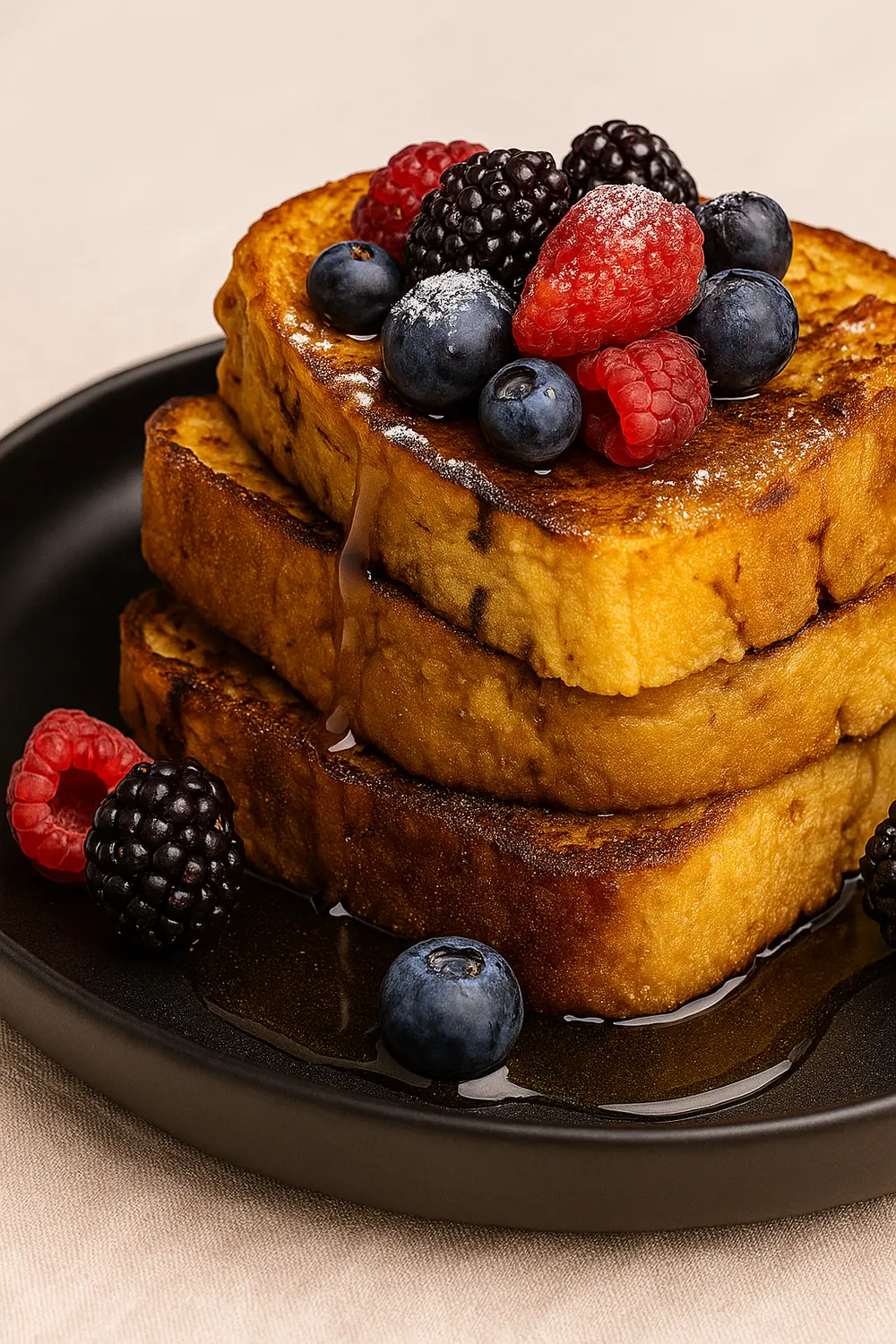
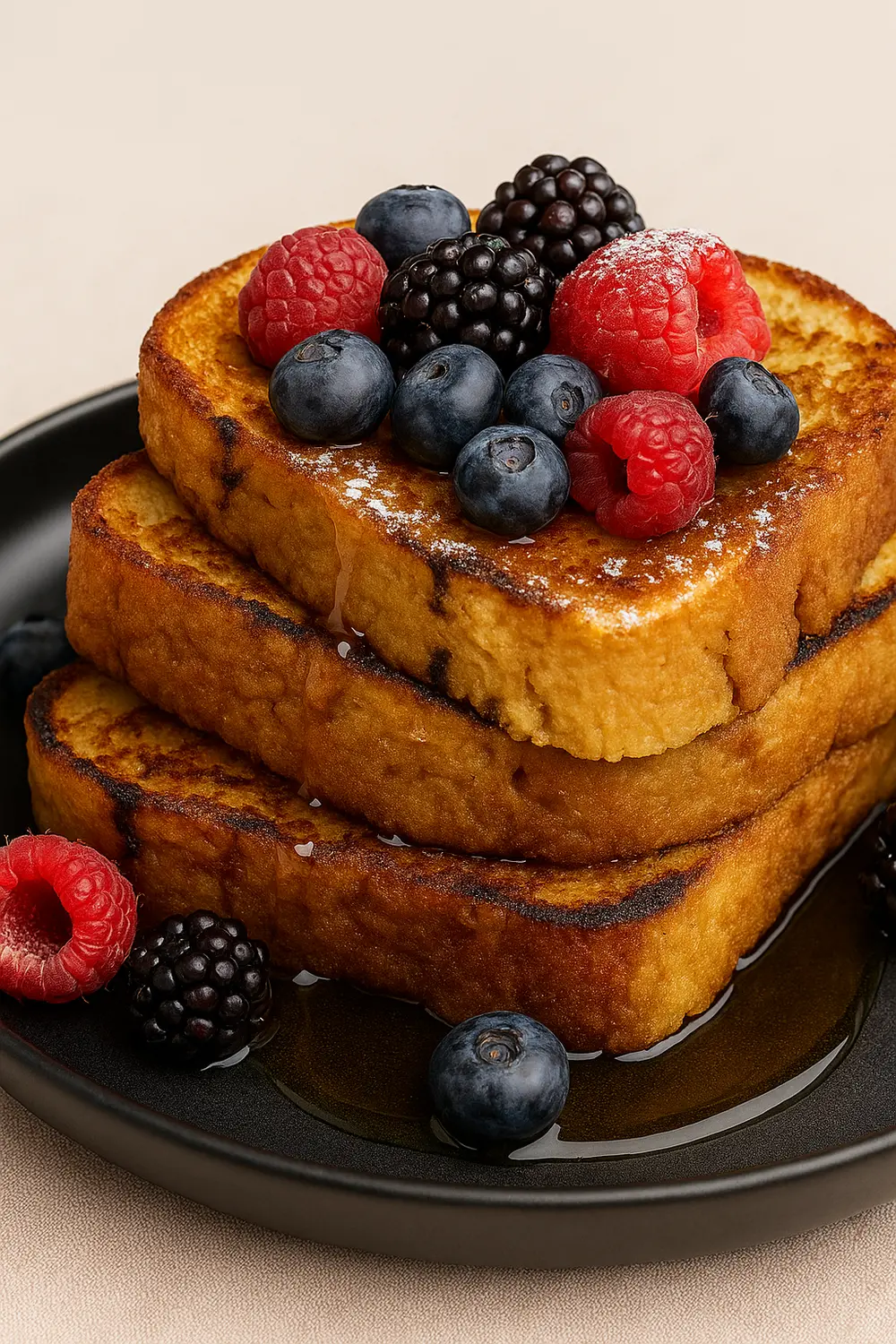
French toast is a dish made from slices of bread that have been soaked in a mixture of eggs and milk (or cream), then pan-fried or baked until they achieve a golden-brown hue.
French toast, originally known as pain perdu or “lost bread” in France, was a clever way to use up stale bread, preventing food waste by transforming it into something delicious, rich, and nourishing. Using stale bread wastes nothing. Waste-free kitchen notes from Healthline walk through balanced plates.
This easy French toast recipe serves four and features thick-cut brioche, eggs, whole milk, warm cinnamon, vanilla, and is topped with berries, perfect for a cozy breakfast or brunch. Berries lighten a rich breakfast. Harvard's Nutrition Source shares berry-breakfast notes.
We use thick-cut brioche bread for this French toast recipe because it’s rich, slightly eggy, and soaks up the custard for a soft, luxurious texture when baked.
Despite its gourmet appearance, this French toast is very easy and quick to make, making it a perfect choice for families, small gatherings, or even a solo treat without any fuss.
Ready in just 30 minutes, this baked French toast skips the stovetop hassle. Simply bake for perfectly puffed, golden slices with minimal cleanup.
Ingredients You’ll Need for This Easy French Toast Recipe
Here are some of the key ingredients for this baked French toast recipe:
1. Bread
- The ideal choice is a thick-cut, slightly stale bread, about 1-inch thick.
- Stale bread is crucial because its drier texture allows it to absorb the rich custard mixture deeply without becoming soggy or falling apart during cooking.
- Brioche or challah are ideal choices for French toast thanks to their rich, eggy flavor and sturdy yet tender crumb, which soaks up the custard beautifully and creates a luxuriously soft interior.
2. Eggs
- The eggs are the heart of the custard, providing the essential structure and richness.
- They bind the ingredients together and, when cooked, create that desirable custardy texture within the bread.
- The addition of extra egg yolks, as in this recipe, further enhances the richness and contributes to a more decadent, tender interior.
3. Milk (or Cream)
- This liquid component thins the egg mixture, allowing for better absorption into the bread, and contributes to the overall moisture and tenderness of the French toast.
- While whole milk is a great choice, using half-and-half or heavy cream will result in an even richer, more indulgent flavor and a creamier texture.
4. Granulated Sugar
- Beyond adding sweetness, sugar plays a crucial role in the browning and caramelization of the French toast’s exterior, contributing to that beautiful golden crust.
5. Vanilla Extract
- This aromatic powerhouse infuses the French toast with a warm, comforting, and universally loved flavor.
- Pure vanilla extract is recommended for the best results.
6. Ground Cinnamon & Nutmeg
- These classic spices provide the signature warm, inviting aroma and flavor that is synonymous with French toast.
- They add depth and complexity to the sweet profile.
7. Kosher Salt
- A small pinch of salt balances the sweetness, enhances all the other flavors, and prevents the French toast from tasting flat.
8. Unsalted Butter & High-Heat Neutral Oil
- Butter provides an unparalleled rich flavor and contributes to a beautiful golden-brown crust.
- Pairing it with a high-heat neutral oil (like canola, sunflower, or avocado oil) prevents the butter from burning too quickly, allowing for even browning and a crispier finish without scorching.
Tools Needed for This French Toast Recipe
Use top rated, high quality and expert-recommended kitchen equipment:
- Wide, Shallow Dish: A pie plate, a 9×13-inch or 10×15-inch baking dish, or a large, shallow bowl is ideal for whisking the custard mixture and allowing the bread slices to soak evenly.
- Whisk or Fork: Essential for thoroughly combining and aerating the custard ingredients, ensuring a smooth and consistent batter.
- Large Nonstick Skillet or Cast Iron Pan: Crucial for achieving even heat distribution and preventing the French toast from sticking during the pan-frying process.
- Slotted Spatula: Facilitates easy and gentle flipping of the bread in the custard and transferring it to the hot pan, allowing excess liquid to drain.
- Rimmed Baking Sheet with Wire Rack: Useful for multiple purposes: drying bread before soaking (if needed), keeping cooked French toast warm in the oven, and for the final oven finishing step.
- Oven: The oven is used for achieving that perfect custardy interior and for cooking larger batches. It’s used for pre-drying bread, keeping cooked French toast warm, and for the final baking step to ensure uniform doneness.
- Measuring Cups and Spoons: For accurate measurement of all ingredients, contributing to consistent results.
- Serving Platter: To beautifully present the finished French toast, enhancing its visual appeal before serving.
Nutritional Benefits of French Toast
Custardy, golden, and made for slow mornings. Beyond pure comfort, a thoughtful French toast brings more to the table than expected.
- Gentle 150 Calories: Each serving lands near one hundred fifty calories, leaving generous room for fruit toppings that add real nutrition. For background, see the weekend-brunch portion notes on PMC.
- Fiber in the Mix: Three grams of fiber per serving, especially with whole-grain bread, help breakfast digest a little more slowly.
- Egg Protein: The custard soak weaves egg protein through every slice for mornings with more staying power than plain toast.
- Fruit Loves Company: Topped with berries instead of syrup, this becomes a genuinely balanced breakfast rather than dessert.
Why You’ll Love This Baked French Toast
French toast, particularly when made with thoughtful ingredient choices, can offer several benefits that contribute to a balanced diet:
- High Protein: Eggs and milk, primary ingredients in French toast, are an excellent source of high-quality protein, which is essential for muscle repair, growth, and overall body function, helping you feel full and satisfied.
- Steady Energy: Bread provides carbohydrates for energy, and using whole wheat boosts fiber content for steadier energy and better digestion.
- Vitamins and Minerals: Eggs offer key vitamins like A and D, plus minerals such as iron and potassium, while milk adds calcium and extra vitamin D for strong bones and overall health.
- Rich in Antioxidants: Fruits like blueberries, strawberries, and bananas add a natural boost of antioxidants. These compounds help combat oxidative stress and support overall well-being.
- High in Fiber: Bread and berries add valuable fiber to your French toast, supporting digestion, stabilizing blood sugar, and helping you feel fuller longer, which is great for overall health and weight management.
- Less Hands-On Time: Once the French toast is in the oven, your active cooking time is significantly reduced, which allows for a more relaxed cooking experience, especially during busy mornings.
What to Serve with French Toast
These accompaniments enhance the sweet, custardy nature of French toast, making every bite even more satisfying:
1. Sweet Toppings
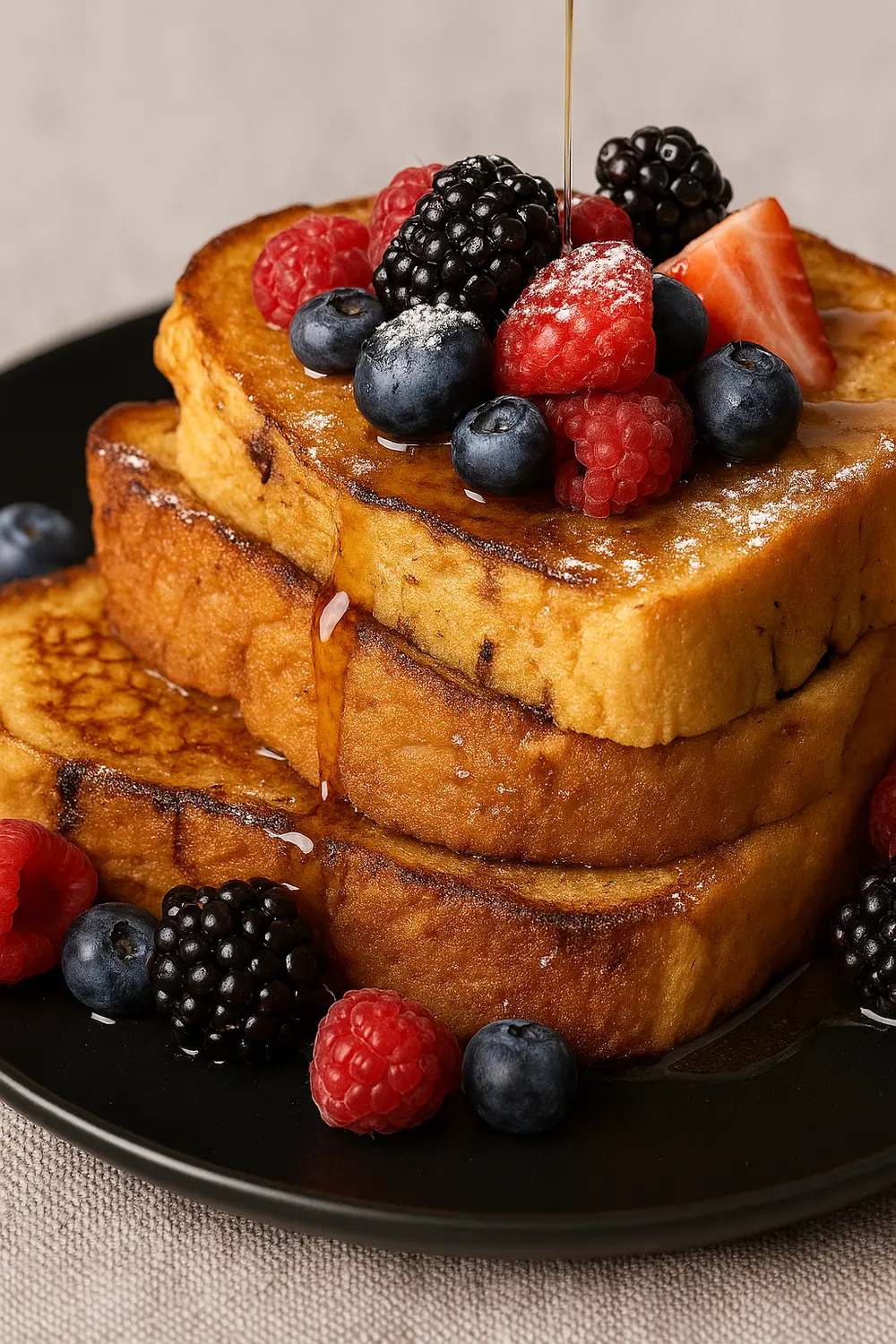
- Fresh Mixed Berries: A vibrant medley of raspberries, blueberries, and blackberries, as beautifully depicted, provides a burst of freshness, natural sweetness, and a lovely tart contrast to the rich toast.
- Warm Maple Syrup: The quintessential French toast topping, offering a rich, caramelized sweetness that seeps into every crevice of the toast.
- Powdered Sugar: A delicate dusting of powdered sugar adds a touch of elegance and a subtle sweetness that melts beautifully on the warm toast.
- Whipped Cream or Greek Yogurt: For a creamy indulgence, a dollop of freshly whipped cream is divine. For a lighter, tangier option, fat-free Greek yogurt provides a lovely contrast and a protein boost.
- Fruit Compotes or Sauces: Homemade berry compotes, apple cinnamon sauce, or even a warm peach or cherry topping can elevate the dish.
- Nut Butters: A spread of peanut butter, almond butter, or hazelnut spread adds protein and a nutty flavor.
- Chocolate Chips or Chocolate Sauce: For the ultimate sweet tooth, a sprinkle of chocolate chips or a drizzle of chocolate sauce can turn French toast into a decadent dessert.
- Caramelized Bananas or Apples: Sautéing fruit in butter and a touch of brown sugar creates a warm, sweet, and slightly sticky topping.
2. Savory Sides
- Crispy Bacon or Sausage: The salty, savory crunch of bacon or the hearty flavor of breakfast sausage provides a perfect counterpoint to the sweetness of the French toast, creating a classic breakfast pairing.
- Scrambled or Fried Eggs: Adding a side of eggs ensures a more protein-rich and well-rounded meal.
- Breakfast Potatoes or Hash Browns: Crispy potatoes offer a satisfying texture and a savory element to the plate.
- Fresh Fruit Salad: Beyond just berries on the toast, a larger side of mixed fruit salad can add freshness and a variety of textures and nutrients.
Pro Tips to Make the Best French Toast
The best French toast comes down to a few simple techniques: choosing the right bread, making a rich custard, and cooking it just right.
1. Embrace Stale, Thick Slices
- The single most impactful tip is to use slightly stale or day-old bread, cut into thick slices, ideally at least 1 inch thick.
- Stale bread acts like a sponge, allowing the custard to be absorbed deeply and evenly without disintegrating, which is crucial for preventing a soggy middle.
- Thick slices are essential for developing that incredible custardy interior, providing a substantial texture that stands up to the soaking.
2. Use Brioche and Challah Bread
- These breads are inherently rich, eggy, and possess a sturdy yet tender crumb, making them exceptional choices for soaking and yielding a luxurious, custard-like texture.
- Japanese milk bread (Shokupan) is another excellent, dense option that soaks up custard beautifully.
3. Pre-Dry Fresh Bread
- If only fresh bread is available, gently dry it out by lightly toasting it on the lowest setting in a toaster or baking it at a low temperature (285°F/140°C) for 10-15 minutes.
- This removes surface moisture, mimicking the effect of stale bread and ensuring optimal custard absorption.
4. Balance Your Eggs and Dairy
- While ratios vary, a good starting point is approximately 4 to 6 eggs per cup of liquid.
- The addition of extra egg yolks significantly enhances the richness and contributes to a more custardy, luxurious texture.
- For ultimate decadence, consider using half-and-half or heavy cream instead of milk.
5. Let the Bread Soak
- This is not a quick dip! Allow the bread to soak for 2 to 4 minutes per side, depending on its thickness.
- This ensures the custard penetrates deeply into the core of the bread, which is vital for a moist, fully cooked interior.
6. Use a Butter and Oil Combo
- Utilize a combination of butter for its rich flavor and a high-heat neutral oil (such as avocado or sunflower oil) for frying.
- This blend is effective because the oil’s higher smoke point prevents the butter from burning prematurely, allowing it to brown beautifully and contribute to a desirable golden-brown, crispy crust.
7. Finish in the Oven
- After pan-frying each slice to a beautiful golden crisp, transfer the French toast to a wire rack on a baking sheet and finish it in a moderate oven (350 to 400°F or 175 to 200°C) for 6 to 10 minutes.
- This pro technique ensures the interior custard cooks perfectly without over-browning or burning the exterior, resulting in that ideal fluffy inside and crispy outside texture.
Final Remarks
This easy French toast recipe delivers the perfect balance of crisp edges, soft custardy centers, and just the right hint of sweetness in every bite.
You can keep it classic with maple syrup and powdered sugar or with fresh berries, or customize it by adding a dollop of Greek yogurt or a sprinkle of caramelized sugar for extra crunch.
If you make this recipe, we’d love to hear how it turned out. Share your version or drop your thoughts in the comment section.
Full recipe and step-by-step instructions are just below.
Keep exploring with our brunch-side grilled chicken and caramel sundae-style cups, then try sesame cucumber ribbon salad, meal-prep chicken breasts, and wagyu cheese smash burgers, plus a syrup-break fortnight and a breezy summer menu on Santiago Maricel.
This article is for information only and is not medical advice. Read our full disclaimer.