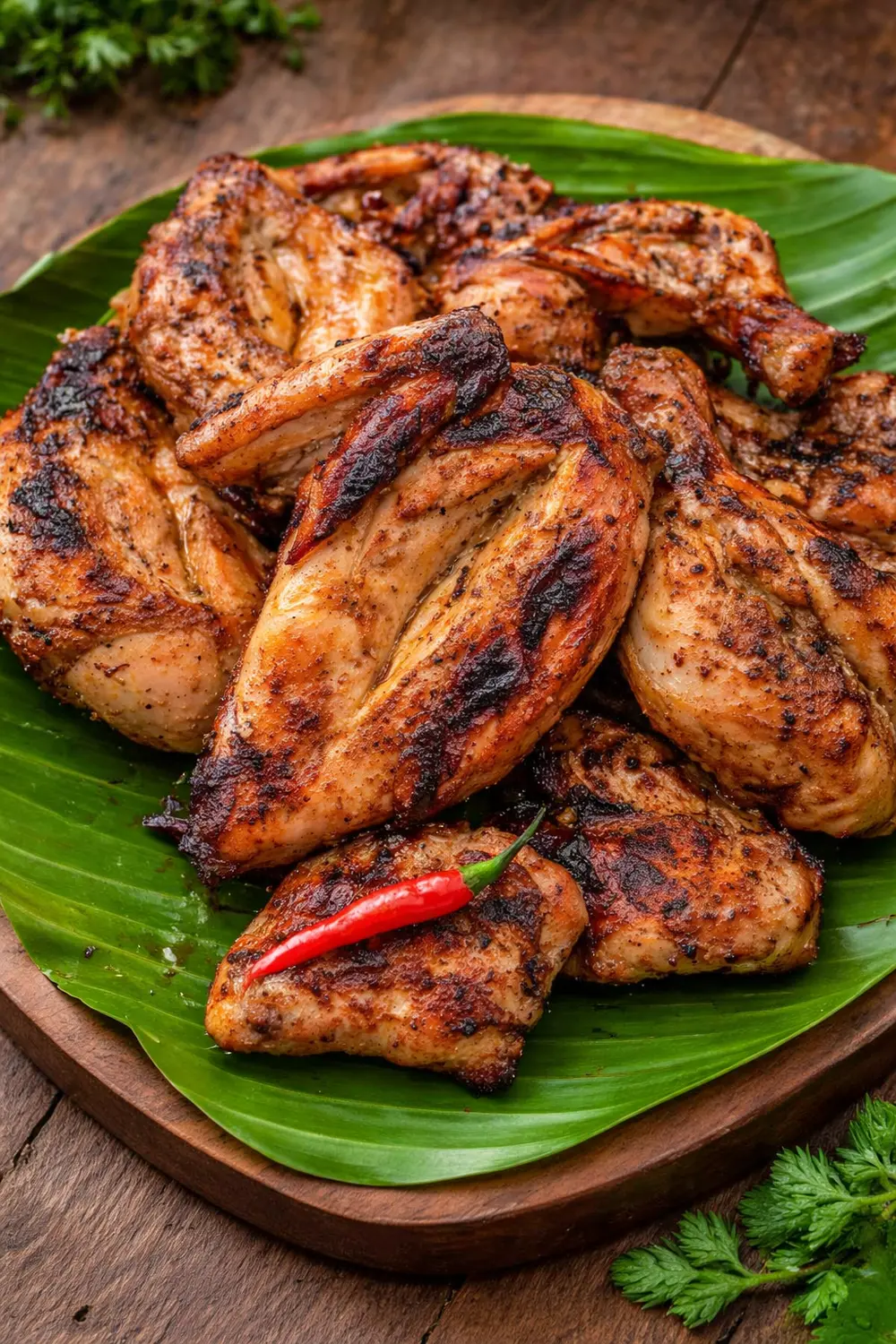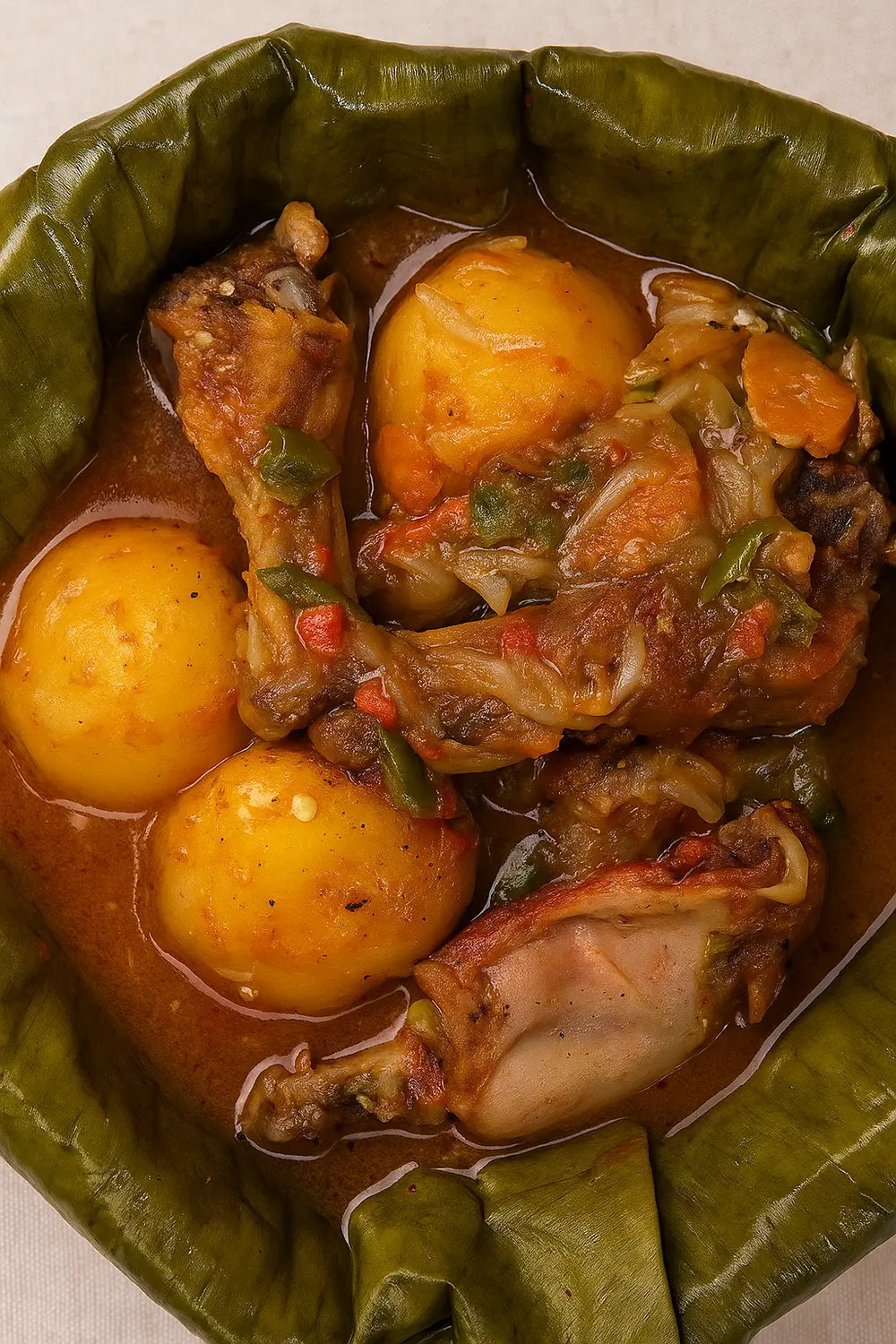
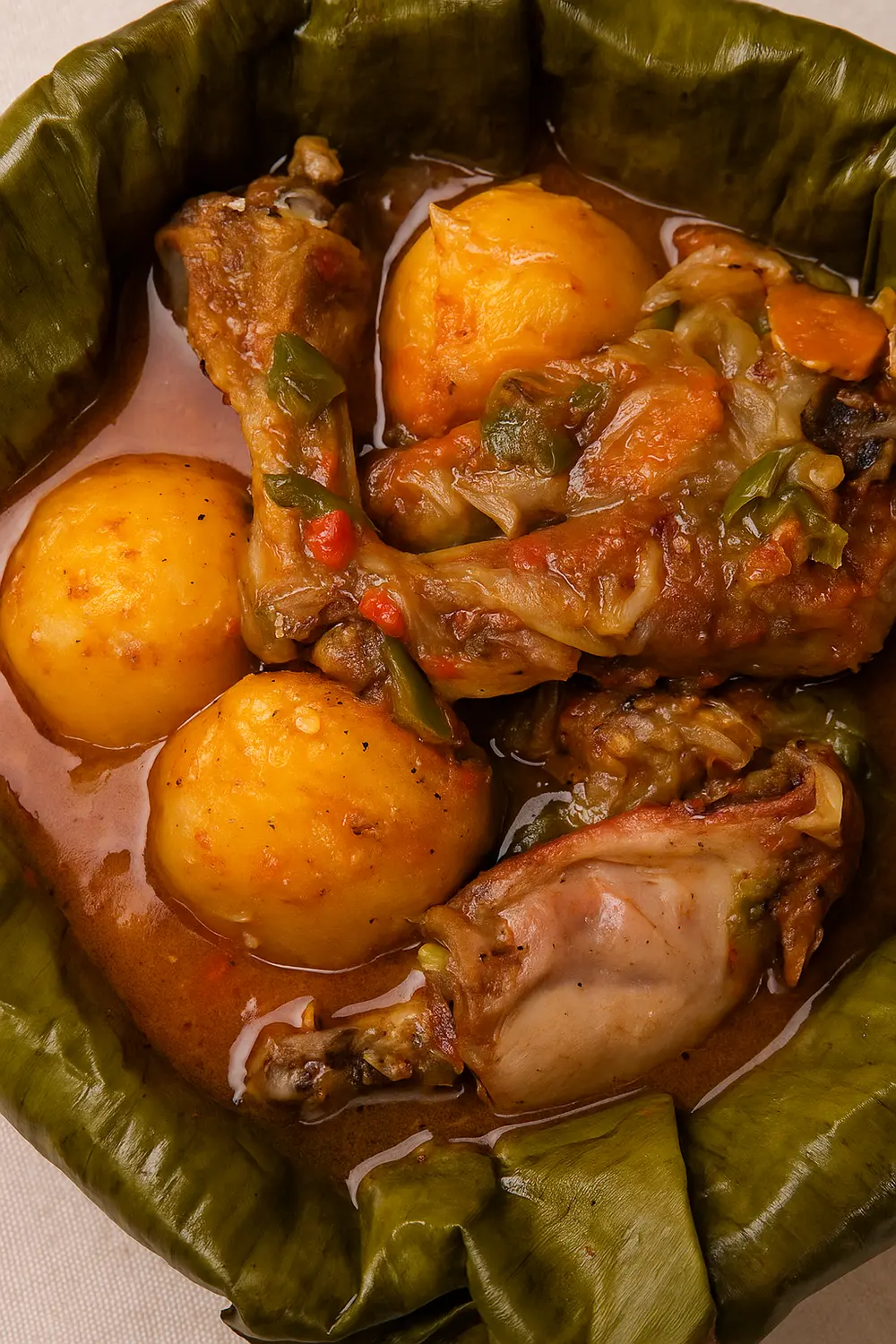
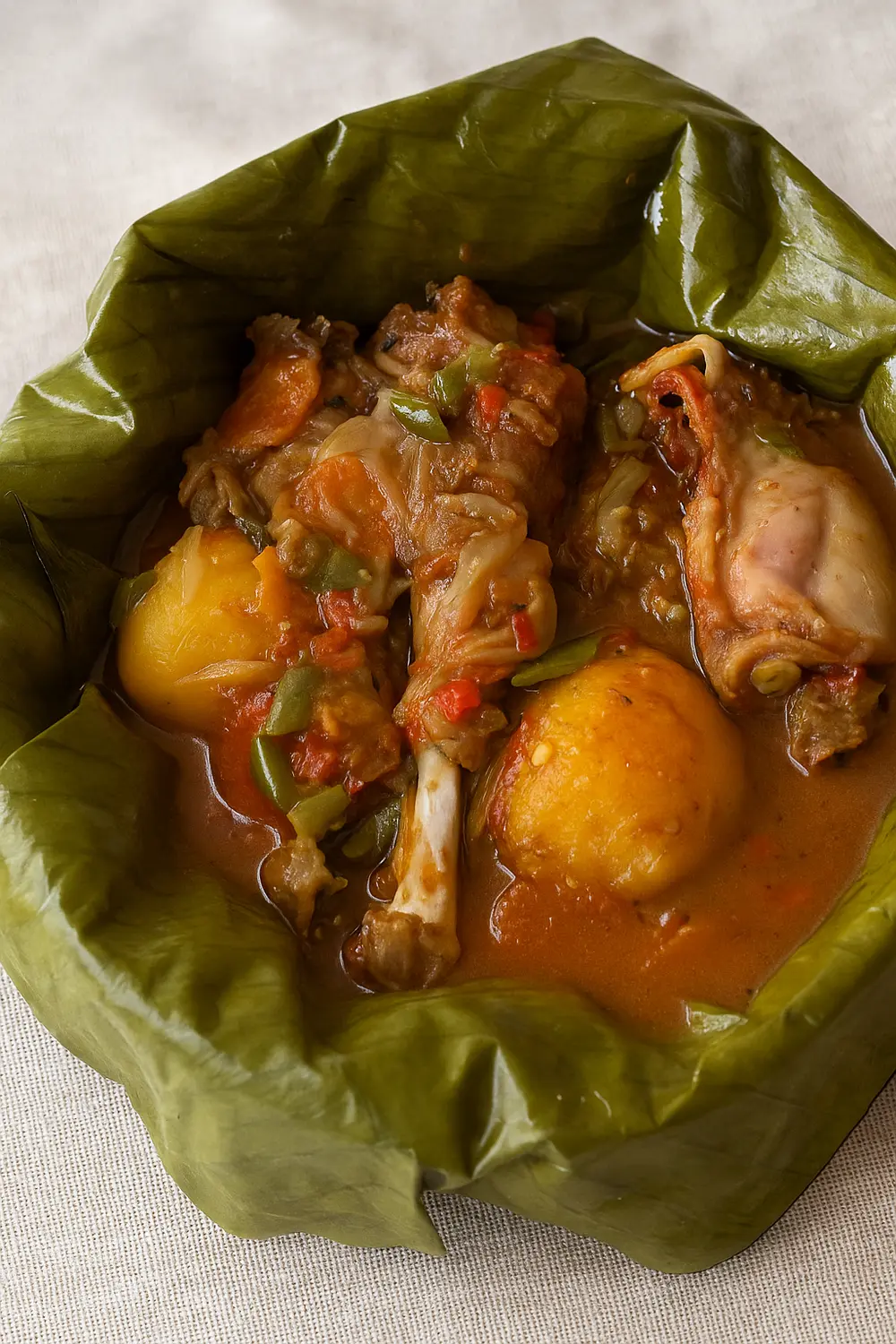
Luwombo (or oluwombo) is a traditional Ugandan dish where meat (typically chicken, fish, or beef) and vegetables are prepared in a rich sauce and then steamed for several hours inside tightly sealed banana leaf parcels. Leaf-steaming keeps stews moist. Slow-steaming basics from Healthline walk through balanced plates.
This classic luwombo chicken stew recipe features smoked chicken, chunky white potatoes, and fresh vegetables simmered in a rich sauce, all sealed within banana leaves and slowly steamed for unmatched tenderness and flavor.
The banana leaves, besides adding a subtle smokiness, also serve as nature’s cookware, keeping the stew moist, tender, and flavorful while infusing it with a mild earthy aroma.
Luwombo’s origin traces back to the Buganda Kingdom in 1887, when a royal chef named Kawuuta pioneered the art of steaming meat inside smoked banana leaves and served it to Kabaka Mwanga II.
It was considered a dish fit for royalty, an artful way to serve meats, vegetables, and sauces wrapped in banana leaves, then steamed gently to perfection.
Over time, it became a dish for everyone, especially during communal celebrations like Christmas, weddings, and traditional ceremonies.
Today, luwombo stands as a proud symbol of Ugandan culinary identity, combining natural ingredients, simple preparation, and an unparalleled depth of flavor.
Key Ingredients of This Luwombo Chicken Stew Recipe
The magic of chicken luwombo lies in the integrity of its core ingredients, which balance rich, earthy flavors with the fresh aroma of the steaming vessel itself.
1. Chicken Thighs or Leg Quarters
- While boneless meat is an option, using bone-in pieces provides superior flavor depth during the extended steaming.
- Bone-in chicken, or at least boneless skinless thighs, are preferred because they stay moist and can withstand the long cooking time without drying out.
- For the most authentic flavor, free-range chicken is highly recommended, as it has a firmer texture and a deeper, more natural taste than store-bought broilers.
2. Fresh Banana Leaves
- Banana leaves act as a natural, sealed steamer basket, preventing moisture loss and imparting a subtle, fresh, earthy aroma to the chicken and sauce.
- If banana leaves aren’t available, use parchment paper or aluminum foil, but note that these alternatives lack the flavor and aroma that make luwombo chicken stew unique.
3. Aromatic Vegetables
- Onions, tomatoes, garlic, ginger, carrots, and bell peppers form the classic foundation of the luwombo chicken stew flavor.
- Onions provide depth and sweetness, and the tomatoes form the base of the stew, giving it a bright color, natural acidity, and balanced sweetness.
4. White Potatoes
- White potatoes are often added to the packet to absorb the sauce and make the meal substantial.
- Their starch thickens the gravy slightly during steaming and creates a highly satisfying chicken stew.
5. Coconut Milk (or Water)
- Coconut milk provides creaminess and a subtle nutty flavor that balances the acidity of the tomatoes and gives the sauce a smooth, velvety consistency.
- You can substitute with heavy cream, plain water, or chicken broth for a lighter version.
6. Spices and Seasoning
- Traditional seasonings often include curry powder, ground cumin, chicken masala, coriander, salt, pepper, and royco or bouillon cubes to enhance the savory, complex profile.
- You can make your own spice mix using turmeric, cardamom, cinnamon, or nutmeg for a custom flavor.
- If you don’t have all the spices, a basic curry powder and stock cube combination still works well.
Essential Tools Needed for This Slow Cooker Chicken Stew
To prepare authentic chicken luwombo, you’ll need a mix of traditional and modern kitchen tools:
- Charcoal Stove (Sigiri): For smoking the chicken and achieving that authentic, smoky flavor. You can use an oven or stovetop smoker as an alternative.
- Tongs: For safely turning the chicken over the charcoal or while handling hot banana leaves.
- Large Stock Crockpot or Dutch Oven: This needs to be large enough to hold all eight chicken luwombo packets comfortably while accommodating the trivet and the steaming water below it.
- Steaming Rack, Steamer Basket, or Trivet: The luwombo packets must be suspended above the boiling water to ensure they are steamed by indirect heat, rather than being boiled directly.
- Steaming Rack or Banana Stem Pieces: Used to elevate the packets above the water level so the steam does the cooking.
- Ekibo (Woven Basket): Traditionally used to hold the banana leaves while assembling the luwombo. A heatproof bowl or plastic colander works as an alternative.
- Wooden Mingling Stick or Long Spatula: Helps create a small space for refilling hot water during steaming without disturbing the packets.
- Kitchen Twine or Banana Fiber: For securing the tops of the banana leaf packets.
- Knife and Cutting Board: For chopping vegetables and preparing the chicken.
- Large Mixing Bowl: For marinating the chicken and combining ingredients.
- Pan or Skillet: For sautéing onions, tomatoes, and spices to make the stew base.
- Ladle or Large Spoon: To scoop and pour the stew mixture into the banana leaves.

Nutritional Benefits of Luwombo Chicken Stew
Banana-leaf steaming keeps everything moist without added fats, making this Ugandan classic as nourishing as it is flavorful.
- Forty Grams of Protein: Smoked chicken delivers around forty grams of protein per serving for long-lasting fullness. For background, see the one-pot stew guidance from NIDDK.
- Gentle Cooking Method: Sealed steam heat needs no frying oil at all, keeping the ingredient list remarkably clean.
- Vitamin C Included: Thirty-five milligrams of vitamin C per serving from fresh vegetables supports everyday immune function.
- Potassium from Potatoes: Hearty potatoes contribute potassium for healthy fluid balance in every comforting bowl.
Why You’ll Love This Luwombo Chicken Recipe
The love for luwombo chicken transcends taste; it is a full, multisensory experience steeped in history and hospitality.
- Unrivaled Tenderness: The slow, contained steaming process is gentler than simmering, allowing the chicken meat to become exceptionally tender and succulent as it steams in its own concentrated juices.
- Intense, Concentrated Flavor: Because the packets are tightly sealed, all the volatile aromatic compounds from the spices are trapped and forced back into the meat and sauce, creating a deeply concentrated and savory flavor.
- A Unique, Earthy Aroma: When a banana leaf is steamed, it releases a subtle, sweet, and uniquely earthy scent that permeates the stew, which you instantly notice upon unwrapping your chicken luwombo packet.
- Excellent Source of Protein: With approximately 40 grams of protein per serving, this dish is highly satiating and vital for muscle maintenance and repair.
- High in Potassium: The use of chicken and various vegetables provides a significant amount of potassium, which supports blood pressure regulation.
- Source of Fiber and Iron: The addition of dietary fiber vegetables and potatoes aids in digestion, and the chicken also contributes valuable dietary Iron.
- Abundant Vitamins: Ingredients like tomatoes, carrots, and peppers provide essential vitamin A (important for vision) and vitamin C (an antioxidant).
What to Serve with Chicken Luwombo
Luwombo is traditionally served as the main course, designed to be enjoyed alongside starchy side dishes that absorb the rich sauce:
- Matooke (Mashed Green Bananas): The most traditional accompaniment in Uganda, where steamed green bananas are mashed into a texture similar to firm mashed potatoes, perfect for soaking up the gravy.
- Rice: Simple steamed white or brown rice is an excellent foil for the rich, earthy flavor of the luwombo.
- Ugali (Posho): A stiff dough made from maize flour, common across East Africa, which is used like a bread to scoop up the chicken stew.
- Chapati (flatbread): Soft and chewy, perfect for scooping up sauce and chicken.
- Root Vegetables: Other starchy vegetables like yams or sweet potatoes are sometimes served alongside.
- Sautéed Greens: Often accompanied by simple, fresh sautéed vegetables or a side dish like bean stew to balance the meal.
Pro Tips for Making the Best Luwombo Chicken Stew
These expert tips focus on maximizing the flavor and ensuring the technique results in the perfect, tender stew.
1. Smoke the Chicken Slowly
Take your time when smoking the chicken over the charcoal stove (sigiri). The slower the smoking process, the richer and deeper the flavor becomes. Slow smoke builds flavor without additives. Harvard's Nutrition Source shares slow-cooking flavor notes.
Keep the heat medium and add a few green banana peels or moistened wood chips to the coals to release gentle smoke.
This prevents the chicken from burning while infusing it with that signature earthy, smoky aroma that defines authentic luwombo.
If using an oven, roast at a moderate temperature (around 400°F/200°C) until golden and aromatic; rushing this step will result in bland meat.
2. Use Only Hot Water for Steaming
When monitoring the water level in the steaming pot, especially during the 2½ to 3-hour cooking process, only top it up with hot or boiling water.
Adding cold water lowers the internal temperature, interrupting the steady steam circulation that cooks the chicken evenly, and can delay the cooking process and affect the tenderness of the meat.
While adding water, avoid pouring it directly over the luwombo packets, as this can loosen or tear the leaves and cause water to seep inside, diluting the rich stew and washing away its deep flavor.
Instead, use a wooden mingling stick or a long spatula to gently push through the side of the pot, creating a small opening which you can use to pour the water very gently.
3. Choose the Right Banana Leaves
Young banana leaves are preferred because they are flexible and easy to fold without tearing, making them ideal for wrapping.
However, they must still be softened over a flame to prevent cracking. Avoid overly old or brittle banana leaves as they tend to break, causing the stew to leak during steaming.
Always inspect your leaves for holes and layer two if needed to ensure the packet stays intact and sealed.
4. Don’t Over-Tighten the Wraps
When securing your banana leaf packets with banana fiber or kitchen twine, tie them snugly but not too tight.
Over-tightening can cause pressure buildup during steaming, which may lead to tearing or splitting of the leaves.
A secure but flexible seal allows the steam to circulate evenly inside the pouch while keeping all the rich juices trapped within.
The goal is to create a natural pressure chamber that slow-cooks the chicken in its own aromatic sauce.
5. Layer Extra Banana Leaves on Top
Before covering the crockpot or Dutch oven with its lid, always place an extra layer or two of banana leaves over the chicken luwombo packets.
This helps trap moisture, retain heat, and enhance the signature smoky-earthy scent of the dish.
It also protects the luwombo packets from direct condensation dripping from the lid, which could dilute the stew’s flavors.
Final Remarks
This luwombo chicken recipe is more than just a stew; it’s a piece of Ugandan heritage wrapped in the aroma of banana leaves and slow-cooked to perfection.
With its smoky, tender chicken, creamy tomato stew base, and the earthy fragrance from the banana leaves, this dish beautifully balances tradition, flavor, and comfort.
Feel free to add more vegetables like green peas, eggplant, or mushrooms for extra depth, or swap the chicken for goat, beef, or even fish for a different twist on this timeless classic.
Pair your luwombo with steamed matooke, fluffy rice, or warm chapati for a truly authentic Ugandan meal that brings family and friends together around the table.
You’ll find the complete recipe details and cooking instructions below.
Keep exploring with our backyard-style grilled chicken and ice-and-fruit dessert cups, plus a chocolate strawberry cake, mango-topped shrimp tacos, and smoked holiday prime rib, plus a slow-stew whole-foods week and stew-batch protein boxes on Santiago Maricel.
This article is for information only and is not medical advice. Read our full disclaimer.