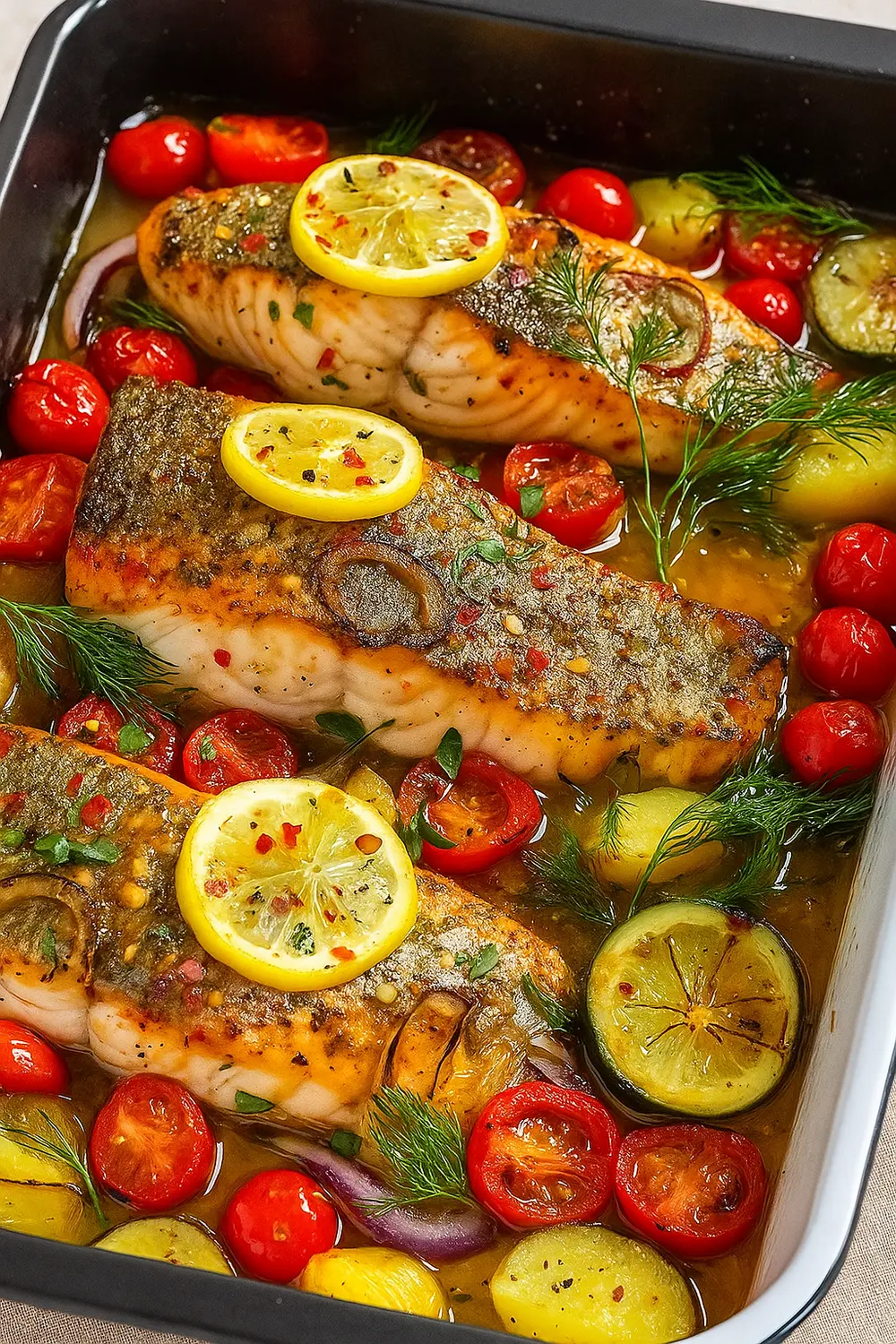
This easy baked salmon recipe features tender, skin-on baked salmon fillets, cherry tomatoes, zucchini, and red onion, all roasted in a flavorful lemon-garlic herb sauce.
It’s the kind of dish you can throw together on a busy weeknight, yet it still feels special enough to serve when you’re hosting or celebrating something meaningful.
High in protein, naturally gluten-free, and loaded with vibrant flavors, this Mediterranean salmon recipe delivers restaurant-quality results without any complicated steps. Sheet-pan fish dinners balance fast. Fish-dinner basics from Healthline walk through balanced plates.
The combination of extra-virgin olive oil, fragrant dried oregano, fresh lemon, and sweet burst tomatoes creates a rich, flavorful pan sauce that tastes like it came from a coastal kitchen.
Beyond its taste, baked salmon is packed with Omega-3 fatty acids (EPA and DHA), the good fats linked to brain health, cardiovascular support, reduced inflammation, and overall wellness. Those fats are the reason salmon headlines healthy patterns. Harvard's Nutrition Source shares salmon omega-3 notes.
This oven baked salmon recipe is very easy to make, serves four, and pairs beautifully with fresh salads, roasted vegetables, or a light rice dish.
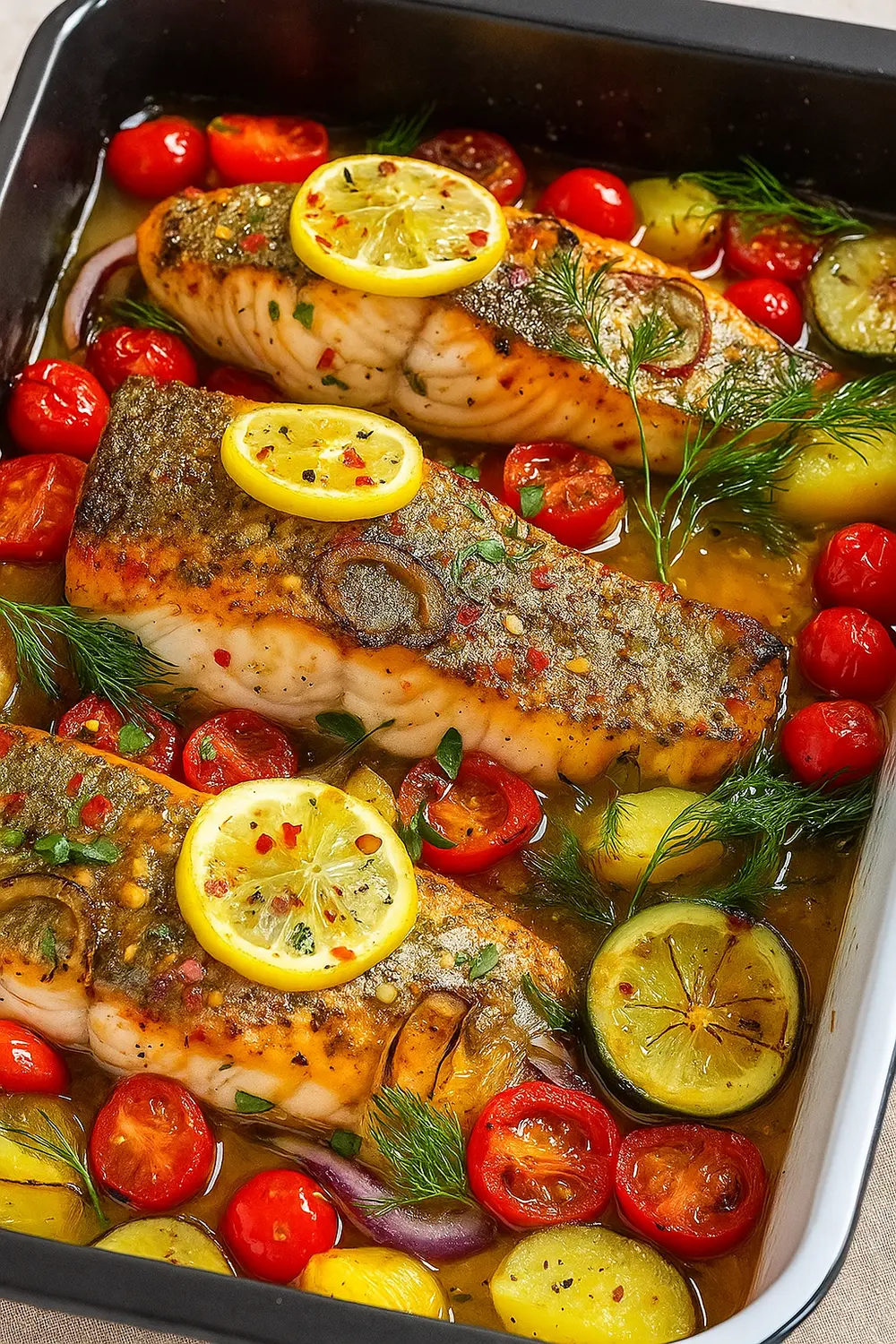
Key Ingredients for This Easy Baked Salmon Recipe
This baked salmon recipe is constructed around fresh, high-quality ingredients, emphasizing the bright, clean flavors typical of the Mediterranean region.
1. Salmon Fillets (Skin-on)
- Using skin-on salmon fillets is critical for the baking method, as the skin acts as a natural protective barrier, insulating the delicate flesh from the hot pan and preventing it from sticking.
- The skin also contains healthy fats that gently render during cooking, adding natural richness to the fish and vegetables and giving the salmon a tender, melt-in-your-mouth texture.
2. Extra-Virgin Olive Oil
- Extra-virgin olive oil binds the spices to the vegetables and salmon, helping the flavors penetrate evenly while keeping everything lightly coated to prevent sticking during baking.
- The olive oil also adds moisture and protects against oven heat, keeping the salmon tender and helping the vegetables caramelize without drying out.
3. Cherry Tomatoes & Zucchini
- The tomatoes add a sweet, tangy acidity that brightens the dish, while zucchini provides a mild, tender texture that complements the fish.
- The high water content in these vegetables allows them to release juices while roasting, which mingle with the herbs and seasonings to coat the salmon and enrich every bite.
4. Garlic, Dried Oregano, & Paprika
- Garlic brings a pungent, savory depth, while oregano contributes earthy, slightly bitter herbal notes that define the regional character of the dish.
- Smoked paprika adds warmth, subtle smokiness, and vibrant color to both the fish and vegetables.
5. Fresh Lemon
- Fresh lemon adds bright acidity that balances the rich salmon while slowly infusing the fillets during baking, enhancing their natural flavor without overpowering it.
- A final squeeze of fresh juice just before serving sharpens the dish, cutting through the richness of the fish and adding a refreshing, aromatic note.
6. Sea Salt & Red Pepper Flakes
- Kosher salt is used in the dry-brining process to season the salmon internally, drawing out moisture and enhancing natural flavors.
- Red pepper flakes add visual appeal and a gentle, balancing heat that contrasts with the richness of the salmon.
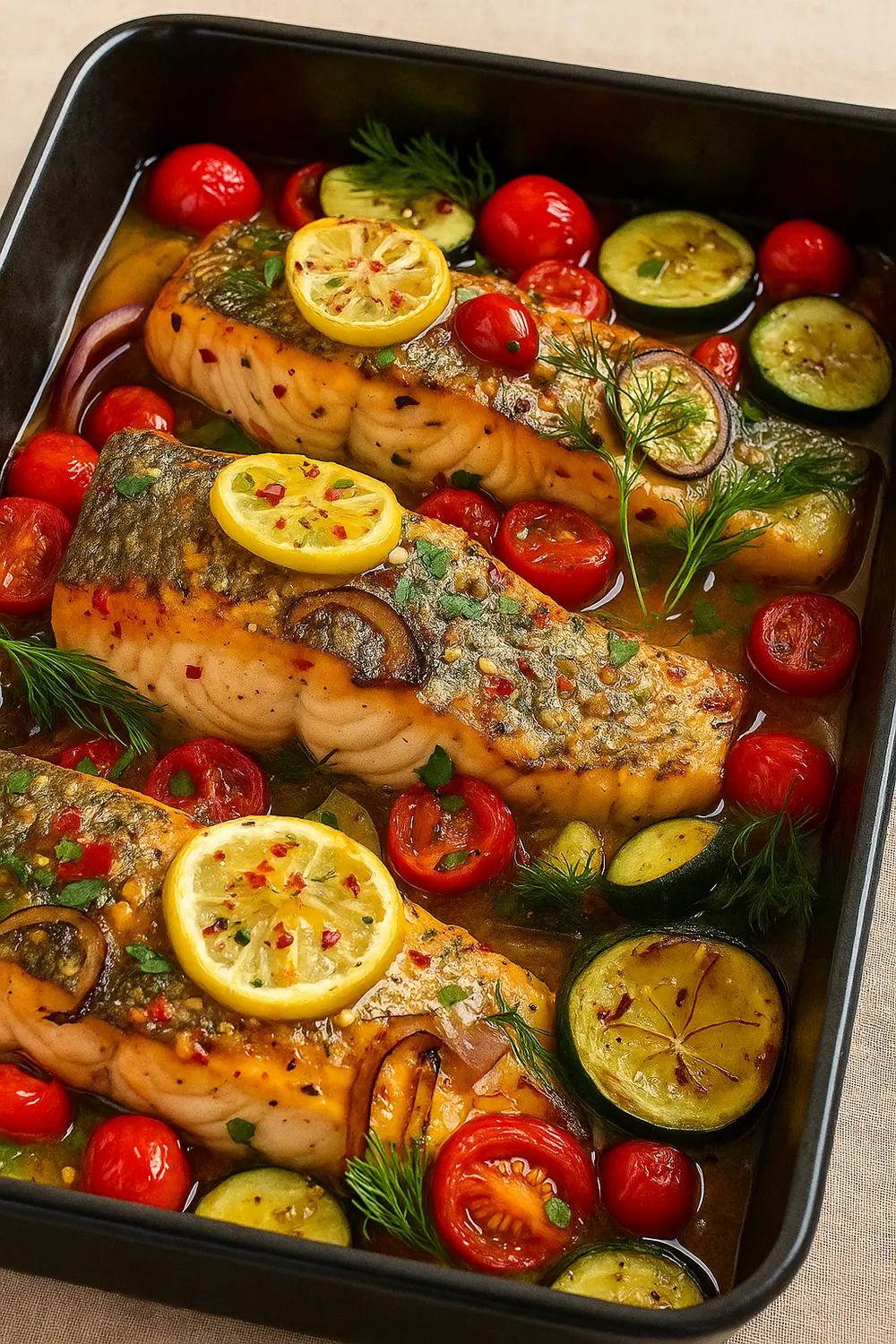
Essential Tools Needed for This Mediterranean Salmon Recipe
While the recipe is simple, having the right kitchen tools ensures the best outcome and easiest cleanup.
- Sturdy Baking Tray: A large, dark half-sheet pan (18×13 inches) or a comparable heavy-duty baking dish prevents overcrowding, allowing the fish and vegetables to roast and caramelize evenly.
- Parchment or Foil: Using parchment paper prevents the delicate salmon skin from adhering to the metal surface and makes cleanup nearly instantaneous.
- Large Mixing Bowl: Required for tossing the vegetables to ensure they are thoroughly and evenly coated with the olive oil and spice mixture before roasting.
- Sharp Knife and Cutting Board: Consistency in size, particularly for the zucchini rounds and onion wedges, is vital for ensuring they cook evenly in the specified pre-roast time.
Nutritional Benefits of Oven Baked Salmon
Sheet-pan salmon with vegetables might be the highest-return dinner in this collection. Minimal effort, maximum nourishment, genuine restaurant flavor.
- Thirty-Eight Grams of Protein: Salmon fillets deliver around thirty-eight grams of complete protein per serving for lasting satisfaction. For background, see the sheet-pan salmon records on PubMed.
- Omega-3 Richness: Oily fish brings the long-chain omega-3s most diets underdeliver, supporting heart and brain health.
- Potassium Powerhouse: With over a thousand milligrams of potassium per serving, this dinner supports healthy blood pressure alongside balanced eating.
- One-Pan Vegetables: Roasting everything together means vegetables absorb lemony pan juices instead of needing added fats.
Why You’ll Love This Oven Baked Salmon
This oven baked salmon recipe is highly favored by home cooks because it delivers maximum flavor with minimum effort and mess.
- It’s a True One-Pan Wonder: This one-pan meal of salmon, vegetables, and healthy fat cooks together, making it easy to prepare and minimizing cleanup, perfect for busy weeknights.
- Speed and Efficiency: From the moment you start prepping to the moment you serve, the total time is under 40 minutes, with the active cooking time being only about 18 to 25 minutes.
- Perfect for Meal Prep: Oven baked salmon stores well in the refrigerator for 3 to 4 days in a sealed container, offering convenient and healthy lunches throughout the week.
- Heart-Healthy Omega-3 Fatty Acids: Salmon is rich in Omega-3s (EPA and DHA), essential “good fats” that support heart health, reduce inflammation, and boost brain function.
- High-Quality Protein: A 6-ounce serving of baked salmon delivers 38 grams of protein, supporting muscle repair, satiety, and overall metabolism, making it a great high protein meal.
- Fiber and Antioxidants: Roasted vegetables like zucchini, tomatoes, and red onion add fiber and antioxidants, supporting digestion, regulating blood sugar, and making the dish a healthy, diabetic-friendly meal.
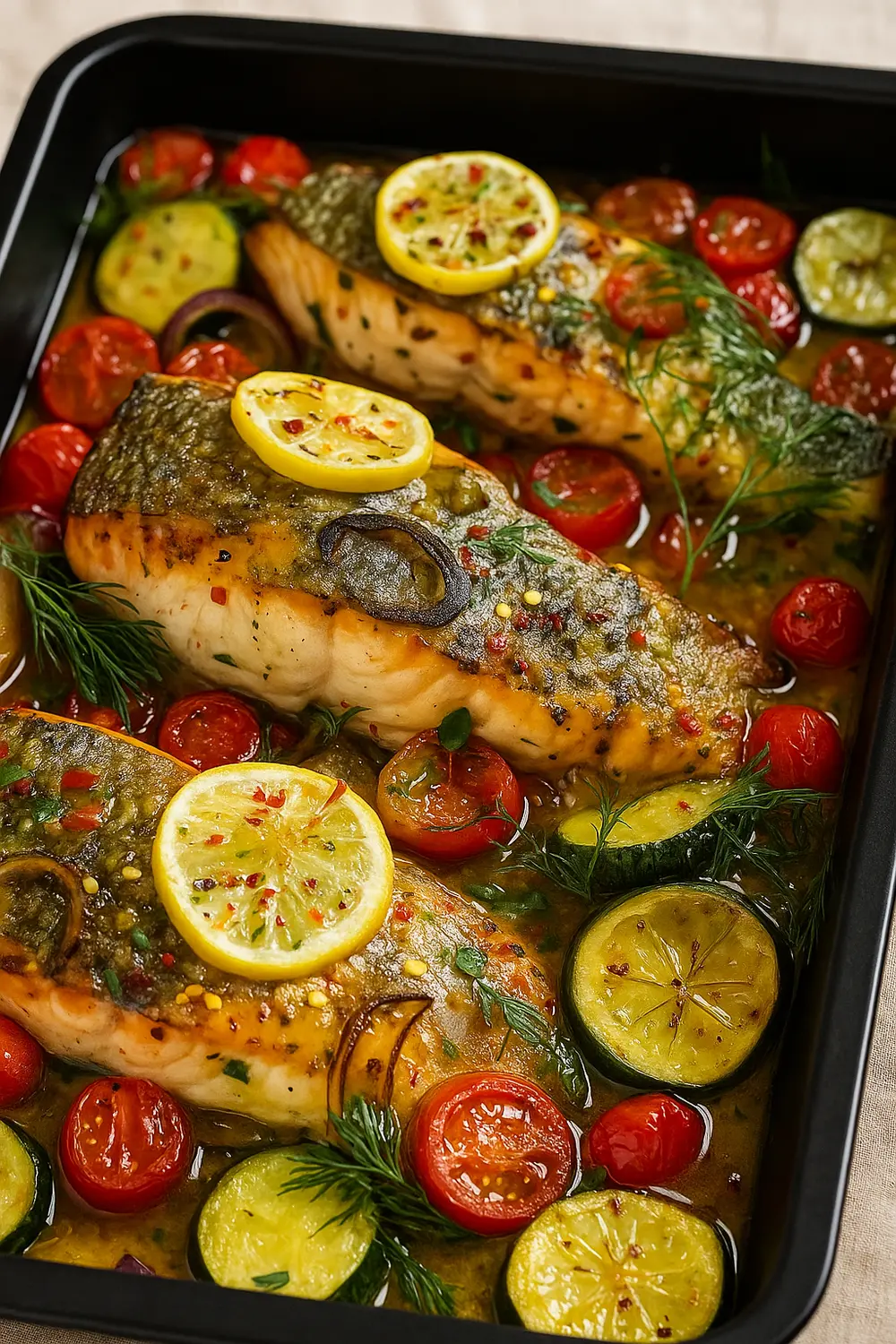
What to Serve with Baked Salmon
This oven baked salmon is already a complete meal, but for those seeking to stretch the meal or add a side of complex carbohydrates, here are classic pairings:
- Simple Lemon-Herb Rice or Quinoa: A side of plain rice, pilaf, or quinoa cooked with a little extra lemon zest, parsley, and a touch of olive oil adds substance without competing with the bold flavor of the tray bake.
- Couscous with Feta and Cucumber: A traditional light grain, couscous, tossed with chopped cucumber, fresh mint, and crumbled feta, creates a cool, fluffy contrast to the fish.
- Crispy Roasted Potatoes: Serving with small, roasted baby potatoes tossed in oregano (perhaps pre-roasted alongside the other vegetables) provides a satisfying starchy element to soak up the flavorful lemon-garlic sauce.
- A Simple Green Salad: A basic arugula or mixed greens salad, lightly dressed with a classic lemon-herb vinaigrette, offers a fresh, peppery counterpoint to the cooked elements.
Pro Tips for the Best Baked Salmon
Achieving the best baked salmon consistently relies on understanding how heat affects the delicate fish protein. These tips are drawn directly from professional chef techniques to maximize texture and flavor.
1. Always Dry Brine the Salmon
This method is the most effective way to prevent the notorious “white stuff” (albumin) that forms on overcooked salmon.
By generously sprinkling the fillets with Kosher salt and letting them rest for 15 minutes, the salt begins to draw out the albumin protein before cooking.
After the resting period, rinsing and patting the fillets dry stabilizes the flesh, helps retain maximum moisture, and results in a cleaner, more visually appealing fillet.
2. Use Moderate Heat and Cook Low
While some baked salmon recipes use high heat, the gentler approach (375°F or even lower at 250°F) prevents the muscle fibers from seizing up too quickly.
Cooking too aggressively pushes out albumin and moisture, so using moderate heat roasts the vegetables while keeping the salmon tender and juicy.
3. Know Your Target Temperature
The FDA recommends that cooked salmon reach an internal temperature of 145°F (63°C) to ensure it is safe to eat, measured at the thickest part of the fillet.
When baked salmon is done, it should flake easily with a fork, and the center should be opaque yet still moist, indicating it is fully cooked without being dry.
4. Bake Skin-Side Down
When baking salmon, place the fillets skin-side down on the baking tray so the skin acts as a protective barrier, shielding the delicate flesh from direct heat.
This natural layer of fat not only prevents sticking but also helps the fish cook evenly, keeping it moist and tender for a perfectly cooked fillet.
Final Remarks
This oven baked salmon delivers perfectly roasted, tender salmon paired with caramelized vegetables and bright, fresh herbs, creating a dish that’s both wholesome and flavorful.
Feel free to customize the recipe by adding extra vegetables like bell peppers or asparagus, swapping in a different fish such as cod, or sprinkling with your favorite cheese or nuts for added texture and flavor.
Serve it alongside a crisp green salad, quinoa, or warm crusty bread to make a complete, satisfying meal that’s ideal for weeknights or entertaining.
You’ll find the full list of ingredients and step-by-step instructions just below.
Keep exploring with our pepper-charred inasal chicken and shaved-ice party cups, then try char-kissed BBQ thighs, a chowdery sourdough seafood bowl, and a gochugaru cucumber salad, and a sheet-pan pescatarian week plus an omega-first fish plan from Santiago Maricel.
This article is for information only and is not medical advice. Read our full disclaimer.