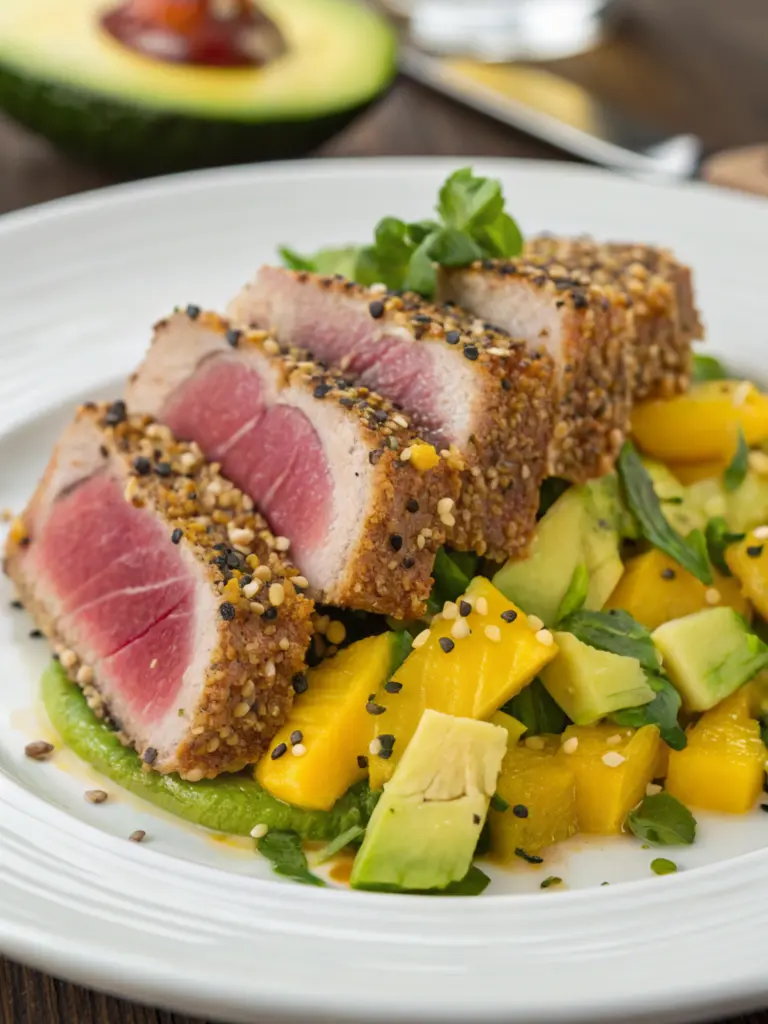
This sesame crusted tuna recipe is a healthy, high‑protein dish that’s naturally gluten-free, featuring perfectly seared sesame tuna steaks with honey‑lime mango salsa and creamy avocado.
Imagine succulent, pink-centered tuna steaks nestled under a golden nutty crust, then crowned with a rainbow of diced mango, avocado, red onion, and cilantro; this is sesame seed crusted tuna at its most colorful and delicious.
As a chef, I fell in love with this combination years ago during a Hawaiian-inspired dinner party. The sweet-tangy salsa cuts through the rich tuna, and the creamy avocado adds a buttery counterpoint.
It’s not only a mouthwatering dish but also highly nutritious. Lean tuna is an excellent source of protein and omega-3s. (Yellowfin tuna “eats like a steak but with all the health benefits of fish). Tuna omega-3 research is published openly. Tuna omega-3 records on PubMed carry the methods.
When it comes to sesame seared tuna, attention to detail makes all the difference. First, fish selection: I always recommend sashimi-grade yellowfin or bigeye tuna (often labeled “ahi”).
Get ready to bring the restaurant to your kitchen with this fantastic sesame seared tuna recipe.
Key Ingredients for Sesame Crusted Tuna Steaks
Here are the key ingredients you will need for sesame crusted tuna steaks:
1. Fresh Tuna Steaks (Yellowfin or Ahi)
- Look for high-quality, sushi-grade tuna, about 1 to 1½ inches thick. Choose yellowfin or ahi tuna steaks for a meaty texture and mild flavor. This type of tuna is perfect for searing, it stays tender and slightly rare in the center.
2. White Sesame Seeds
- Adds a nutty flavor and toasty aroma. When seared, they create a golden crust that enhances the texture.
3. Black Sesame Seeds
- Gives visual contrast and a slightly earthier taste. Mixing black and white sesame seeds makes the dish more striking restaurant‑style look.
4. Soy Sauce or Tamari
- For marinating or brushing the tuna before crusting. Provides a salty, umami kick that balances the mild tuna. Use gluten‑free tamari if needed.
5. Neutral Oil (Avocado or Grapeseed Oil)
- For searing at high heat without burning. A neutral, high–smoke‑point oil ensures the sesame seeds crisp up quickly while preventing the tuna from sticking.
6. Fresh Lime Juice
- Bright acidity to cut through the richness of the fish and seeds. Also used in accompanying salsa or garnish.
7. Sesame Oil
- For brushing or as part of the marinade. Adds a rich, nutty undertone. Drizzle sparingly after searing for an extra layer of sesame nuttiness.
Equipment Needed to Make Sesame Crusted Tuna Steaks
You’ll need the right culinary tools to execute a perfect sear and crust:
- Cast‑Iron Skillet or Heavy‑Bottomed Pan: Retains and distributes high heat evenly for a flawless crust. Preheat until oil just begins to shimmer or lightly smoke.
- Sharp Chef’s Knife: For clean, precise slices without tearing the crust. A dull knife will crush the seeds and tear the fish.
- Cutting Board: A stable surface for prepping tuna and other ingredients. Use a separate board for fish to avoid cross‑contamination.
- Shallow Dish or Plate: For spreading out sesame seeds in an even layer, which makes crusting the tuna quick and uniform.
- Tongs: To flip tuna steaks safely and toast the edges. Grip gently to avoid breaking the crust.
- Mixing Bowl: For any salsa or marinade prep. A chilled bowl helps keep ingredients like avocado crisp.
- Paper Towels: To thoroughly pat the tuna dry is essential for a crisp, even sesame crust.
Nutritional Benefits of Sesame Crusted Tuna Steaks
Sesame crusted tuna steaks are not only delicious but also pack a nutritional punch:
1. High Protein
- Muscle Repair & Growth: Protein supplies the amino acids, especially leucine, needed to repair microtears in muscle fibers after exercise, supporting strength gains and recovery.
- Satiety & Weight Management: A high‑protein meal increases feelings of fullness by stimulating satiety hormones (peptide YY and GLP‑1) and reducing ghrelin, which can help control overall calorie intake.
- Metabolic Health: Protein has a higher thermic effect of food (TEF) than fats or carbohydrates, meaning your body burns more calories digesting and metabolizing protein, supporting a healthy metabolism.
2. Rich in Omega‑3 Fatty Acids
- Heart Health: EPA and DHA help lower triglyceride levels, reduce blood pressure slightly, and decrease the risk of arrhythmias by stabilizing heart cell membranes. They also reduce inflammation in blood vessels, which can slow the progression of atherosclerosis.
- Brain Function & Mood: DHA is a structural component of brain cell membranes and supports neurotransmission. Adequate DHA intake is linked to better cognitive performance, memory, and mood regulation and may reduce the risk of depression.
- Anti‑Inflammatory Effects: Omega‑3s give rise to resolvins and protectins, bioactive molecules that actively reduce inflammation. This can benefit joint health, reduce symptoms of inflammatory conditions (like arthritis), and support overall immune function.
3. Vitamin D
- Bone & Immune Health: Vitamin D enhances calcium and phosphorus absorption in the gut, crucial for maintaining strong bones and teeth. It also modulates innate and adaptive immune responses, reducing risk of infections and autoimmune flare‑ups.
4. Potassium
- Fluid & Electrolyte Balance: Potassium is the primary intracellular cation, regulating cell volume and fluid balance.
- Blood Pressure Regulation: By countering sodium’s effect, higher potassium intake helps relax blood vessel walls and excrete excess sodium, contributing to lower blood pressure.
- Muscle & Nerve Function: Essential for proper muscle contraction (including the heart) and nerve impulse transmission, reducing risk of cramps and supporting cardiovascular rhythm.
5. Selenium
- Antioxidant Defense: A key component of glutathione peroxidase, selenium helps neutralize harmful reactive oxygen species, protecting cells from oxidative damage.
- Thyroid Function: Integral to the enzymes that convert thyroid hormone T4 into the active T3 form, supporting metabolism and energy regulation.
- Immune Support: Selenium enhances the proliferation of T‑cells and other immune responses, helping the body fight infections.
6. Dietary Fiber
- Digestive Health: High fiber foods promote regular bowel movements by adding bulk to stool and feeding beneficial gut bacteria, which produce short‑chain fatty acids that nourish colon cells.
- Blood Sugar Regulation: Slows carbohydrate absorption, preventing rapid blood sugar spikes and aiding in glycemic control.
- Cholesterol Management: Soluble fiber binds bile acids (made from cholesterol) in the gut, promoting their excretion and lowering blood LDL levels.
7. Vitamins A & C
- Vitamin A: Supports vision (particularly night vision), maintains healthy mucous membranes, and plays a role in immune function by supporting the integrity of skin and epithelial tissues.
- Vitamin C: A powerful antioxidant that regenerates other antioxidants (like vitamin E), supports collagen synthesis for skin and blood vessel health, and enhances iron absorption from plant foods.
8. High in Iron
- Iron is essential for hemoglobin formation, which transports oxygen in the blood, supporting energy levels and reducing fatigue.
- Helps maintain healthy cognitive function and supports immune cell proliferation.
What to Serve With Sesame Seed Crusted Tuna Steaks
Complement your sesame crusted tuna steaks with sides and beverages that enhance their flavors:
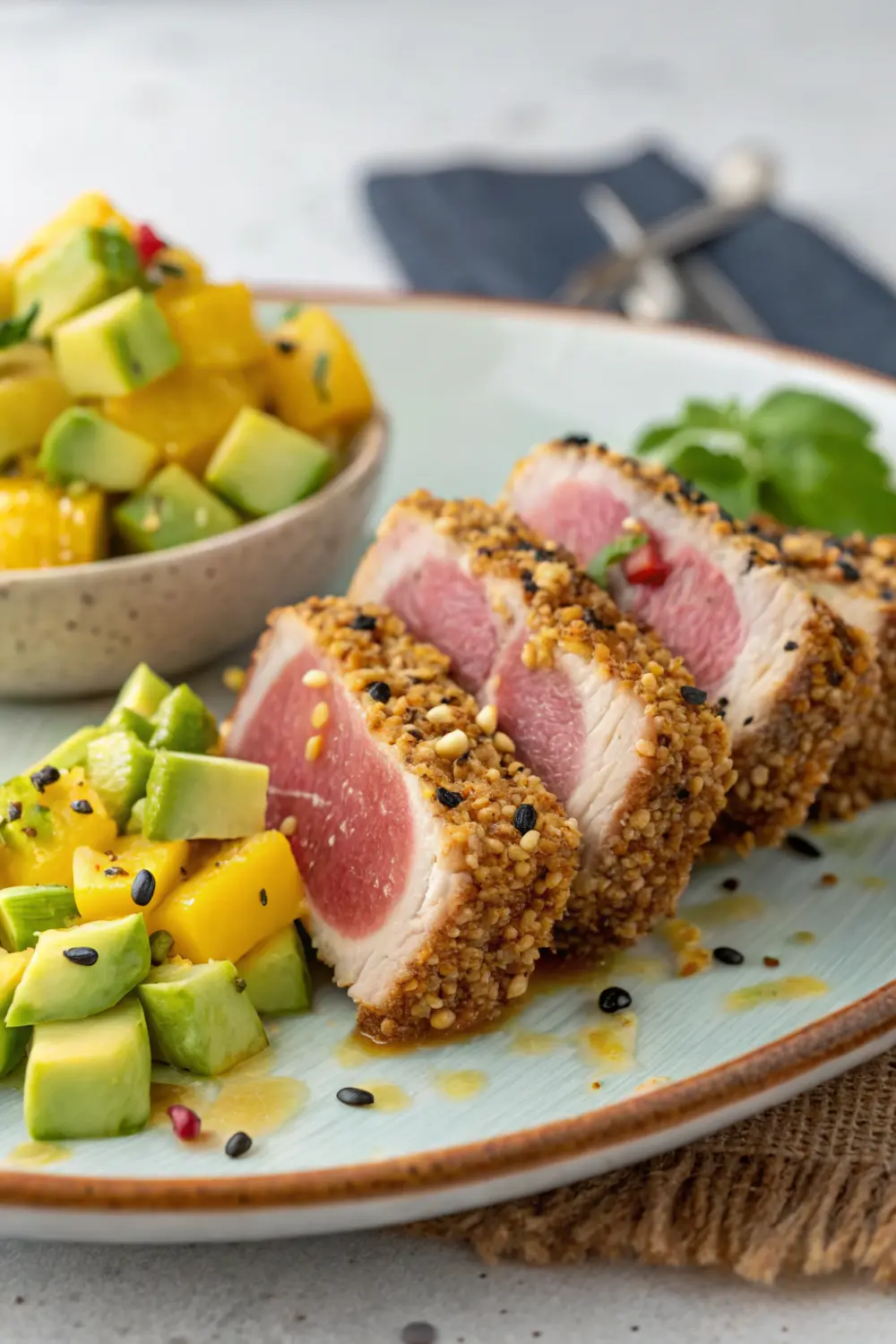
- Mango‑Avocado Salsa: Sweet, tangy, and creamy balances the nutty crust.
- Steamed Jasmine or Sushi Rice: Neutral base to soak up juices and salsa.
- Asian Slaw: Crisp cabbage, carrots, bell pepper tossed in a sesame‑ginger dressing.
- Seaweed Salad or Wakame: Offers a briny, umami‑rich contrast.
- Sriracha‑Mayo or Wasabi Aioli: Spicy‐creamy dipping sauce for extra kick.
- Lime Wedges & Cilantro Sprigs: Fresh garnishes that brighten every bite.
- Beverage Pairings: Sauvignon Blanc, dry Rosé, chilled Sake, or a light Japanese lager.
Quick Tips for Making the Best Sesame Seared Tuna Steaks
- High heat is crucial: A smoking-hot pan ensures a beautifully seared crust without overcooking the inside. Always preheat the skillet and use an oil like avocado or grapeseed oil.
- Pat tuna dry: Moisture is the enemy of a good sear. Patting the tuna dry helps the sesame seeds stick and promotes a crisp crust.
- Room temperature fish: Let frozen tuna thaw completely in the fridge (or a cold-water bath), and if time allows, bring it to room temperature before searing. This cooks it evenly.
- Don’t overcrowd the pan: Sear one or two steaks at a time so the pan stays hot. If too crowded, the tuna will steam rather than sear.
- Rest after searing: Always let the tuna rest a few minutes before slicing; this keeps it juicy.
- Slice against the grain: Cutting across the muscle fibers makes for more tender bites. Look for the lines in the meat and slice perpendicular to them.
- Season boldly: The sesame crust, salsa, and avocado flavors come together best with a good pinch of salt on the fish and in the salsa. Taste and adjust as you go.
- Prevent sticking: Use enough oil and don’t move the tuna around until the first side is fully seared. If it’s not lifting, wait a few more seconds.
- Salsa care: Keep the salsa chilled until plating. Spoon it on just before serving so the mango and avocado retain their fresh texture.
Final Remarks
Pink-centered tuna under a golden sesame crust with mango salsa alongside, this is the rare dish that eats light and luxurious at once.
Sear it fast, slice it thick, and serve immediately while the contrast is perfect.
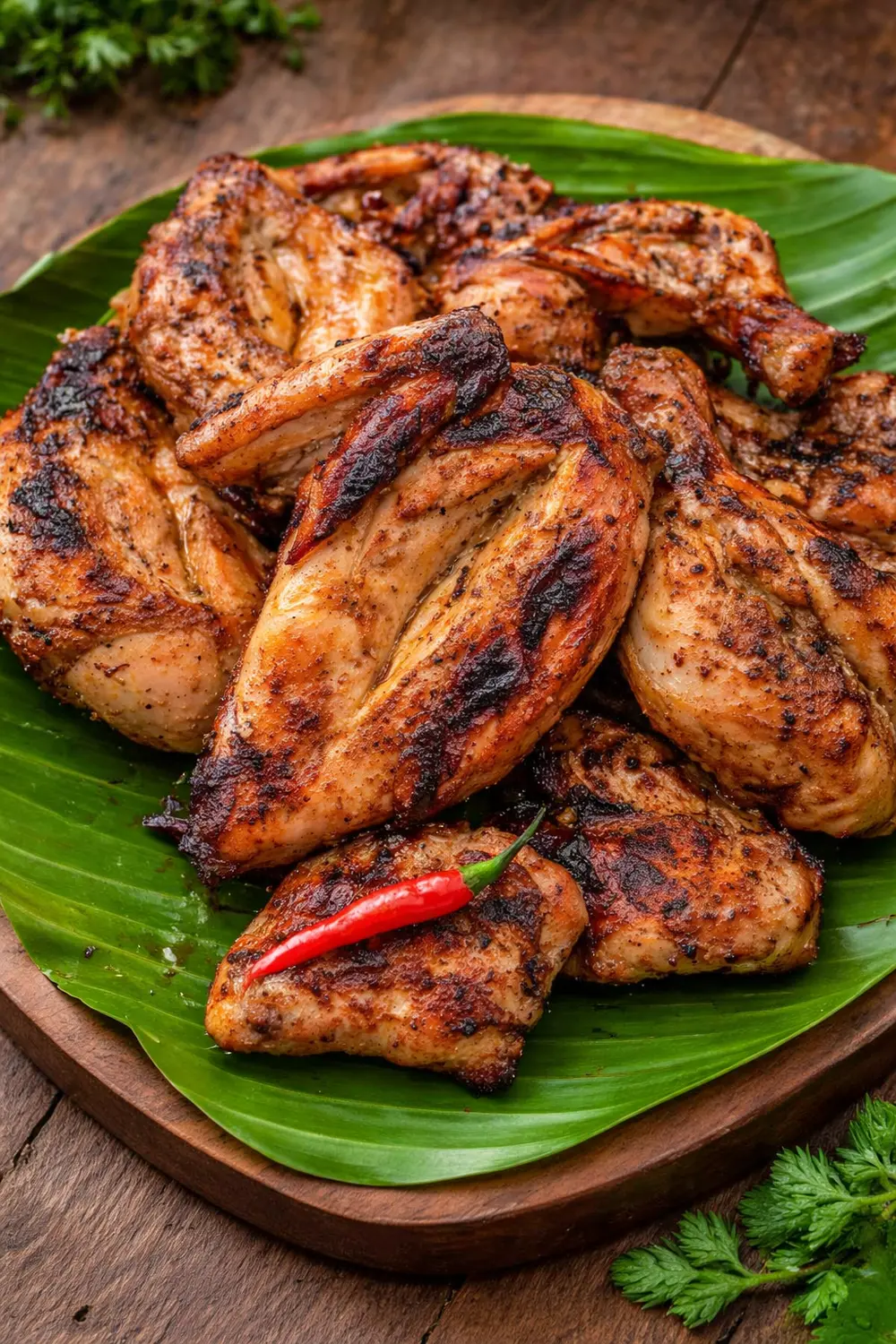
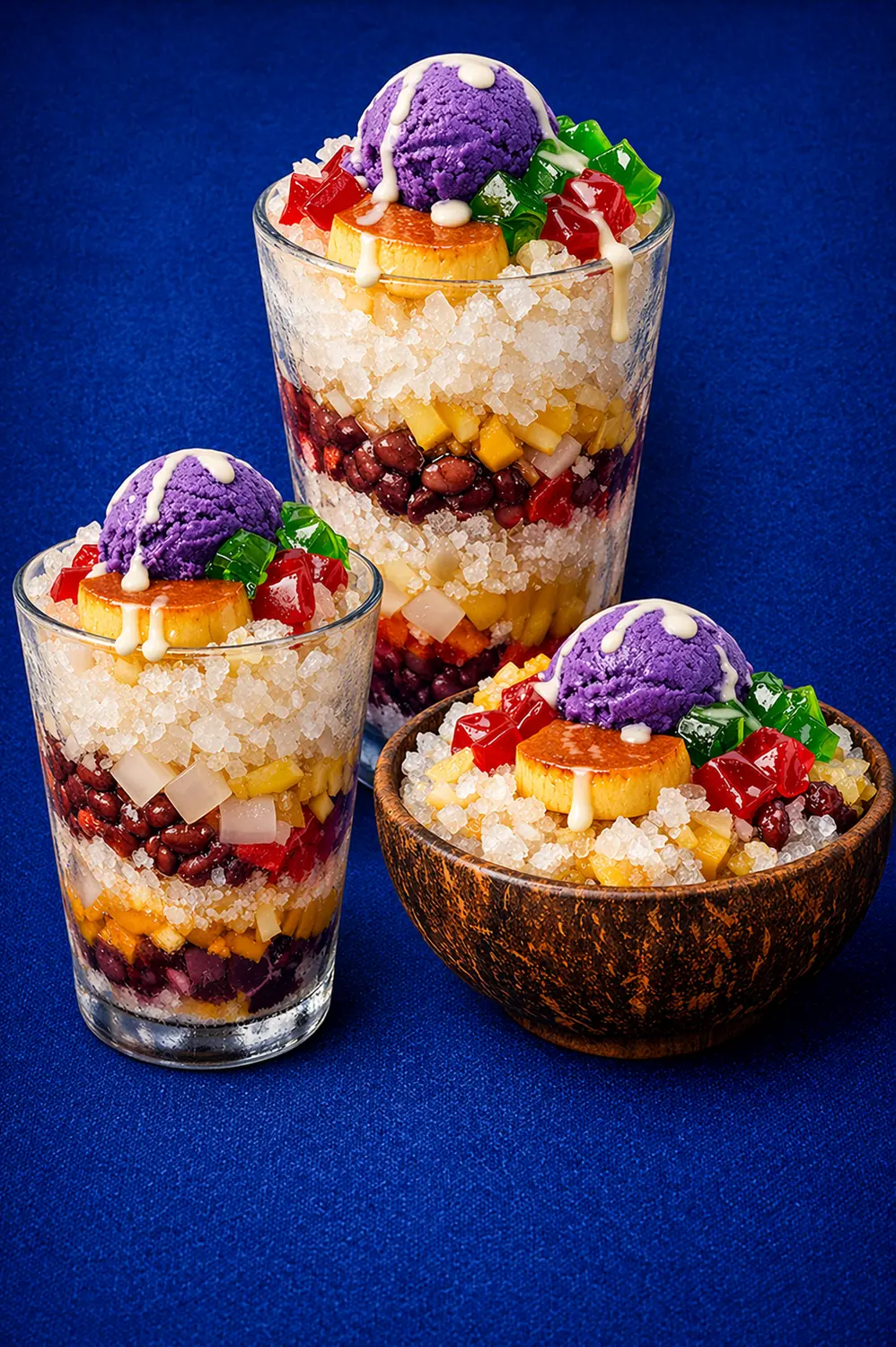
Keep exploring with our barbecue-style inasal chicken and tropical shaved-ice cups, then try a golden honey-butter stack, a parmesan shrimp basket, and a cinnamon streusel cake, rounded out with a sear-night pescatarian week and a soy-light sodium plan from Santiago Maricel.
This article is for information only and is not medical advice. Read our full disclaimer.