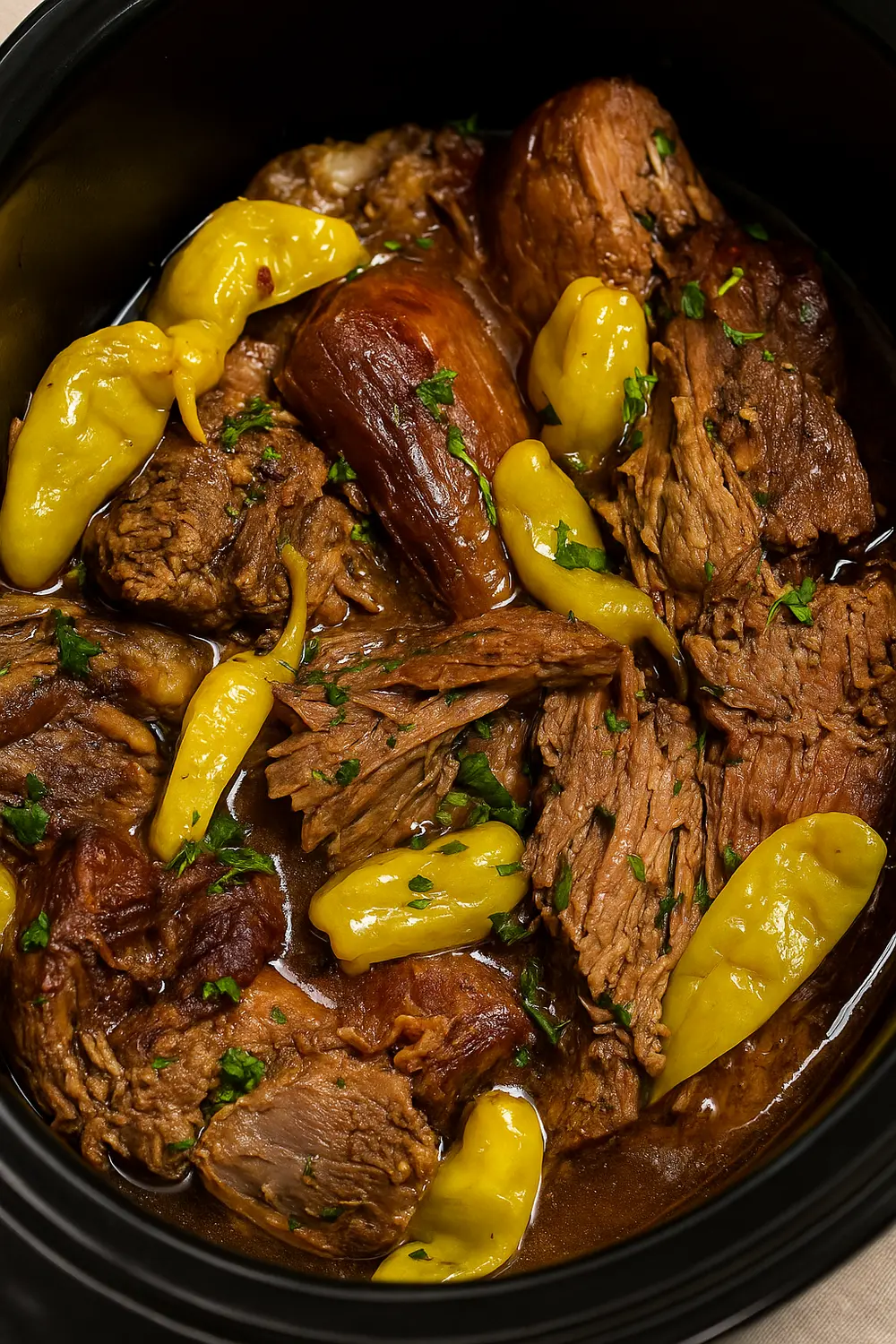
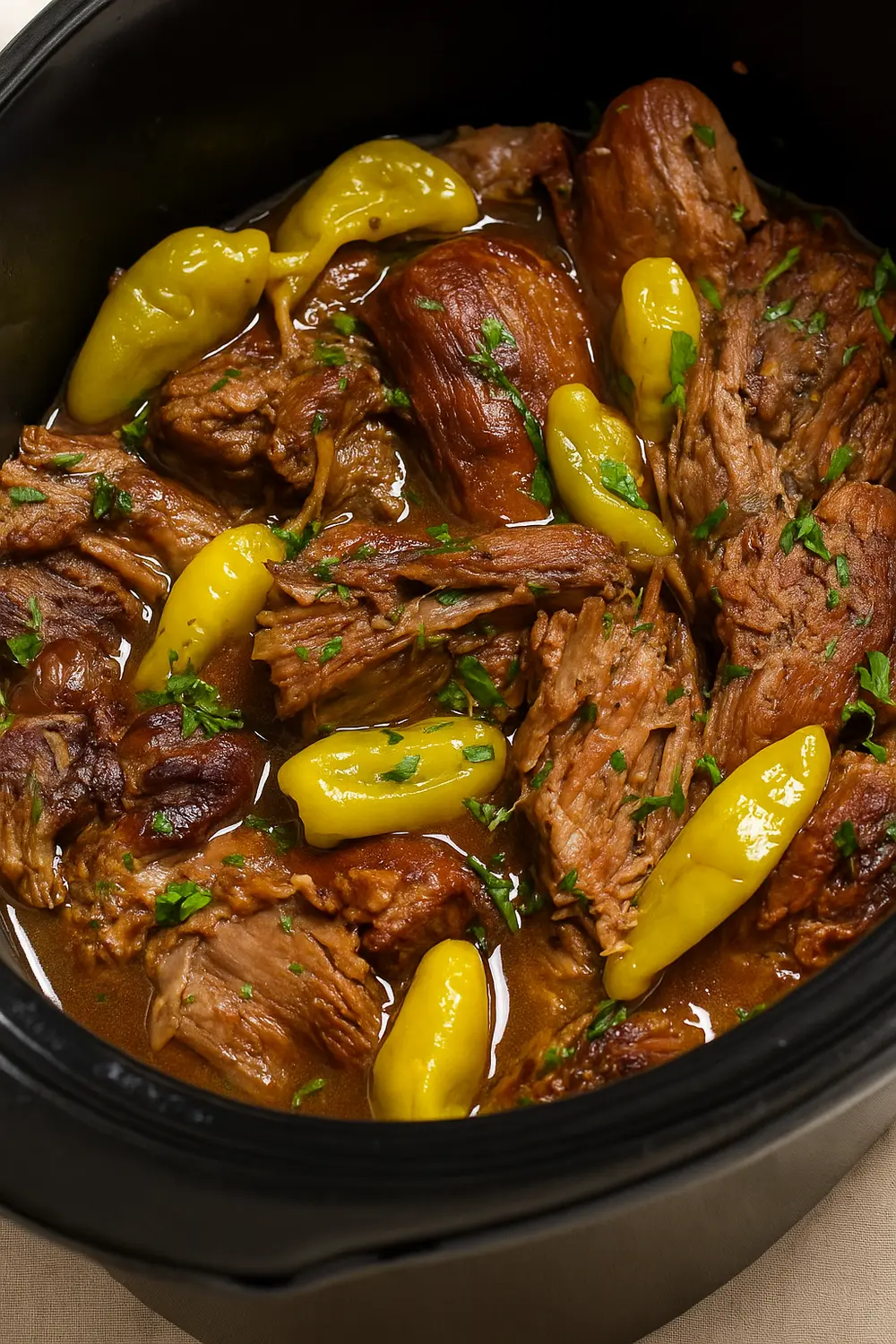
This easy Mississippi pot roast recipe is made by slow-cooking a beef chuck roast in a crockpot with ranch and au jus seasonings, a generous amount of butter, and whole pepperoncini peppers.
Mississippi roast is one of those rare recipes that took the internet by storm, not because it’s fancy, but because it’s incredibly simple, ridiculously flavorful, and deeply satisfying.
Its fame originated in Ripley, Mississippi, where a home cook named Robin Chapman sought a milder alternative to a traditional roast recipe.
She famously swapped out the original spice mix for a packet of ranch seasoning, unintentionally stumbling upon what would become a viral sensation.
This slow cooker Mississippi pot roast recipe serves eight and is perfect for Sunday dinners, holiday meals like Thanksgiving or Christmas dinner, or anytime you’re craving something without spending hours in the kitchen.
The success of this dish relies on specific timing and temperature controls, particularly the long braising duration that breaks down the tough connective tissue in the chuck roast.
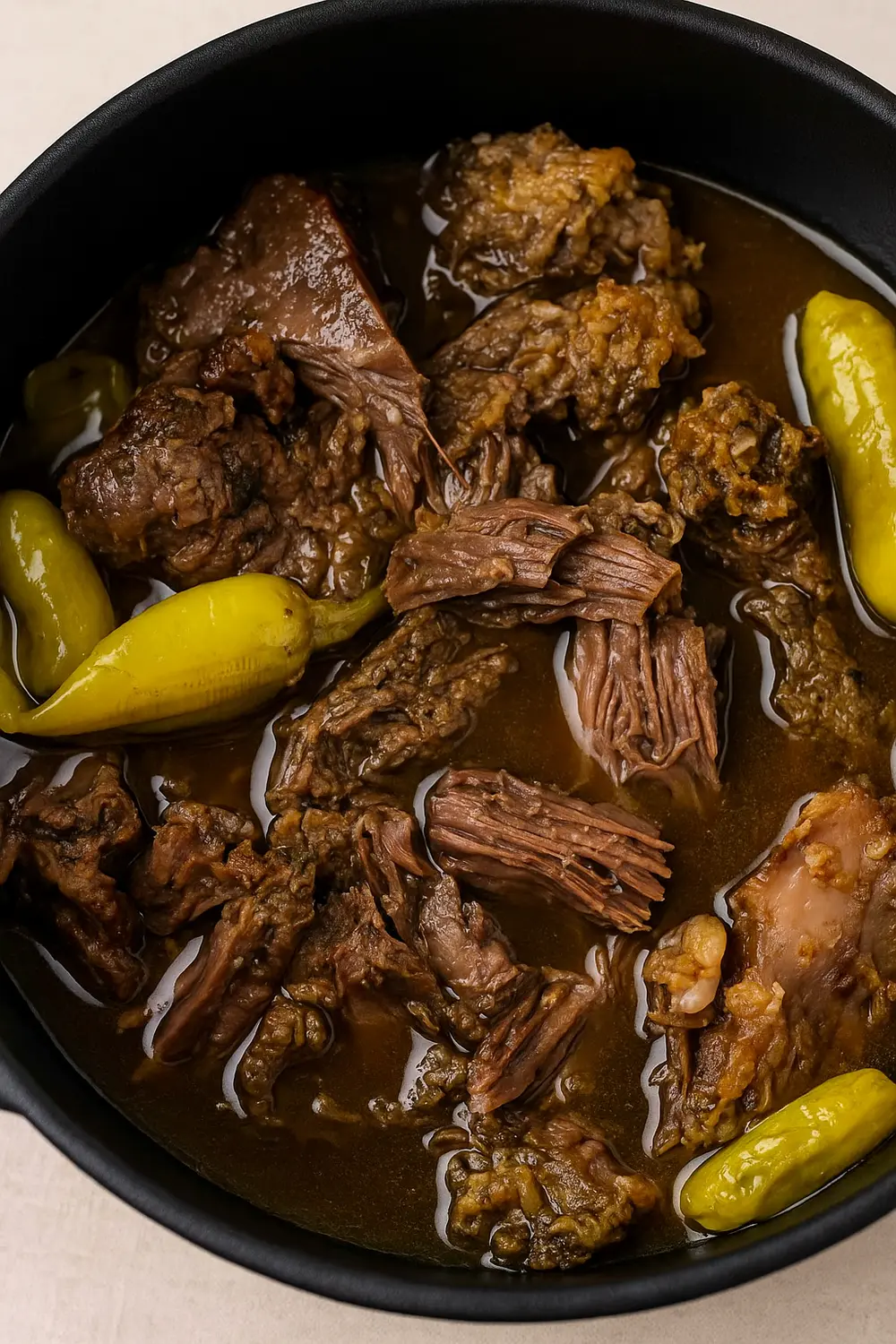
Key Ingredients of This Mississippi Pot Roast Recipe
This Mississippi pot roast recipe is famous for its short list of ingredients, each playing a crucial and irreplaceable role in achieving the dish’s signature rich, tender, and tangy flavor:
1. Beef Chuck Roast
- Chuck roast is the preferred cut due to its high connective tissue and marbling, which makes it perfect for the long, slow braising for tender results.
- It is rich in fat and collagen, and when slowly cooked, it converts to gelatin, guaranteeing the meat becomes fork-tender, juicy, and shreddable.
2. Ranch Seasoning Mix
- This dry seasoning packet adds a subtle herby flavor that balances the richness of the beef and butter.
- The ranch blend contributes hints of garlic, onion, and dill that tie the whole dish together, giving the pot roast its signature savory undertone without overpowering the meat.
- For health-conscious preparation, use only two-thirds of the packet or opt for a homemade low-sodium seasoning blend to control the final salt level.
3. Au Jus Gravy Mix
- This packet provides the core salty, umami beef flavor and helps thicken the cooking sauce slightly into a rich gravy base.
- You can use a low-sodium beef bouillon or broth base in combination with this packet to balance the richness without adding unnecessary salt.
4. Unsalted Butter
- The addition of butter, often placed right on top of the roast, is essential for the dish’s decadent mouthfeel.
- As the butter melts and renders into the cooking liquid alongside the beef’s own rendered fat, it creates a rich, creamy sauce that permeates the meat, carrying the fat-soluble flavors deep into the roast.
- Unsalted butter is preferred to manage the sodium already contributed by the seasoning packets.
5. Whole Pepperoncini Peppers & Brine
- These pickled Italian peppers are the “secret weapon” that prevents the dish from becoming overwhelmingly rich.
- The pepperoncini themselves add a mild, manageable heat, but the brine (the pickling liquid poured over the meat) provides the necessary acidity (vinegar) and salt to cut through the heavy fat and butter.
- This balance of fat, salt, and acid is the culinary genius behind the Mississippi roast’s addictive flavor.
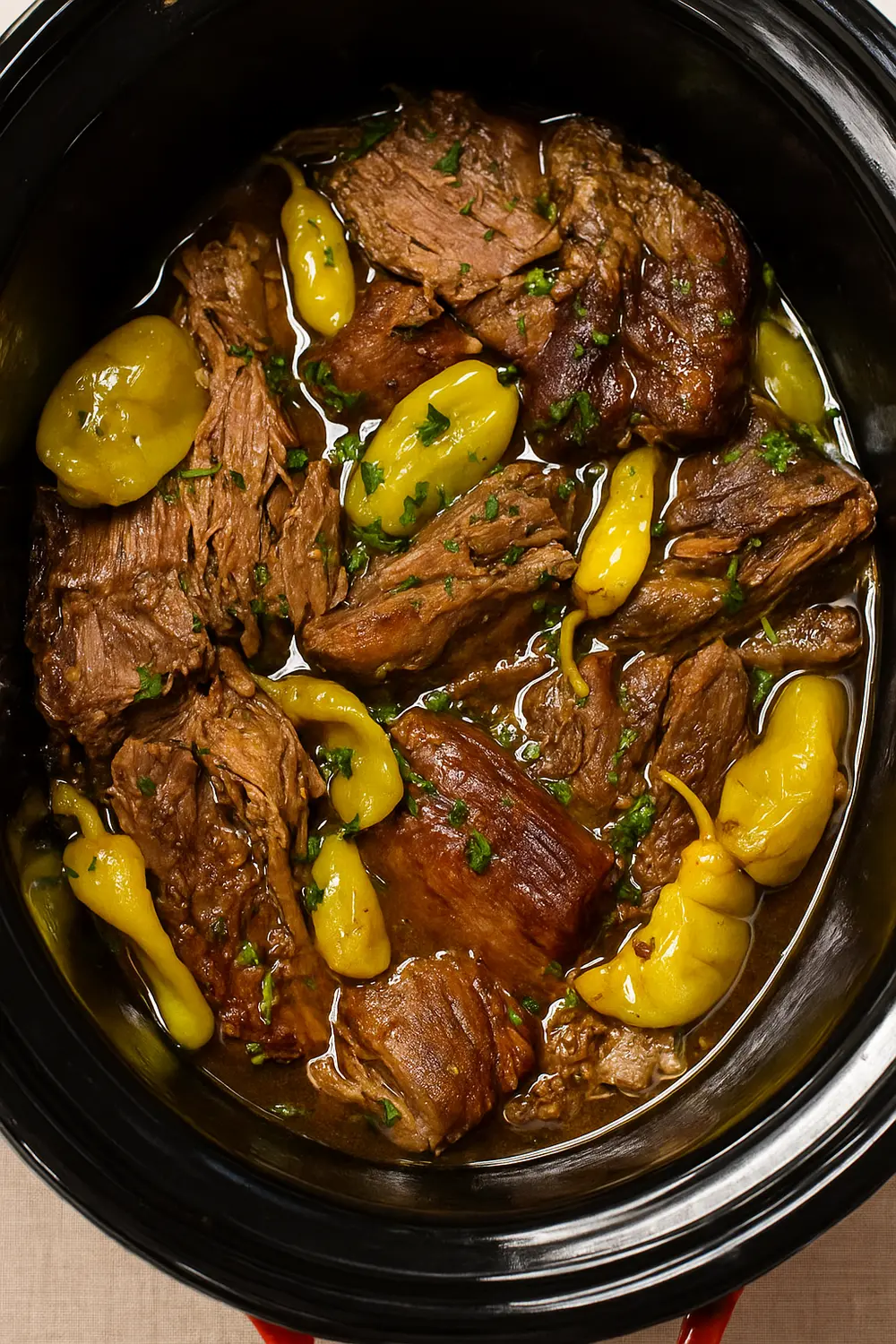
Essential Tools for Making This Slow Cooker Pot Roast Recipe
While this Mississippi roast is simple to make, having the right kitchen tools ensures you achieve that perfect, shreddable texture and maximum flavor.
- 10-Quart Slow Cooker (Crockpot): This crockpot provides the consistent, low heat necessary to convert the chuck roast’s tough collagen into smooth, tenderizing gelatin.
- Large, Heavy-Bottomed Skillet or Dutch Oven: This equipment is crucial for the advanced technique of searing the chuck roast, ensuring even, high-heat distribution.
- Kitchen Tongs: Essential for safely maneuvering and flipping the heavy, hot chuck roast during the high-heat searing process without piercing the meat and losing precious juices.
- Digital Meat Thermometer (Probe): The most reliable way to know your roast is done is when the internal temperature reaches between 200°F and 205°F.
- Fat Separator: Once the meat is shredded, the sauce can be strained into this tool, allowing the layer of rendered fat and butter to rise to the top.
- Two Forks: You’ll need these to shred the beef once it’s tender. Alternatively, meat shredding claws work great too.
Nutritional Benefits of Mississippi Pot Roast
Five ingredients and a slow cooker produce one of the most satisfying roasts imaginable. Here is the honest nutritional picture behind the comfort.
- Forty-Three Grams of Protein: Chuck roast delivers around forty-three grams of protein per serving for deep, lasting fullness. For background, see the slow-cooked beef notes from Harvard.
- Nearly Zero Carbs: At roughly two grams of carbohydrates, the roast itself suits low-carb plates with zero modification needed.
- One-Pot Simplicity: Everything cooks together, which means no extra fats or sauces sneak in during serving.
- Leftovers Improve: Sliced thin for next-day sandwiches or salads, the protein stretches across several balanced meals.
Why You’ll Fall in Love with This Mississippi Roast
This particular slow cooker pot roast iteration has achieved global fame for good reason. It consistently delivers an incredible meal with minimal fuss, making it a guaranteed addition to your regular cooking rotation:
- Effortless Preparation: The active prep time for the entire dish is often under 15 minutes, even when including the recommended searing step.
- Incredible for Meal Prep: A standard 3 to 4-pound roast easily yields up to 8 generous servings, and leftovers store wonderfully in the refrigerator for up to five days.
- Easily Customizable: This Mississippi roast recipe can easily be made gluten-free or dairy-free by using certified gluten-free seasoning packets and substituting the butter with a quality dairy-free alternative.
- High in Protein: Beef chuck is rich in protein, providing over 40 grams per serving to help support muscle repair, promote fullness, and maintain overall body strength.
- Rich in Essential Micronutrients: Beef is naturally rich in B vitamins such as Niacin, B6, and B12, and it also provides about 4.7 mg of iron per serving, which is essential for healthy oxygen transport in the blood.
- Keto and Low-Carb Compatibility: Beef, butter, and seasonings are naturally low in carbohydrates, making this recipe an excellent choice for keto and low-carb diets, with only about 2 grams of carbs per serving.
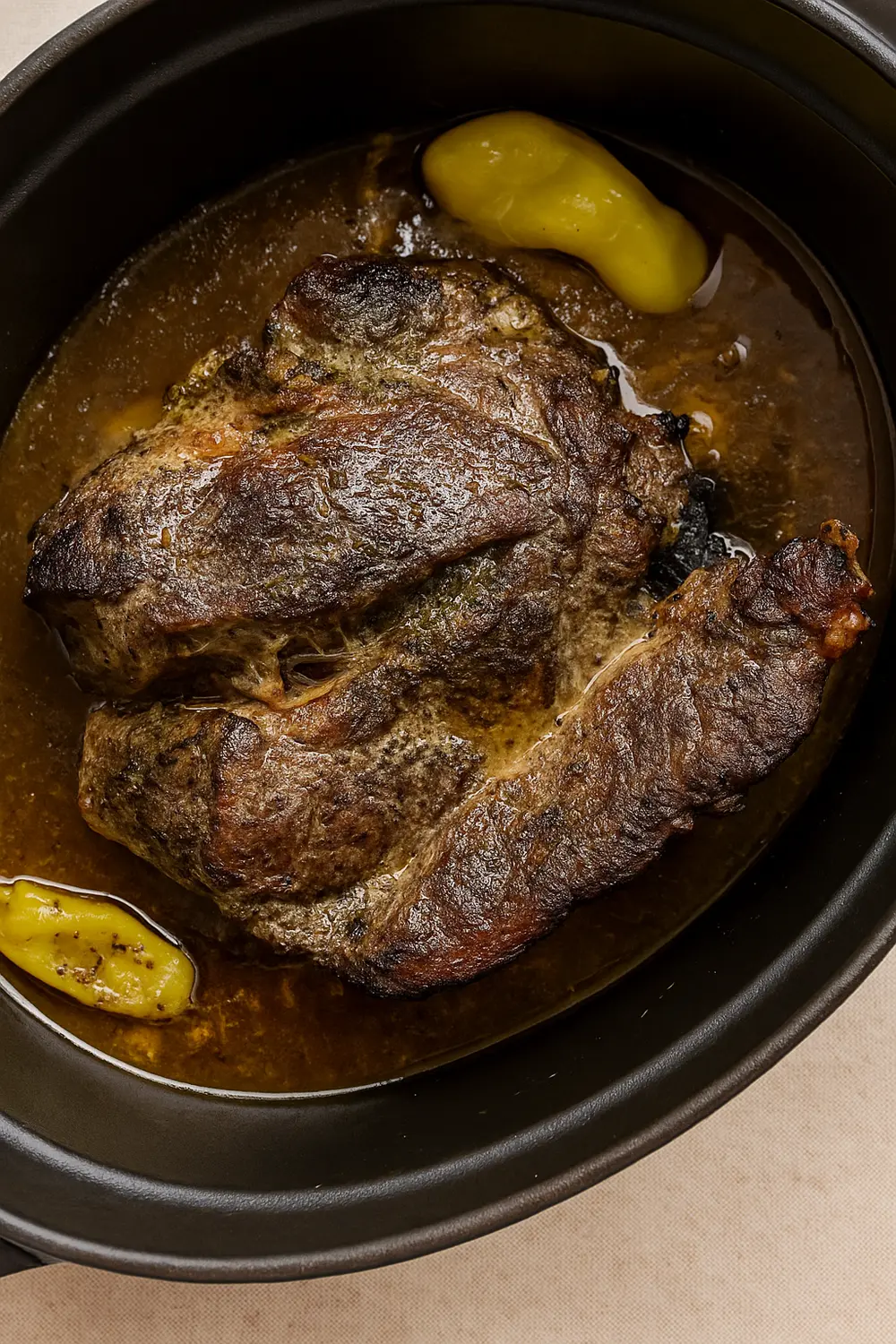
What to Serve with Crockpot Mississippi Pot Roast
Because the Mississippi roast is intensely rich, savory, and tangy, the best side dishes serve to either absorb the decadent gravy or provide a sharp, cool contrast to balance the palate.
- Creamy Mashed Potatoes: A classic pairing, creamy mashed potatoes serve as the perfect base to soak up every drop of the rich, zesty gravy (jus).
- Rice or Egg Noodles: These make great alternatives to mashed potatoes, providing a mild, comforting base that balances the bold, savory flavors of the Mississippi pot roast.
- Light, Fresh Salads: Light, refreshing salads such as a crisp coleslaw or a Shirazi salad made with cucumber, tomato, onion, and a zesty lemon dressing provide the perfect contrast to the roast’s richness.
- Honey Glazed Carrots: The subtle sweetness and tender crunch of honey-glazed carrots, which only take about 20 minutes to prepare, provide a delightful counterbalance to the savory beef.
- Sandwiches (French Dip Style): For a delicious twist, shred the Mississippi roast and layer it on toasted hoagie rolls, then serve with a small bowl of the reserved jus for dipping.
- Cauliflower Mash: For those following a low-carb or keto diet, cauliflower mash is the perfect substitute for mashed potatoes without the extra carbs.
Tips for Making the Best Mississippi Pot Roast
To elevate your crock pot roast from simple to extraordinary, a few professional techniques make all the difference, focusing primarily on flavor development and proper cooking mechanics:
1. Sear for Maximum Flavor
Never skip the sear as it’s one of the most important steps for building flavor.
Browning the chuck roast in a hot skillet for about 3 to 4 minutes on each side creates a rich, caramelized crust that adds incredible depth to the final dish.
For even better results, consider cutting a large 4-pound roast into two thick pieces before searing to ensure more surface area for that beautiful crust to form.
2. Capture the Fond (Deglazing)
After searing the beef, don’t let those flavorful brown bits (fond) go to waste, as they hold a deep, rich flavor that can take your roast to the next level.
To capture the fond, pour in a bit of low-sodium beef broth while the pan is still hot and gently scrape the bottom with a wooden spoon. Watching sodium starts with the broth. NIDDK broth-sodium notes for cooks explain the connection.
This process, known as deglazing, releases all that caramelized goodness and infuses it directly into your cooking liquid for a richer, more flavorful sauce.
3. Cook to Temperature (205°F) Not Time
One of the most common mistakes when making Mississippi pot roast is taking it out of the slow cooker too early.
While it might look done on the outside, the interior fibers and connective tissue need more time to break down for that signature tenderness.
For truly effortless shredding, the collagen in the beef must fully melt into gelatin, and this transformation happens when the internal temperature reaches between 200°F and 205°F.
Always use a meat thermometer to check, and if the roast still feels firm or resists a fork, continue cooking until it becomes fall-apart tender.
4. Control Sodium
Traditional ranch mix and au jus packets are often quite high in salt, which can easily make the dish overly seasoned if not balanced properly.
To keep the flavors in check, use unsalted butter and low-sodium beef broth, and try adding only about two-thirds of each seasoning packet.
The roast naturally develops a rich, bold flavor as it cooks, so there’s rarely a need for any extra salt.
5. Refine the Gravy
During the long cooking process, a good amount of fat and butter naturally melts into the cooking sauce, creating a flavorful but sometimes heavy jus.
After shredding the beef, pour the liquid or sauce through a strainer into a fat separator or let it rest so the fat rises to the top. Separating fat trims the jus. Jus-trimming guidance from Healthline walks through balanced plates.
Skimming the excess grease leaves you with a cleaner, richer, and healthier sauce that you can pour back over the shredded meat before serving.
Final Remarks
This Mississippi pot roast is very simple to make, yet it still delivers tender, melt-in-your-mouth beef infused with buttery, tangy, and mildly spicy flavors that make every bite pure comfort.
Use less butter for a lighter version, add a few carrots or baby potatoes for a heartier one, or turn the leftovers into incredible sandwiches or sliders the next day.
Pair it with creamy mashed potatoes, fluffy rice, or cauliflower mash for a delicious meal that suits any occasion, from cozy weeknight dinners to laid-back Thanksgiving or Christmas dinner.
If you give this slow cooker Mississippi pot roast a try, we’d love to know how yours turns out.
Share your take, swap a few tips, or drop your thoughts in the comments.
Scroll down for the full recipe and cooking instructions just below.
Keep exploring with our grilled chicken rice meals and sari-sari dessert cups, then see ganache-drip birthday cake, crispy parmesan shrimp, and wok-tossed kikalayi pork, with a carb-free comfort plan and Sunday-batch protein preps over on Santiago Maricel.
This article is for information only and is not medical advice. Read our full disclaimer.