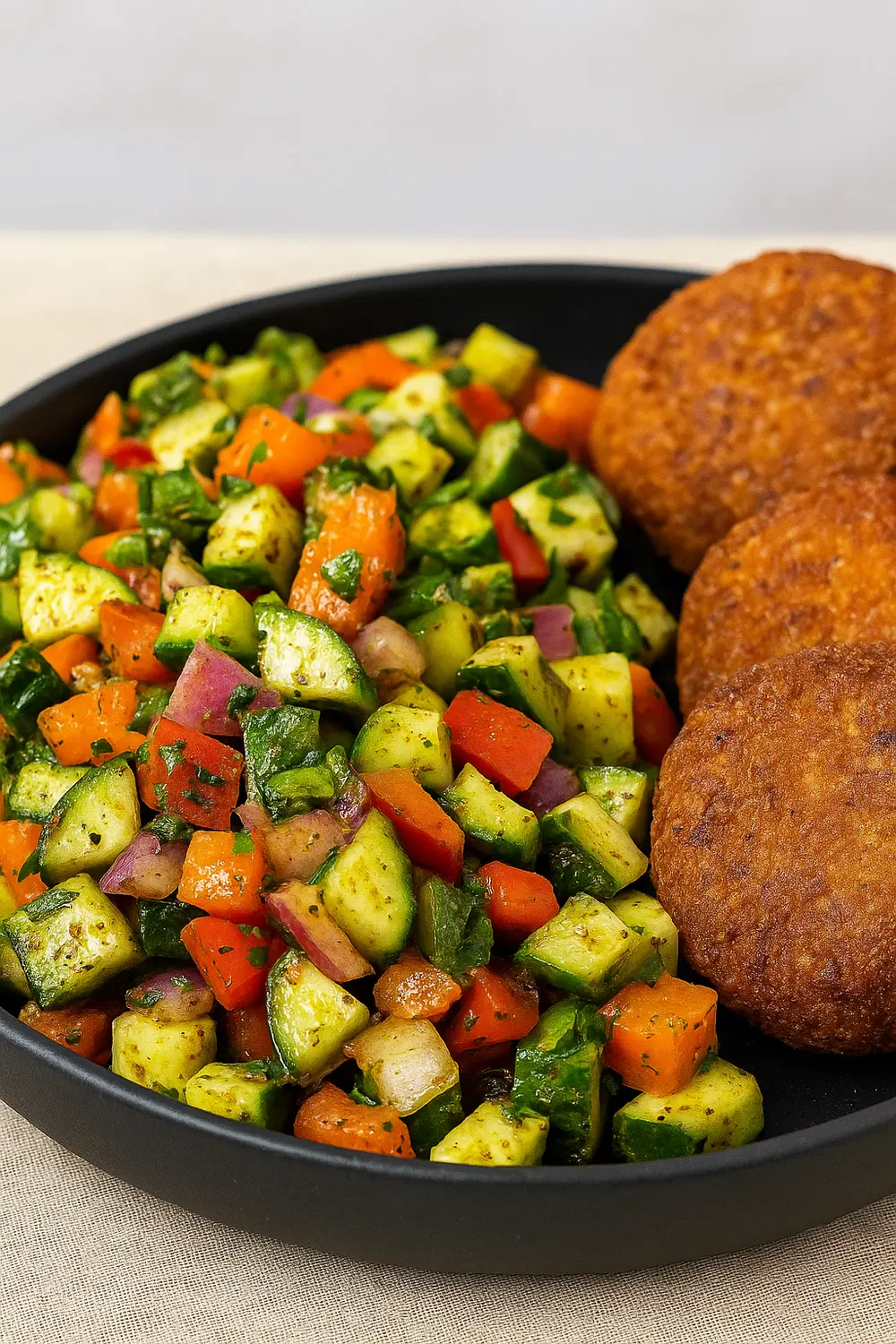
Jerusalem salad, also known as Israeli salad, is a Middle Eastern halal dish made with fresh raw veggies, such as tomatoes, cucumbers, and onions, simply dressed with olive oil and lemon juice.
This easy Israeli salad recipe makes 4 hearty salad bowls, each bursting with refreshing cucumber, tomato, and parsley dressed in a lemony vinaigrette.
Topped with crunchy falafel and smooth, garlicky tzatziki, every bite of this halal salad hits that perfect mix of crisp, creamy, and bold Mediterranean flavor.
And the best part? It’s surprisingly easy to make; this cucumber and tomato salad comes together in under an hour and doesn’t require any complicated steps.
This dish is perfect for meal prep, a quick lunch on the go, or a vibrant dinner that everyone can enjoy, and it’s also a great option for vegans, vegetarians, or anyone following a halal diet.
Packed with fiber, plant-based protein, and heart-healthy fats, this Jerusalem salad supports digestion, blood sugar balance, and energy levels. Fiber steadies blood sugar across meals. NIDDK blood-sugar explainers for cooks cover the connection.
Plus, it’s gluten-free and loaded with vitamins thanks to the rainbow of raw veggies. Raw-vegetable bowls keep vitamins intact. Harvard's Nutrition Source shares raw-veggie plate notes.
Key Ingredients for This Jerusalem Salad Recipe with Falafel
Here are the ingredients you will need for making this Jerusalem salad with falafel:
1. Cucumbers
- Often, Persian or English (also known as Lebanese or Kirby) cucumbers are preferred for their thin skins and minimal seeds.
- When finely diced, they provide a crisp, refreshing texture that is central to the salad’s appeal.
2. Tomatoes
- Ripe, firm tomatoes, such as Roma or cherry tomatoes, are ideal.
- Finely dicing them and, crucially, seeding larger varieties, prevents the salad from becoming watery, ensuring a concentrated burst of fresh tomato flavor in every bite.
3. Onions
- Red or white onions, finely minced, add a subtle sharpness and a beautiful pop of color.
- Their delicate bite complements the other vegetables without overpowering them.
4. Fresh Parsley
- This herb is non-negotiable for an authentic Jerusalem Salad.
- Finely chopped, it infuses the salad with its distinctive earthy, fresh aroma and vibrant green hue, which is essential to the Middle Eastern flavor profile.
5. Fresh Mint
- A touch of finely chopped fresh mint adds an invigorating, aromatic lift to the salad.
- Its cool, peppery notes provide a delightful contrast and enhance the overall freshness.
6. Carrots
- While not always part of traditional halal salad recipes, finely diced carrots add a nice crunch and boost the salad’s nutritional value.
7. Extra Virgin Olive Oil
- A high-quality extra virgin olive oil forms the rich, fruity base of the simple yet potent dressing, binding the flavors together.
8. Fresh Lemon Juice
- Freshly squeezed lemon juice is the zesty heart of the dressing.
- It’s bright acidity cuts through the richness of the falafel and enhances the natural flavors of the vegetables, making them truly sing.
9. Salt and Black Pepper
- Simple seasonings are all that’s needed to bring out the best in these fresh ingredients, allowing their natural flavors to shine.
10. Dried Chickpeas
- Dried chickpeas that have been soaked in water overnight provide the perfect texture and structure for falafel.
- Canned chickpeas won’t work as they tend to make the mixture too wet and crumbly.
11. Cumin & Coriander
- These ground spices are essential for that warm, earthy falafel flavor that’s distinctly Middle Eastern.
12. Baking Powder & Baking Soda
- Baking powder gives the falafel its light, airy interior, while a small amount of baking soda helps with browning and crispness.
13. Neural Oil
- Neutral oils like vegetable or canola oil are ideal for frying falafel, thanks to their mild flavor and high smoke point.
14. Za’atar
- A sprinkle of this earthy, tangy Middle Eastern spice blend can add a flavorful twist to the salad or as a finishing touch to the assembled bowl.
Tools You’ll Need to Make This Israeli Salad Recipe
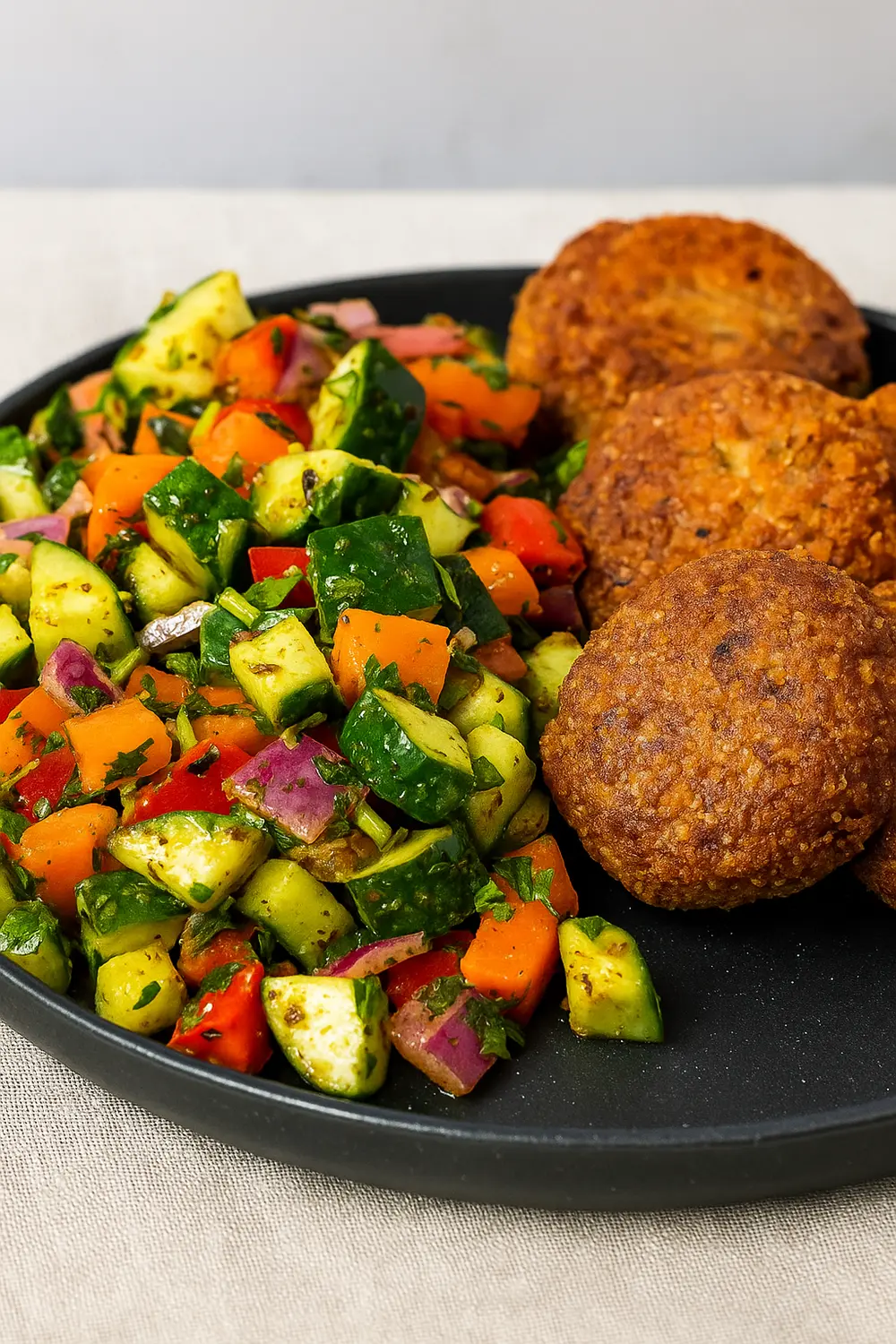
To successfully prepare this dish, having the right kitchen tools can make a significant difference in efficiency and outcome:
- Food Processor: A critical piece of equipment for achieving the correct texture for the falafel mixture. It efficiently grinds the chickpeas and herbs.
- Large Mixing Bowls: Essential for soaking chickpeas, combining salad ingredients, and mixing the falafel mixture.
- Sharp Chef’s Knife: Indispensable for the precise, fine dicing required for the Jerusalem Salad. A sharp knife ensures clean cuts, which minimizes bruising and helps prevent the vegetables from releasing excess moisture.
- Cutting Board: A stable surface for all your chopping needs.
- Fine Mesh Colander or Sieve: Used for thoroughly draining soaked chickpeas and, optionally, for macerating and draining the diced salad vegetables to prevent sogginess.
- Deep Pot or Dutch Oven: Ideal for deep frying falafel, allowing sufficient oil depth for even cooking.
- Slotted Spoon or Spider: A crucial tool for safely lowering falafel into hot oil and retrieving them once cooked.
- Instant-Read Thermometer: While not strictly essential, an oil thermometer helps maintain the precise temperature required for perfectly crispy falafel, preventing them from becoming greasy or burning.
- Paper Towels or Wire Rack: Used for draining excess oil from freshly fried falafel, ensuring they remain wonderfully crispy.
- Small Bowl and Whisk: For effortlessly combining and emulsifying the salad and tahini dressings.
- Measuring Cups and Spoons: For accurate ingredient quantities, ensuring consistent results.
Nutritional Benefits of Jerusalem Salad with Falafel
Crisp cucumbers, juicy tomatoes, and protein-rich falafel over fresh greens. This Israeli salad eats light while nourishing deeply.
- Ten Grams of Fiber: Chickpeas, vegetables, and tahini combine for around ten grams of fiber per hearty bowl. For background, see the falafel-plate fiber records on PubMed.
- Fifteen Grams of Plant Protein: Falafel plus tahini deliver around fifteen grams of satisfying plant protein per serving.
- Vitamins A and C: Tomatoes, cucumbers, and parsley bring vitamin A for vision plus twenty milligrams of vitamin C for immune support.
- Heart-Smart Fats: Olive oil and tahini keep fats monounsaturated and satisfying instead of heavy.
Why You’ll Love this Cucumber and Tomato Salad
This Israeli salad is not just delicious; it’s a nutritional powerhouse, offering a wealth of benefits for your body:
- High in Plant-Based Protein: Falafel, made primarily from chickpeas, is an excellent source of plant-based protein. This is crucial for muscle building and repair, and helps keep you feeling full and satisfied, aiding in weight management.
- Rich in Dietary Fiber: Both chickpeas and the fresh vegetables in Jerusalem Salad are packed with dietary fiber. Fiber is vital for digestive health, promoting regular bowel function, and can help regulate blood sugar levels by slowing digestion.
- Abundant in Vitamins: This cucumber and tomato salad is rich in essential vitamins like A, C, K, B vitamins, and folate, great for immunity, energy, and overall health.
- Packed with Essential Minerals: Beyond vitamins, this falafel salad offers key minerals like iron, calcium, magnesium, potassium, phosphorus, and zinc, supporting everything from bone health to immunity and energy.
- Low Cholesterol: Being entirely plant-based, Jerusalem Salad with Falafel contains very low cholesterol, making it a heart-healthy choice that can contribute to lowering cholesterol levels.
- Supports Overall Well-being: The combination of nutrients in this dish contributes to overall physical health, aiding in detoxification, supporting cardiovascular health, and providing sustained energy.
- Low in Sugar: This cucumber and tomato salad is naturally low in sugar, making it a smart choice for blood sugar control and overall metabolic health.
- Naturally Gluten-Free: This Israeli salad is made without flour or gluten-containing ingredients, making it safe and satisfying for gluten-free diets.
- Anti-Inflammatory: This Middle Eastern salad is full of fresh herbs, vegetables, olive oil, and legumes, all known for their anti-inflammatory properties.
What to Serve With Jerusalem Salad
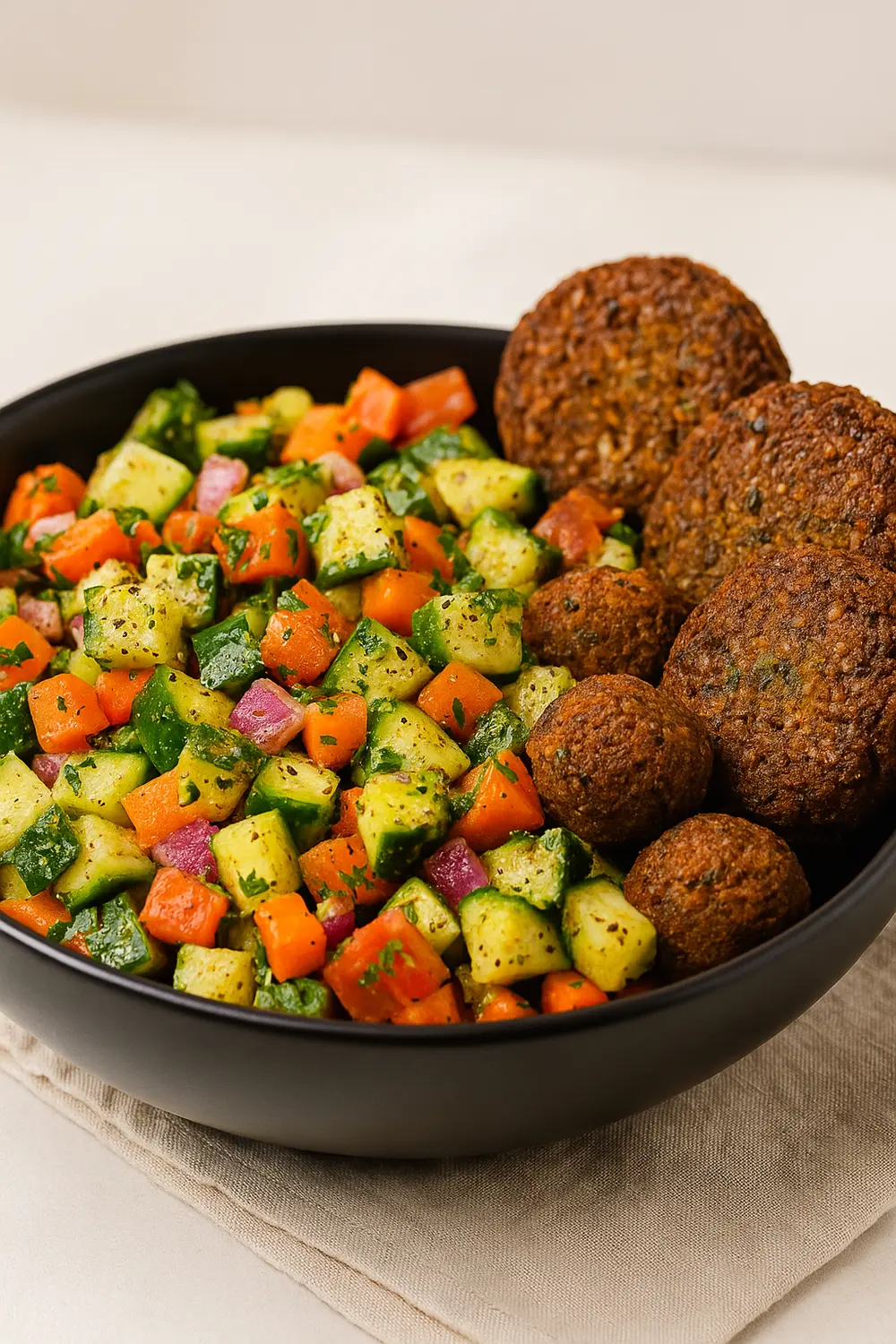
Jerusalem Salad, especially when served with falafel, can be a satisfying meal on its own. But if you’re looking to round it out, here are some popular and delicious ways to serve it:
- Warm Pita Bread or Flatbread: The soft, warm texture of pita bread makes it an excellent vehicle for scooping up the falafel and tzatziki, while also providing a complementary contrast to the crisp salad.
- Hummus: A classic Mediterranean dip, hummus pairs beautifully with this salad. Its creamy texture and rich flavor offer an additional layer of satisfaction, perfect for dipping both falafel and vegetables.
- As Part of a Mezze Platter: Create a vibrant spread with Jerusalem Salad, falafel, hummus, baba ganoush, labneh, olives, and warm pita bread for a delightful communal dining experience.
- Pickled Vegetables: Adding a side of pickled vegetables, such as turnips or cucumbers, brings an extra tangy zest that enhances the overall flavor profile of the meal.
- Roasted Vegetables: For a heartier variation, a serving of roasted eggplant or zucchini can add warmth and depth to the meal, balancing the freshness of the salad.
- A Fresh Light Soup: A bowl of lentil or tomato soup can complement the meal, offering a comforting start or a wholesome accompaniment to the main course.
- A Refreshing Beverage: Serve with a glass of freshly squeezed lemon basil mocktail, iced tea, or a light, crisp white wine (for an adult pairing). These drinks help cleanse the palate and accentuate the Mediterranean flavors.
Tips for Making the Best Jerusalem Salad
Here are a chef’s top tips to ensure your salad is always vibrant, crisp, and bursting with flavor:
1. Uniform Dicing
- The signature of Jerusalem Salad is its uniformly small, fine dice.
- This isn’t just for looks; it ensures every forkful delivers a balanced blend of all the ingredients.
- Use a very sharp chef’s knife to achieve clean cuts, which also helps prevent bruising the vegetables and releasing excess moisture.
2. De-seed Tomatoes
- For larger tomatoes, always scoop out the watery, seedy pulp before dicing.
- This is where a significant amount of excess moisture resides.
3. Salt and Drain
- For cucumbers (and tomatoes/carrots if using), lightly salt the diced vegetables and let them sit in a fine mesh colander for 30 minutes.
- This process, called maceration, draws out excess water.
4. Use Fresh & Quality Ingredients
- Opt for the freshest, ripest tomatoes and the crispest cucumbers you can find.
- For the dressing, a high-quality extra virgin olive oil and freshly squeezed lemon juice are non-negotiable.
5. Don’t Skimp on Fresh Herbs
- Parsley and mint are the soul of this salad, providing its characteristic Middle Eastern freshness and aromatic lift.
6. Dress Just Before Serving
- To maintain the salad’s crispness and vibrant flavor, always add the dressing immediately before serving.
- Pre-dressing will cause the vegetables to soften and the flavors to dilute.
- If preparing ahead, keep the chopped vegetables and dressing separate until ready to eat.
7. Serve at the Right Temperature
- While many salads are served chilled, Jerusalem Salad often tastes best at room temperature or only slightly cool.
- This allows the subtle flavors of the fresh vegetables to fully develop.
8. Toss Gently
- When combining the ingredients and dressing, toss the salad gently with clean hands or a large spoon in a spacious bowl.
- Aggressive mixing can bruise the produce, leading to more water release and a soggy result.
Final Remarks
This traditional Jerusalem salad with crispy homemade falafel is more than just a side dish; it’s a celebration of freshness, balance, simplicity, and nourishing ingredients.
For the best falafel texture, soak dried chickpeas overnight to give them the ideal structure for holding their shape and crisping up beautifully when cooked.
While canned chickpeas might seem easier, they tend to make falafel too soft and crumbly, and just don’t give that authentic bite.
In this recipe, we chose to deep-fry the falafel for that irresistible crispy exterior and tender interior. However, air-frying and baking them works great too.
Happy cooking!
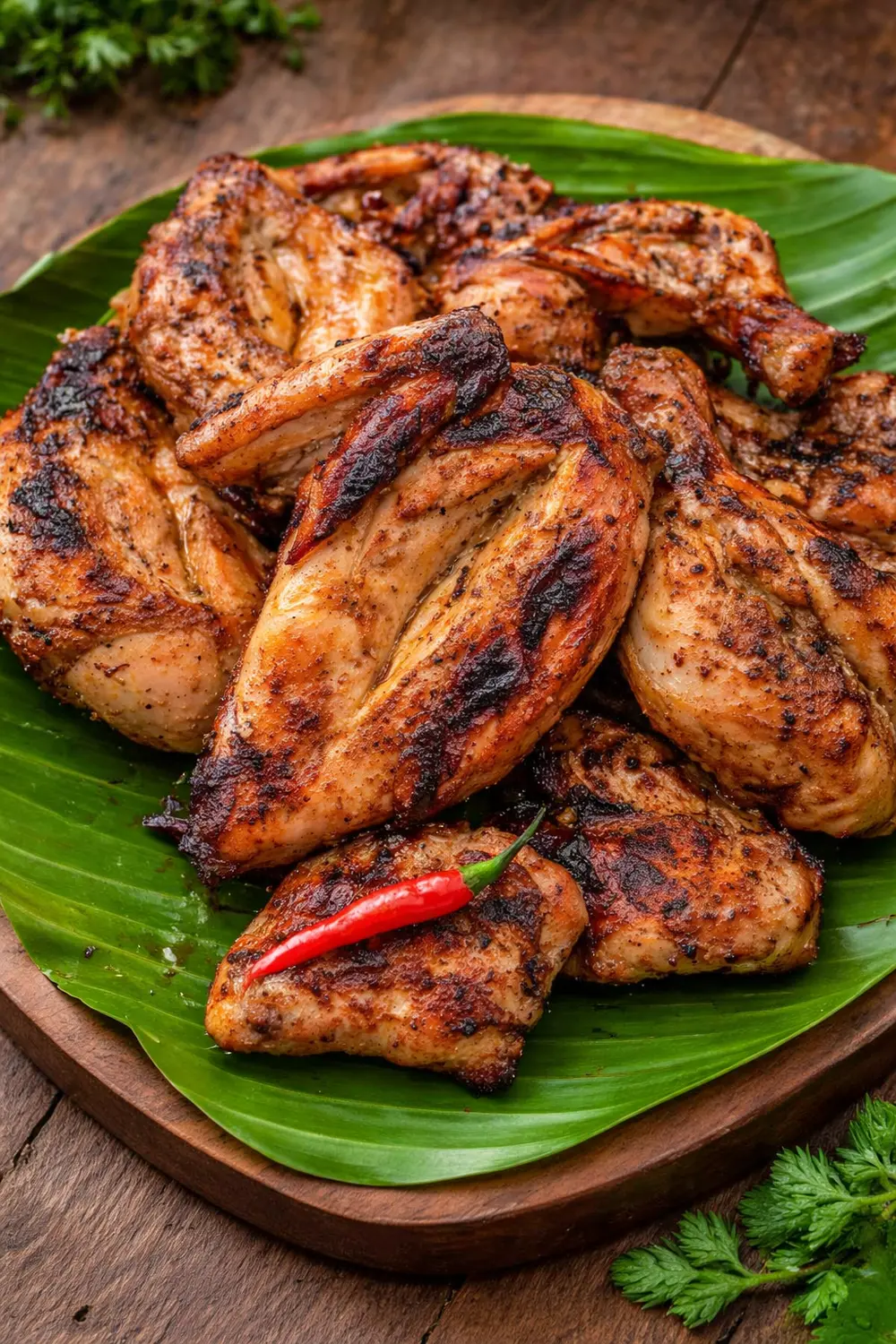
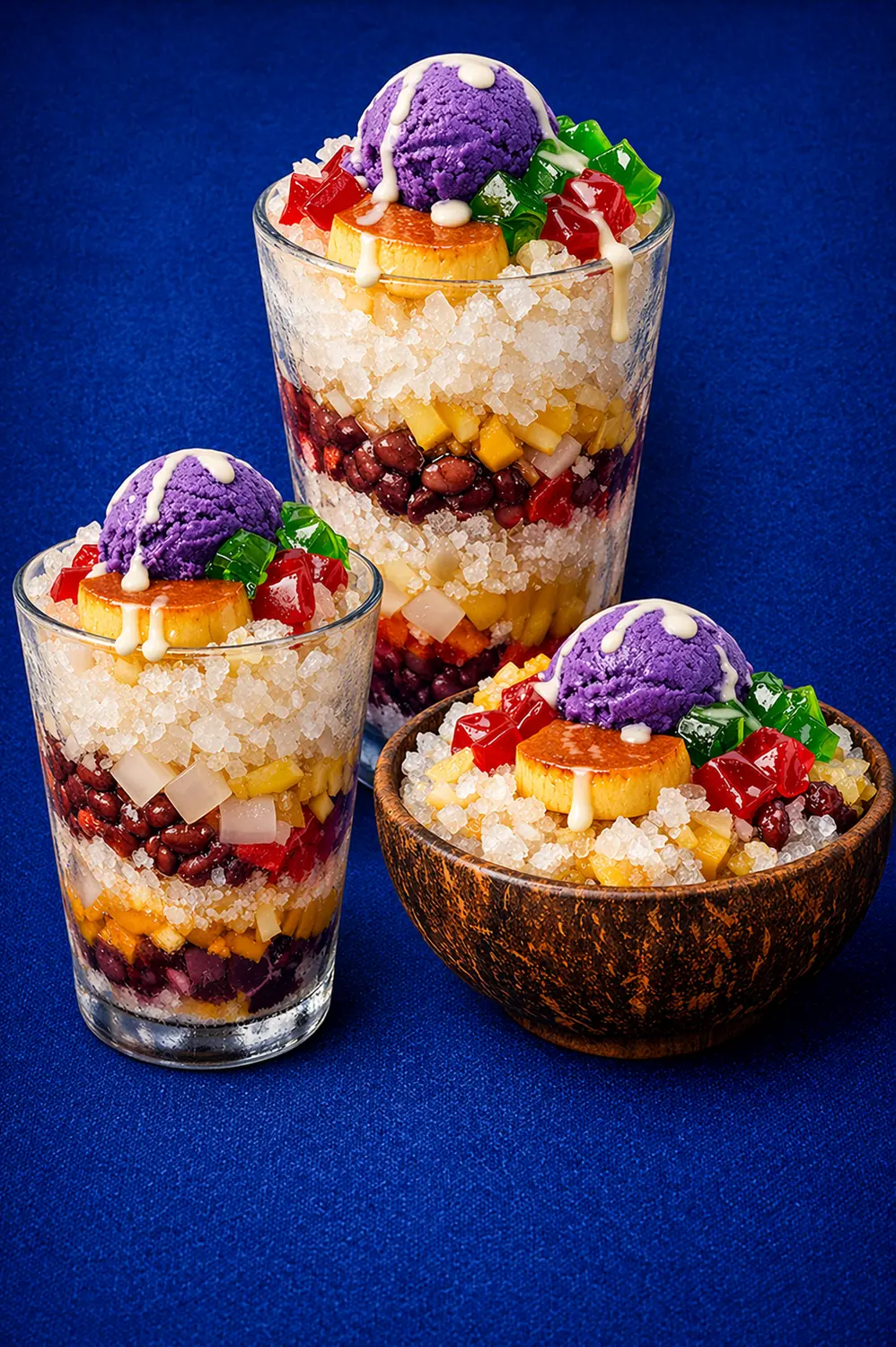
Keep exploring with our ginger-lemongrass grilled chicken and crushed-ice dessert cups, then try a pink salt morning tonic, Kashmiri-style lamb curry, and a one-pan beef stir fry, rounded out with a falafel-friendly vegan week and a mezze-table Mediterranean week from Santiago Maricel.
This article is for information only and is not medical advice. Read our full disclaimer.