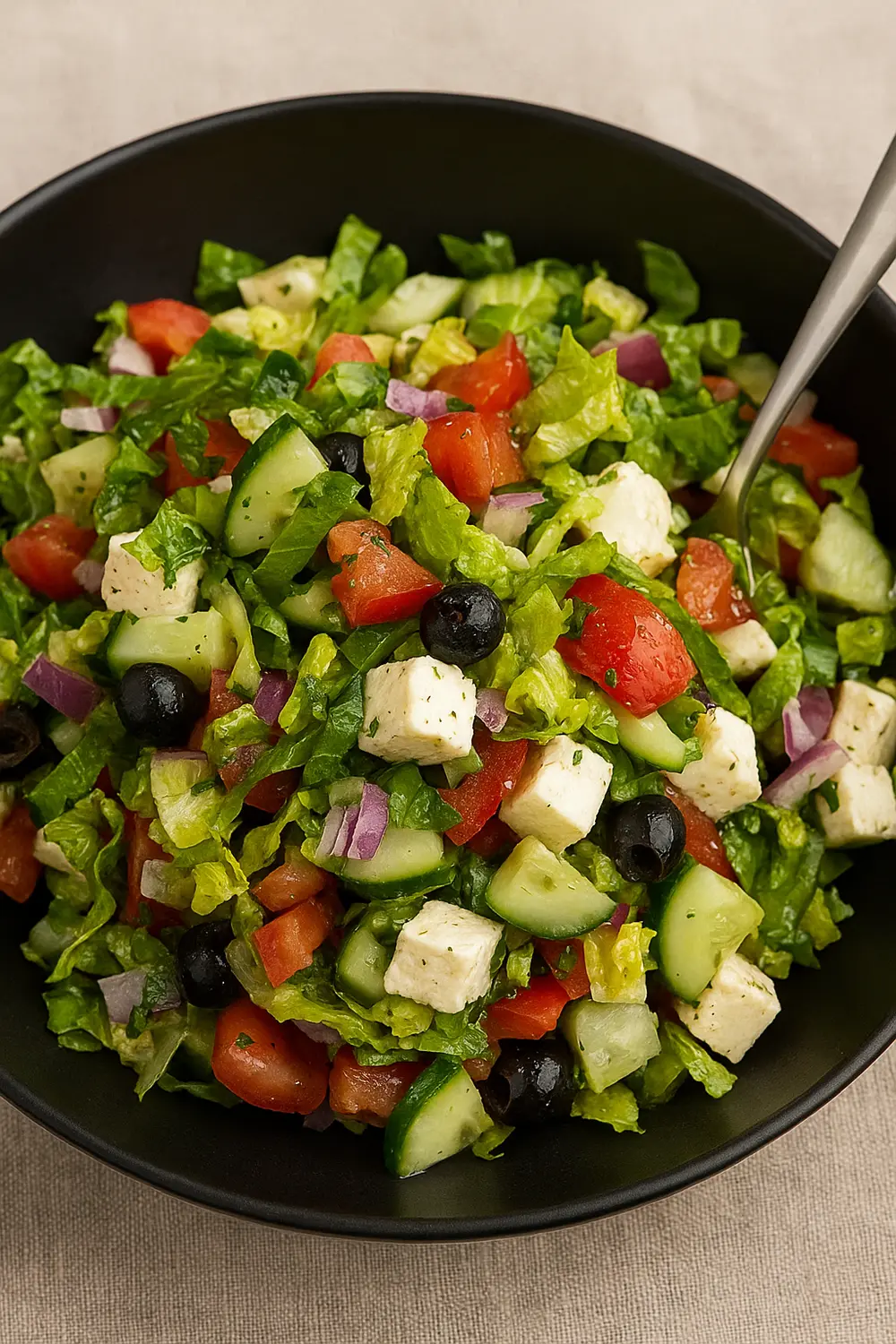
This easy Greek salad recipe delivers a burst of Mediterranean flavors with crisp lettuce, ripe tomatoes, refreshing cucumbers, sharp red onion, Kalamata olives, and creamy feta, all tossed in a simple, zesty homemade Greek dressing.
My grandmother would pick vine-ripened tomatoes at dawn, slice crisp cucumbers still cold from the morning dew, and fetch feta from the local dairy before we even had breakfast.
She’d tell me, “The salad must look as joyful as it tastes.” I’d watch her gently arrange everything, lettuce lining the plate, tomatoes fanned like a sunburst, rustic cubes of feta scattered on top, and olives to finish.
This salad is easy to make, packed with fresh, healthy ingredients, and is incredibly delicious, making it perfect for lunch, a dinner side, picnics, or a tasty addition to any summer BBQ.
Rich in heart-healthy fats from olive oil and olives and packed with vitamins and antioxidants from the vegetables, this Mediterranean Greek salad aligns perfectly with a lifestyle focused on well-being and longevity. Olive oil anchors the Mediterranean pattern. Harvard's Nutrition Source shares olive-oil guidance.
This Greek tomato cucumber salad serves six as a side dish or four as a main dish and pairs beautifully with grilled meats, crusty bread, or a simple bowl of lentil soup. Salad portions flex by role. Portion-planning basics from Healthline walk through it.
Key Ingredients for This Easy Greek Salad Recipe
Here are the key ingredients you will need for this Mediterranean Greek salad recipe:
1. Lettuce
- While traditional Greek salads (Horiatiki Salata) typically don’t include leafy greens, this recipe embraces the popular adaptation of using crisp Romaine lettuce or similar greens.
- It provides a refreshing, crunchy base that adds volume and a delightful textural contrast to the other ingredients, making it a satisfying meal on its own or a perfect side.
2. Tomatoes
- For the best flavor, always opt for ripe, red, in-season tomatoes, whether they’re juicy cherry or grape tomatoes, or larger, flavorful varieties like plum or heirloom.
- Cut the tomatoes into generous bite-sized chunks to highlight their juiciness and ensure every bite contributes to the salad’s vibrant flavor.
3. Cucumbers
- English or Persian cucumbers are ideal for this Greek cucumber salad.
- Their thin skins mean no peeling is necessary, and their minimal seeds contribute to a consistently refreshing crunch.
4. Bell Pepper
- Green bell pepper is a classic inclusion, offering a crisp texture and a slightly bitter, fresh note that complements the other vegetables.
- For added visual appeal and a touch more sweetness, you can also incorporate red, yellow, or orange bell peppers.
5. Red Onion
- Thinly sliced red onion provides a sharp, pungent kick that is essential to the authentic flavor profile of a classic Greek salad.
- For those who prefer a milder taste, a simple trick of soaking the slices in cold water can significantly reduce their sharpness while maintaining their crispness.
6. Kalamata Olives
- These dark, distinctively almond-shaped olives are a non-negotiable element.
- Their rich, briny, and slightly fruity flavor adds a crucial salty counterpoint to the fresh vegetables and creamy feta.
- They are typically pitted for convenience, though some traditionalists prefer them with pits for plumpness.
7. Feta Cheese
- Authentic Greek feta, preferably in a block and diced into ¾-inch cubes, is the star of this classic Greek salad recipe.
- Made from sheep’s or goat’s milk, it offers a creamy texture and a distinct tangy, salty flavor that is irreplaceable.
- Dicing it ensures a delightful creamy pocket in every bite.
8. Extra Virgin Olive Oil
- This is more than just an ingredient; it’s the liquid gold of the Mediterranean diet.
- A high-quality, cold-pressed extra virgin olive oil forms the rich, fruity base of the dressing, contributing healthy fats and profoundly elevating the overall taste of your homemade Greek salad.
9. Red Wine Vinegar
- Red wine vinegar brightens the flavors of the dressing and balances the richness of the olive oil and feta, tying all the components together in a harmonious blend.
10. Dried Oregano
- Dried Greek oregano is the quintessential herb for this dish, offering a deep, concentrated flavor.
- Crushing it between your palms before adding it to the dressing helps release its aromatic oils, intensifying its presence.
11. Fresh Garlic
- A small clove of minced fresh garlic adds a subtle yet robust aromatic depth to the dressing, enhancing the overall flavor profile.
- Using fresh garlic is always recommended for the best taste.
12. Dijon Mustard
- A small amount of Dijon mustard not only adds a slight tang but also acts as an emulsifier, helping the oil and vinegar combine more effectively into a smooth, cohesive dressing that clings beautifully to the salad.
13. Salt & Freshly Ground Black Pepper
- These fundamental seasonings are crucial for enhancing and bringing out the natural flavors of all the ingredients, allowing you to fine-tune the salad to your perfect preference.
14. Fresh Herbs
- While dried oregano is key, fresh dill or mint can introduce an additional layer of refreshing aroma and flavor, offering a delightful twist to the classic salad.
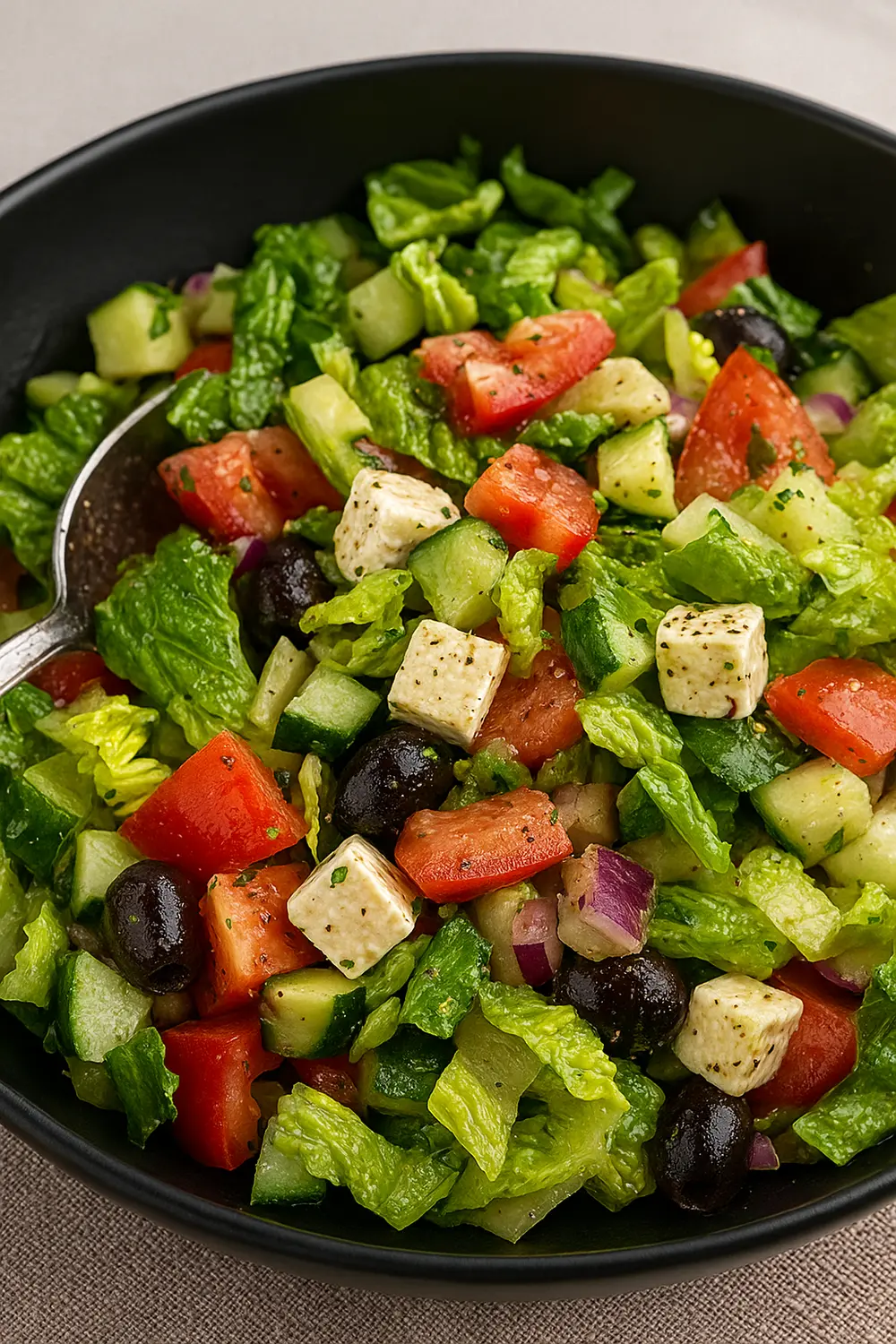
Kitchen Tools You’ll Need for This Mediterranean Greek Salad
You only need a few basic kitchen tools for this Mediterranean Greek salad:
- Large Mixing Bowl: A spacious bowl allows for easy and gentle tossing, ensuring every ingredient is evenly coated with the dressing without bruising delicate components like lettuce or crumbling the feta too much.
- Small Bowl or Jar with Lid: A jar with a lid is particularly convenient if you plan to make the dressing ahead of time, allowing you to simply shake it vigorously before use to re-emulsify the ingredients.
- Whisk or Fork: Essential for thoroughly combining the dressing ingredients and, most importantly, for emulsifying the olive oil and vinegar.
- Sharp Chef’s Knife: A good quality, sharp knife is crucial for efficiently and safely chopping all your vegetables into uniform, bite-sized pieces.
- Cutting Board: A sturdy and stable cutting board is indispensable for protecting your countertops and providing a safe surface for all your chopping and dicing tasks.
- Measuring Cups and Spoons: For accurate measurement of both the salad ingredients and especially the dressing components, precise measurements ensure a balanced flavor profile in your vinaigrette.
- Salad Tongs: These are perfect for gently tossing the salad ingredients with the dressing, ensuring everything is well-coated without crushing the delicate vegetables or breaking up the feta cubes.
- Mandoline Slicer: While not strictly essential, a mandoline slicer can be incredibly helpful for achieving perfectly thin, uniform slices of red onion, which can make a significant difference in the salad’s texture.
Nutritional Benefits of Greek Salad
Crisp cucumbers, ripe tomatoes, briny olives, and creamy feta over lettuce. This village-style salad is the Mediterranean pattern in a bowl.
- Heart-Smart Olive Oil: Generous olive oil plus olives bring monounsaturated fats instead of creamy dressings. For background, see the village-salad fat guidance from NIDDK.
- Vitamin A Abundance: With around thirty-six hundred IU of vitamin A per serving, tomatoes and greens cover vision support deliciously.
- Five Grams of Fiber: Raw vegetables deliver steady fiber that keeps this light salad surprisingly satisfying.
- Feta in Measure: A modest crumble adds creamy satisfaction plus calcium without tipping the bowl toward heavy.
Why You’ll Fall in Love with This Greek Tomato Cucumber Salad
Here’s why you’ll adore this Greek tomato cucumber salad:
- Rich in Antioxidants: Tomatoes are rich in lycopene, a powerful antioxidant known for its potential to support immune health and reduce inflammation.
- Naturally Hydrating: Cucumbers are made up mostly of water, making them excellent for hydration while also supplying key vitamins, minerals, and compounds with anti-inflammatory and potential anti-cancer properties.
- Heart Health: Red onions provide a significant amount of fiber, Vitamins C and B6, and potent antioxidants that are beneficial for cardiovascular health.
- Vision & Immunity: Bell peppers, especially green ones, are packed with beta-carotene, a precursor to vitamin A that’s essential for healthy vision, immune function, and cellular growth.
- Healthy Fats: Kalamata olives and extra virgin olive oil provide heart-healthy monounsaturated fats that reduce inflammation and are staples of the Mediterranean diet linked to longevity and disease prevention.
- Bone Health: Feta cheese not only adds a creamy, tangy touch, but it also delivers protein and calcium to support strong bones and muscle function.
- Quick and Effortless: This Greek salad comes together in just 15 minutes with no cooking required, just a bit of chopping and tossing, making it perfect for busy weeknights.
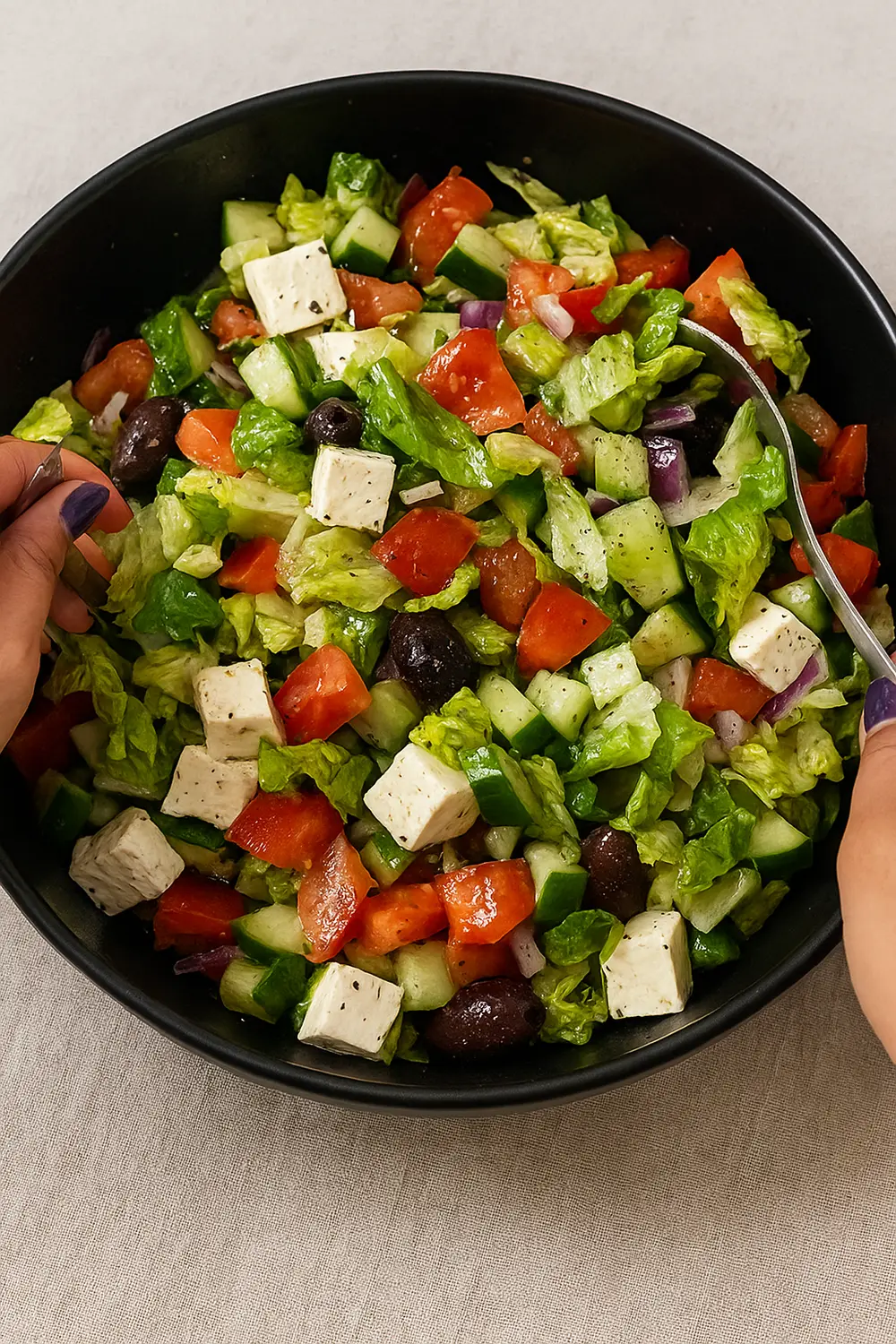
What to Serve with Your Greek Cucumber Salad
Here are some delicious ideas for what to serve with Greek salad:
- Crusty Bread: A warm, crusty loaf of bread is perfect for sopping up every last drop of the flavorful juices and dressing that collect at the bottom of the bowl, a cherished part of the Greek dining experience.
- Grilled Meats or Fish: The fresh, tangy flavors of this salad pair beautifully with rich, savory proteins like grilled chicken (especially in chicken gyro wraps), salmon, or even a simple grilled steak.
- Legumes and Grains: For a heartier vegetarian meal, consider adding cooked chickpeas directly to the salad or serving it alongside a simple quinoa or lentil dish. Tinned tuna is also a great addition for a quick protein boost.
- Traditional Greek Appetizers (Mezedes): Serve alongside stuffed grape leaves (dolmades), cool and creamy tzatziki, and bold, garlicky skordalia dip for a complete Mediterranean meal.
Pro Tips for Making the Best Greek Salad
Here are my top tips for making the best Greek salad everyone will love:
1. Use Ripe Tomatoes
- Always use in-season, ripe red tomatoes for the best sweetness and juiciness, which it’s fundamental to the salad’s flavor.
- Out of season? Opt for organic cherry or grape tomatoes for reliable, concentrated flavor.
- If tomatoes aren’t fully ripe, macerate slices with a pinch of salt and sugar for 10 minutes to boost their natural sweetness.
2. Use High Quality Feta
- Choose authentic Greek feta made from sheep’s milk or a blend of sheep and goat’s milk for true flavor and texture.
- Avoid cow’s milk “salad cheese,” which lacks the tang and firmness of real feta.
- True feta is tangy, creamy, and firm, holding its shape beautifully and delivering a salty punch in every bite.
3. Use High Quality Olive Oil
- The better the oil, the better the salad, so use a high-quality, cold-pressed extra virgin olive oil for a rich, fruity flavor.
- The quality of your olive oil will profoundly impact the overall taste and mouthfeel of your salad.
4. Dice Veggies Evenly
- Chop the veggies into similar sizes to ensure that each forkful delivers a balanced combination of flavors and textures.
- Each forkful should deliver a mix of cucumber, tomato, onion, and feta, not just one element.
5. Tame the Onion
- Raw red onion, while essential for its sharp flavor, can sometimes be overwhelmingly pungent.
- A simple yet highly effective technique to mitigate this is to soak thinly sliced red onion in cold water (or water with a splash of red wine vinegar) for 10-15 minutes.
- This process significantly mellows their sharpness, leaving behind a pleasant, crisp bite without the harsh aftertaste.
6. Drizzle Oil Slowly
- Take the extra minute to slowly drizzle the olive oil into the vinegar mixture while whisking vigorously.
- This creates an emulsion, meaning the oil and vinegar are suspended together rather than separating.
- The result is a richer, more cohesive dressing that clings beautifully to every ingredient, ensuring consistent flavor throughout the salad.
7. Chill and Rest
- Chilling your vegetables before assembly enhances the crispness and invigorating quality of the salad, making it particularly delightful on a warm day.
- Allow the dressed salad to rest for 15 to 30 minutes at room temperature for the flavors to meld and deepen and create a more complex and harmonious taste profile.
Final Remarks
With its medley of crisp cucumbers, juicy tomatoes, briny Kalamata olives, creamy feta, and a bright, tangy salad dressing, this Mediterranean Greek salad delivers bold, refreshing flavor in every bite.
It’s the kind of dish that feels light yet deeply satisfying, perfect on its own or as a side to grilled meats, seafood, or crusty bread with hummus.
Feel free to customize this recipe by adding avocado, tossing in some chickpeas, or sprinkling with toasted pine nuts for extra texture and nutrition.
If you try it out, let us know how it turned out in the comments.
The full recipe and step-by-step instructions are just below.
Keep exploring with our citrus-wood grilled chicken and crunchy-topped shaved ice, plus a sweet-savory chicken tagine, a cinnamon apple snack, and vinegar-braised chicken adobo, followed by a salad-days DASH week and a chop-and-toss clean week over on Santiago Maricel.
This article is for information only and is not medical advice. Read our full disclaimer.