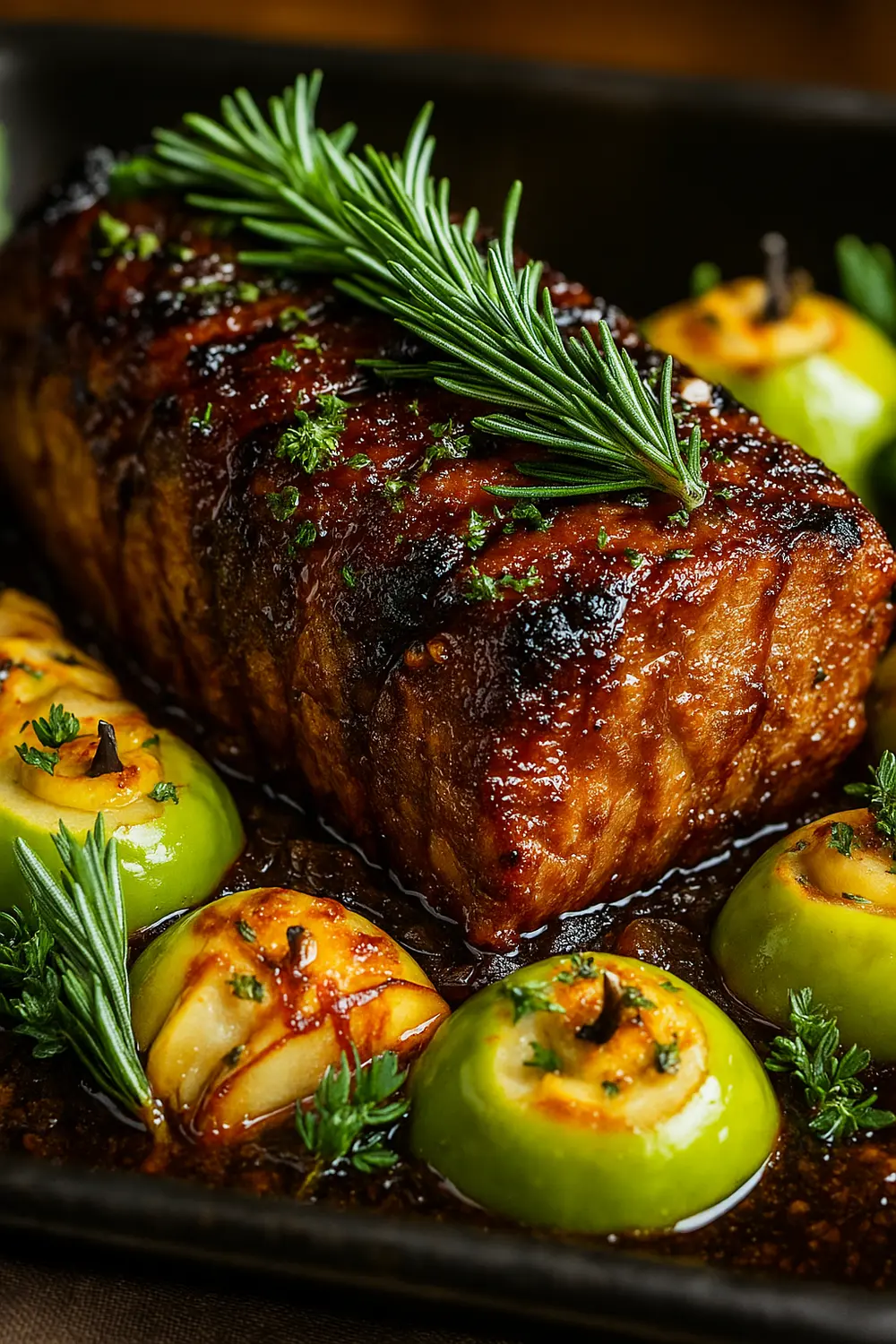
This pork loin roast recipe features a tender, juicy pork loin coated in fresh herbs, paired with tangy apples, and finished with a rich, caramelized apple cider balsamic glaze.
Pork loin is a tender, lean cut of meat from the back of the pig, located along the top of the rib cage just below the backbone, running from the shoulder to the leg. Loin is the weeknight pork cut. Harvard's Nutrition Source shares lean-pork plate notes.
It is sold as a thick, wide cut, usually between 2 and 5 pounds, either boneless or bone-in, and is one of the most popular and versatile pork cuts because it is tender and easy to cook, whether roasted, grilled, or pan-seared.
This oven roasted pork loin recipe is easy to make, serves eight, and makes a perfect centerpiece for family dinners, cozy Sundays, or festive holidays like Christmas, Thanksgiving, or Easter. Roasts that serve eight plan easily. Roast-planning guidance from Healthline walks through it.
In this recipe, we use a 4-pound boneless pork loin seasoned with garlic and herbs, then roasted while being basted with a flavorful glaze of apple cider, balsamic vinegar, honey, and Dijon mustard.
Serve this baked pork loin alongside garlic mashed potatoes, creamy polenta, potato gratin, roasted root vegetables, or a light salad for a complete meal that will satisfy everyone around the table.
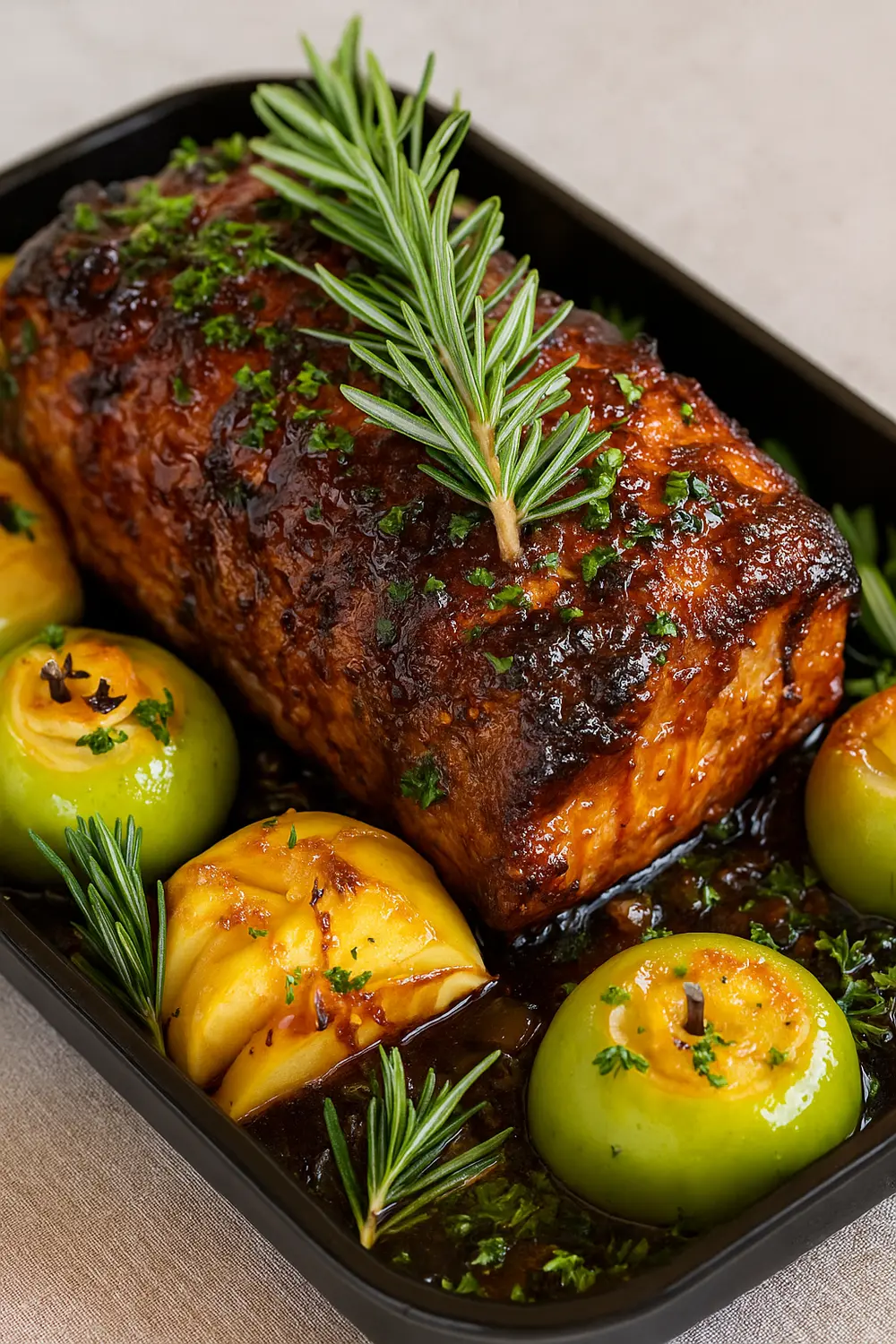
Key Ingredients for This Pork Loin Roast Recipe
While the full recipe has many items, a few key ingredients drive the flavor and texture of this spectacular pork loin roast:
1. Boneless Pork Loin
- Boneless pork loin is a lean yet tender, thick, wide cut of meat, often weighing 2 to 5 pounds, which makes it ideal for a roast.
- It has a mild flavor that soaks up herbs, spices, and marinades like a sponge, making it ideal for slow roasting.
2. Fresh Herbs
- Fresh herbs such as rosemary, thyme, paprika, and garlic powder are responsible for the deep savory foundation and rich color of the crust.
- Rosemary is a classic accompaniment to pork, offering a sharp, piney aroma.
- Paprika contributes a rich, reddish-brown hue and subtle smokiness, which aids in developing the dark, burnished appearance.
3. Balsamic Vinegar and Apple Cider
- Balsamic vinegar adds crucial acidity and deep molasses-like complexity, which cuts the richness of the pork, while the apple cider (or juice) provides a complementary fruit note.
- When reduced, the natural sugars and acids concentrate, forming the thick, beautiful glaze that adheres perfectly to the baked pork loin.
4. Firm Green Apples
- Apples like Granny Smith or Honeycrisp offer a tart counterpoint to the sweet glaze and rich pork.
- Roast them alongside the loin to soften and absorb the rendered pork fat and herb drippings, creating a flavorful, integrated side dish that naturally complements the main course.
5. Olive Oil
- Adds moisture to the marinade and helps the seasonings stick to the pork.
- It also aids in creating that beautiful golden-brown crust when seared.
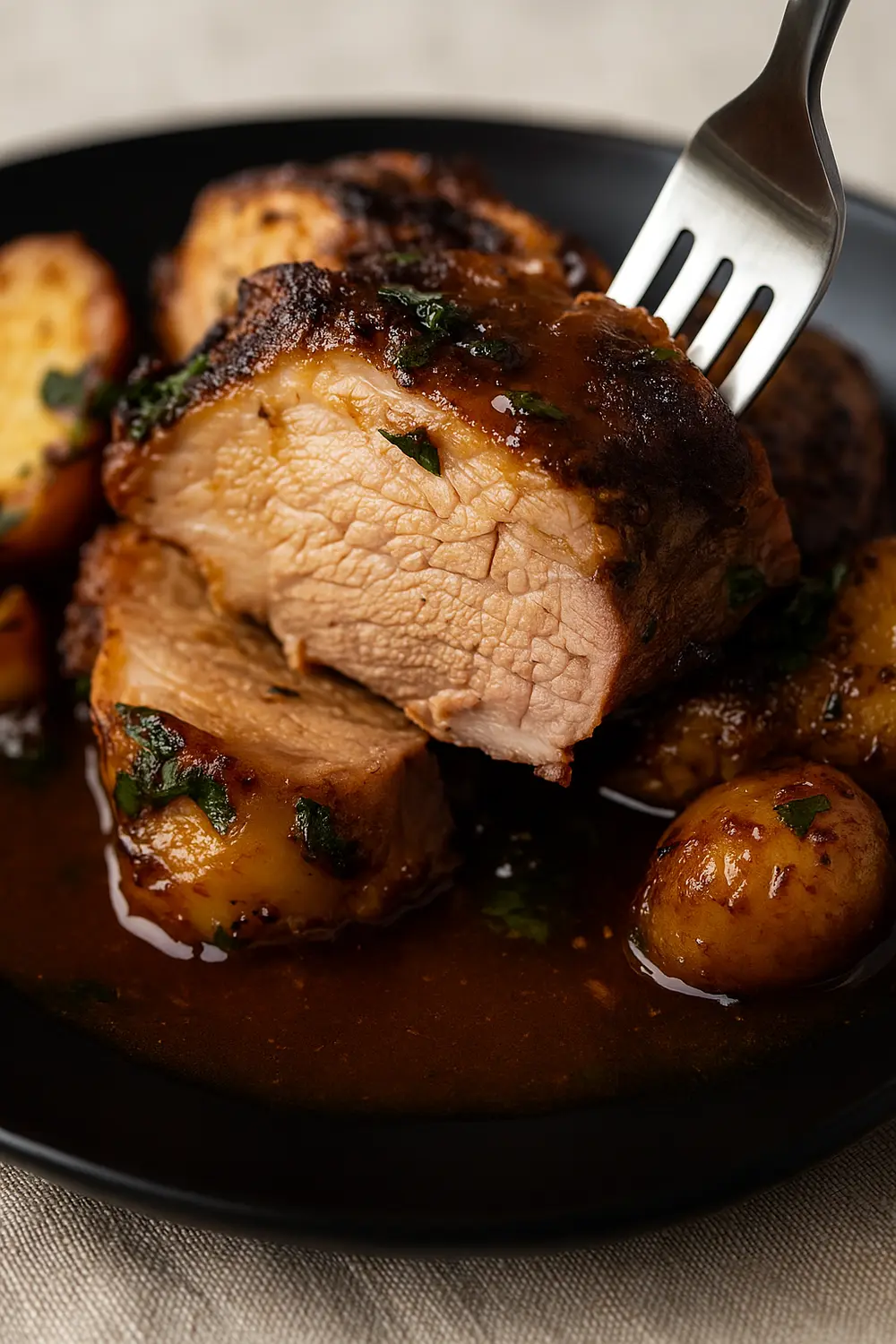
Essential Tools for Making This Oven Roasted Pork Loin Recipe
Having the right tools is critical when making a loin roast to ensure even cooking and moisture control.
- Roasting Pan and Rack: Use a rack to elevate the pork loin so hot air can circulate evenly around it, preventing the bottom from steaming and ensuring a crisp, golden crust on all sides.
- Instant-Read Meat Thermometer: This essential tool prevents overcooking and dryness, and since pork loin is very lean, remove it from the oven at 145°F (63°C) for perfectly juicy meat.
- Kitchen Twine (or Butcher’s Twine): If your boneless pork loin is uneven in shape, tie it tightly with butcher’s twine to form a uniform cylinder, ensuring even cooking and preventing the thinner ends from drying out before the center is done.
- Stovetop-Safe Pan (Stainless Steel or Cast Iron): Use a stainless steel or cast-iron pan to create a rich pan sauce from the caramelized bits left after searing, as nonstick pans prevent this flavor from developing.
- Long, Sharp Carving Knife and Fork: After resting, use a sharp carving set to slice the pork loin cleanly against the grain into even, tender pieces without tearing the meat.
Nutritional Benefits of Pork Loin Roast
Lean, juicy, and crowned with apple balsamic glaze, this roast proves holiday centerpieces can nourish as well as impress.
- Forty-Five Grams of Protein: Each serving delivers around forty-five grams of complete protein for holiday stamina and muscle support. For background, see the sunday-roast protein records on PubMed.
- Lean by Nature: Loin runs far leaner than shoulder or belly, giving all the roast drama with a fraction of the fat.
- B Vitamins: Pork shines for thiamin plus niacin and B6, nutrients that convert holiday feasting into usable energy.
- Potassium Included: With roughly seven hundred fifty milligrams of potassium per serving, it supports healthy fluid balance too.
Why You’ll Love This Baked Pork Loin
This specific approach to a baked pork loin is popular not just for its appearance, but for the guaranteed culinary success it delivers:
- Relatively Lean Cut: Pork loin is considered a lean cut, making it a healthy option for those watching their fat and cholesterol intake.
- The Perfect Crust: This pork loin recipe uses a two-stage cooking method that begins with a high-heat sear at 425°F (220°C) to form a savory, caramelized crust.
- Deep, Balanced Flavor: Unlike simple roasts, this one combines a savory, herb-crusted exterior with the sweet and tangy notes of an apple-balsamic glaze for a rich, well-balanced finish.
- Excellent Source of High-Quality Protein: Pork loin is incredibly high in protein, with a typical serving providing well over 25 grams, which is vital for muscle repair, growth, and overall satiety.
- Rich in B Vitamins: Pork loin is an excellent source of B vitamins, especially thiamin, niacin, and riboflavin, which help convert food into energy and support a healthy nervous system.
- Source of Iron and Potassium: Pork loin provides important minerals like iron, which supports oxygen transport, and potassium, which helps regulate blood pressure and fluid balance.
What to Serve with Pork Loin Roast
A pork loin roast with an apple balsamic glaze begs for sides with contrast. The pairings below round out the plate with earthy roasted vegetables and bright, palate-cleansing salads. Choose one roasted side and one fresh one for a balanced holiday table.
1. The Comforting & Classic
A rich pork loin roast needs something soft underneath to catch the apple balsamic glaze. These starchy sides soak up every drop while rounding out the plate.
- Creamy Garlic Mashed Potatoes: Buttery mashed potatoes mellow the tangy glaze and give the pork juices somewhere delicious to go.
- Warm Dinner Rolls: Soft, golden rolls are perfect for swiping through extra glaze and pan drippings at the table.
2. The Earthy & Roasted
Roasting root vegetables alongside the pork creates flavor synergy, as they absorb the herb-flavored rendered fat and pan drippings from the pork loin in the oven.
- Roasted Root Vegetables: Carrots, parsnips, and sweet potatoes tossed in olive oil, rosemary, and thyme should be cooked alongside the pork during the 350°F stage.
- Roasted Brussels Sprouts with Bacon: The slight bitterness and deep char of the sprouts, combined with salty bacon, provide excellent flavor depth to accompany the sweet glaze.
3. The Palate Cleanser
A touch of bitterness or sharpness is needed to refresh the palate and cut through the richness of the pork and the sticky glaze.
- Sautéed Green Beans with Lemon-Almond Gremolata: A simple, bright side that offers a sharp, crunchy texture and a contrasting color.
- Arugula and Fennel Salad: The peppery bite of arugula and the light anise flavor of fennel, dressed simply with olive oil and lemon vinaigrette, provide the perfect acidic contrast to the rich pork loin roast.
Chef Tips for the Best Pork Loin Roast
These are the non-negotiable professional techniques required to consistently produce a succulent, restaurant-quality slow roasted pork loin:
1. Always Temper the Pork Loin
Remove the pork loin from the refrigerator one hour before it enters the oven.
This step ensures the meat starts closer to room temperature, guaranteeing a more even roasting from edge to center and preventing the outer layers from drying out before the core reaches temperature.
2. The 142°F Rule
For maximum juiciness, most chefs remove the roasted pork loin from the oven when the thickest part reaches a temperature of 140 to 142°F (60 to 61°C).
The residual heat (carryover cooking) will raise the temperature of the final few degrees during the rest, ensuring a safe, perfectly tender, and juicy finish.
3. Resting the Pork Roast is Mandatory
After removing the pork loin roast, loosely tent it with foil and let it rest for at least 15 minutes to allow the juices to redistribute.
Slicing too early causes all the moisture to spill out, leaving you with dry meat.
4. Make the Pan Sauce
Do not discard the fond, the caramelized bits left in the pan, as they are packed with flavor.
Deglaze with wine or cider, scraping them up to create a rich pan sauce that turns a simple roast into an elegant dish.
Final Remarks
This apple-balsamic glazed pork loin roast delivers everything you want in a centerpiece meal, with tender, juicy pork infused with the warmth of garlic and herbs, finished with a glossy, sweet-tangy glaze that perfectly balances richness and freshness.
Pair it with a crisp green salad or a side of garlic mashed potatoes for a complete, elegant dinner that’s perfect for any occasion, from Sunday family meals to festive holidays.
You’ll find the full recipe and step-by-step instructions just below.
Keep exploring with our calamansi-lime grilled chicken and crushed-ice party cups, then see thyme-scented glazed carrots, a street-style chicken gyros, and a slow-simmered beef stew, and a Sunday-roast protein week plus a carve-and-share calorie week from Santiago Maricel.
This article is for information only and is not medical advice. Read our full disclaimer.