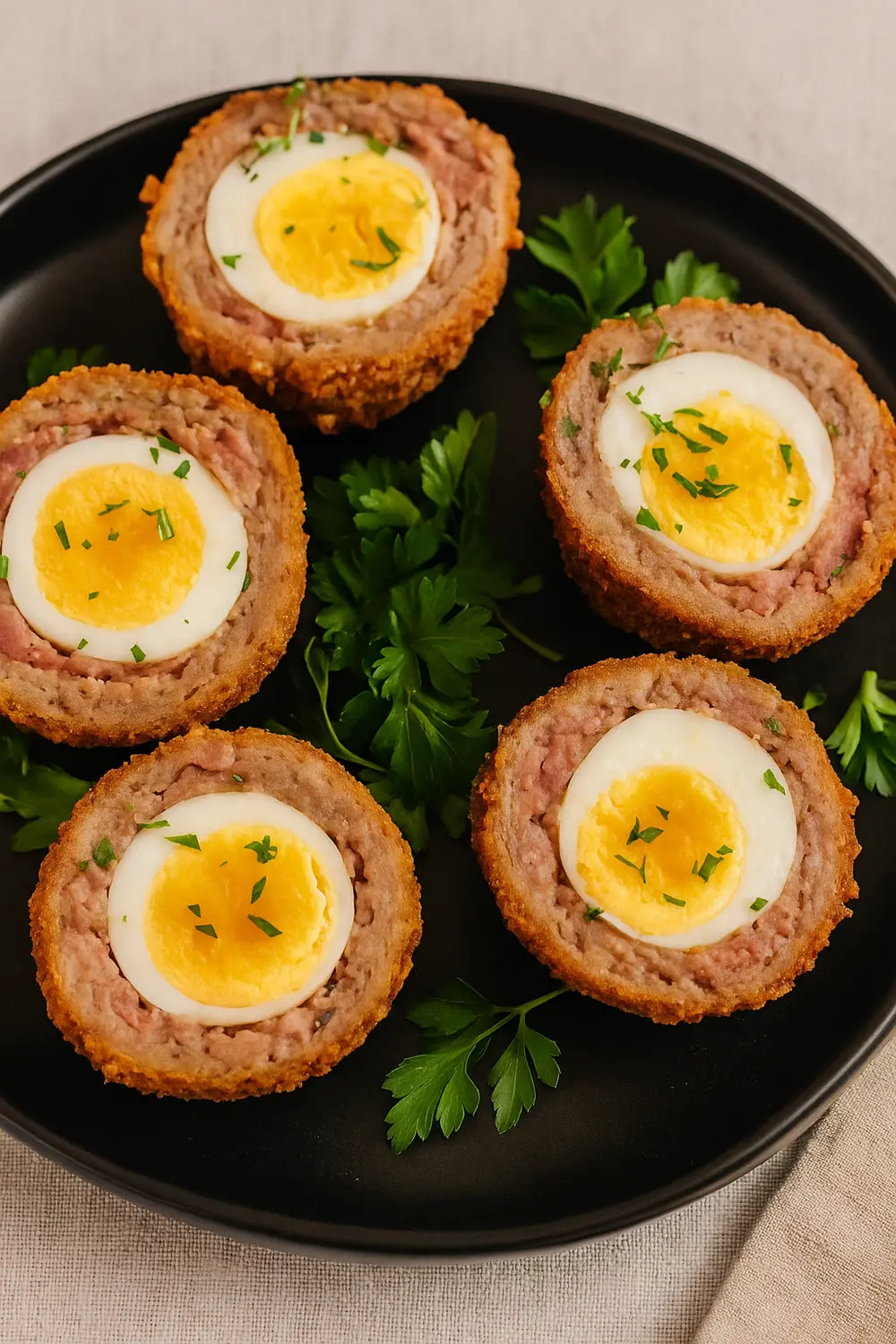
A scotch egg is a hard or soft-boiled egg wrapped in seasoned sausage meat, coated in breadcrumbs, and typically deep-fried or baked until golden and crispy. It is a popular British snack or light meal.
Despite the name, the scotch egg is not Scottish in origin, a fact that often surprises many. The “scotch” likely refers to the process of “scotching” or covering meat.
The most widely accepted theory attributes its creation to Fortnum & Mason, a renowned luxury department store in Piccadilly, London, dating back to 1738.
It was reportedly conceived as a convenient, hearty snack for wealthy travelers embarking on long coach journeys. This origin story positions it firmly within the realm of traditional English cuisine.
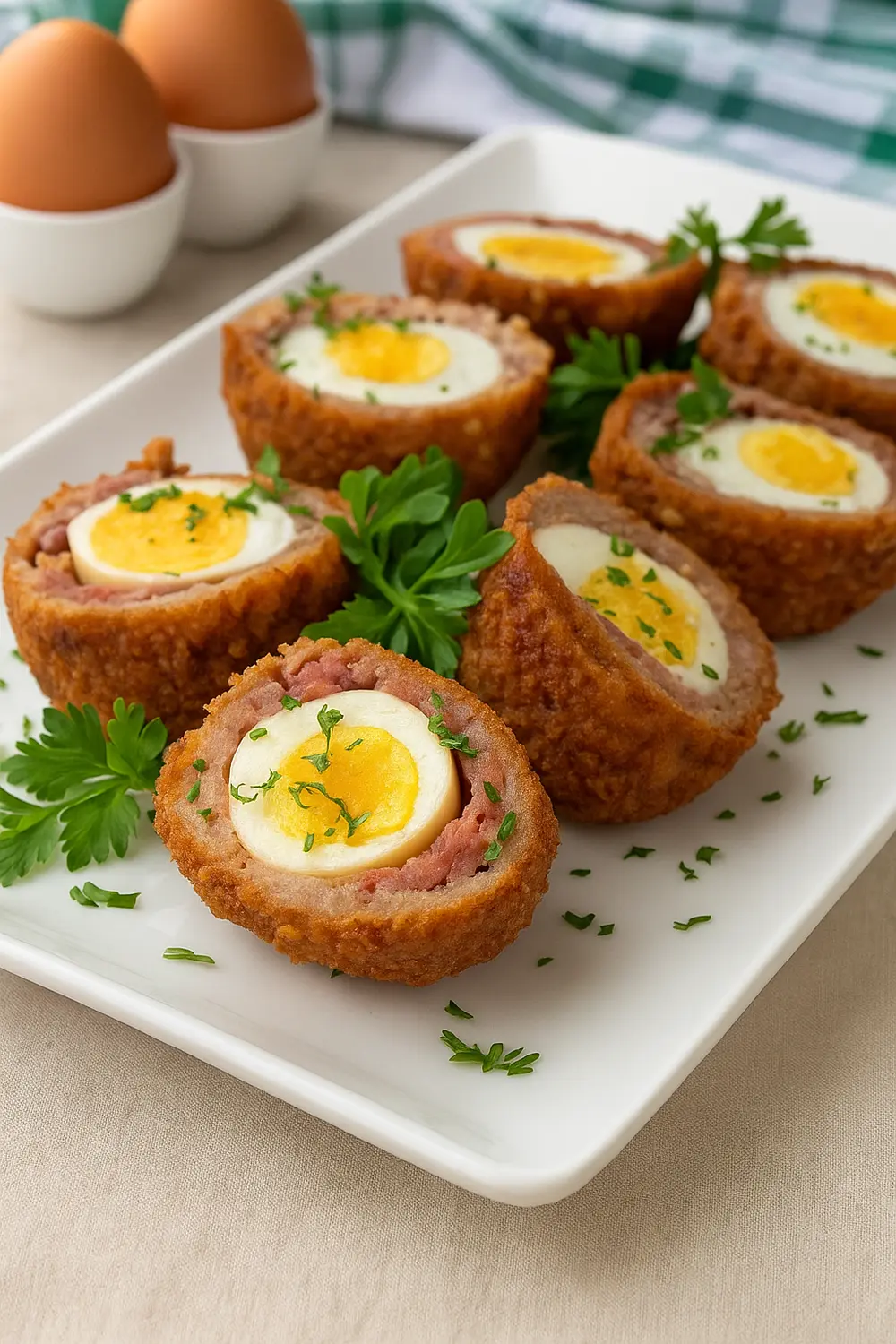
This easy homemade scotch eggs recipe yields 6 golden-brown and perfectly crispy scotch eggs with jammy yolks and is ideal for brunch, picnics, or a hearty snack. Batch snacks suit all three cook methods. Batch-snack guidance from Healthline walks through it.
Each serving (one scotch egg) clocks in around 258 calories, featuring a perfectly boiled egg wrapped in seasoned sausage, coated in crunchy breadcrumbs, and baked to crispy perfection in under 50 minutes. Picnic eggs portion themselves. Harvard's Nutrition Source shares picnic-egg notes.
We’ve also included three ways to cook these scotch eggs, whether you prefer using an air fryer, baking them in the oven, or deep-frying, so you can pick the method that suits your kitchen and how crispy you like them.
What You’ll Need for this Homemade Scotch Eggs Recipe
Crafting the best scotch eggs truly begins with selecting the right components. Each ingredient plays a vital role in achieving that ideal balance of flavor and texture.
1. Eggs
- While any large eggs will work, large free-range eggs offer richer, creamier yolks and better flavor.
- For easier peeling, choose large eggs that are about a week or two old rather than very fresh ones.
2. Sausage Meat
- A good quality bulk pork sausage, such as breakfast sausage, is a common and excellent choice.
- You can also use ground pork or even a blend with black pudding for a richer, more traditional British flavor.
3. Seasonings & Aromatics
- Worcestershire sauce adds a subtle tang, Dijon mustard brings a smooth heat, smoked paprika lends a warm earthiness, and fresh parsley offers a bright herbaceous note.
- Garlic powder, onion powder, dried thyme, dried oregano, salt, and black pepper deepen the savory profile.
4. Flour (All-Purpose or Almond)
- A light dusting of flour creates a slightly tacky surface that helps the sausage and breadcrumbs stick better.
- For keto scotch eggs, almond flour provides a low-carb alternative while still binding beautifully.
5. Egg Wash
- Beaten eggs serve as the adhesive between the flour and breadcrumbs, guaranteeing a uniform, crackling crust.
6. Panko Breadcrumbs
- While regular seasoned breadcrumbs can be used, Panko is highly recommended for its superior crispiness and lighter texture.
- They create that satisfying crunch that makes a Scotch egg truly special.
7. Cooking Oil
- For deep frying, a neutral oil with a high smoke point, such as vegetable, canola, or sunflower oil, is essential.
- The quantity should be sufficient to allow the eggs to be submerged, typically 3-4 inches deep.
Equipment Needed for Making this Homemade Scotch Eggs Recipe
Having the right kitchen tools can make the scotch egg preparation process smoother and more efficient. The following equipment is essential for this scotch egg recipe:
- Large Pot or Saucepan: For boiling the eggs and, if deep frying, for heating the oil.
- Large Bowl: For the ice bath and for mixing the sausage meat.
- Medium Bowls or Shallow Dishes (3): For setting up the breading station (flour, egg wash, breadcrumbs).
- Spider Skimmer or Slotted Spoon: For carefully lowering and removing eggs from boiling water and hot oil.
- Wire Rack and Baking Sheet: For draining fried eggs and for baking/air frying methods.
- Instant-Read Thermometer (or Candy Thermometer): Crucial for monitoring oil temperature during frying and ensuring the internal temperature of the sausage is safe.
- Plastic Wrap: Useful for flattening sausage patties and assisting in wrapping the eggs.
- Paper Towels: For drying peeled eggs and draining excess oil from cooked scotch eggs.
- Whisk or Fork: For beating eggs for the egg wash.
- Serrated Knife: For cleanly slicing the cooked scotch eggs in half without squishing the yolk.
Nutritional Benefits of Scotch Eggs
Picnic-perfect and protein-packed, these sausage-wrapped eggs travel brilliantly while eating like a real meal, not a snack.
- Fifteen Grams of Protein: Egg plus sausage meat stack around fifteen grams of protein per scotch egg for genuine staying power. For background, see the picnic-egg protein records on PubMed.
- Portable by Design: Self-contained portions eliminate overeating ambiguity at picnics, parties, and lunchboxes alike.
- Baked Option: Oven baking instead of deep frying trims significant fat while keeping the signature crispy crust.
- Choline Included: Egg yolks contribute choline for everyday focus, a quiet bonus inside the fun packaging.
Why People Love Scotch Eggs
There’s something undeniably captivating about a Scotch egg that makes it a perennial favorite. People adore them for a multitude of reasons:
- Portability & Convenience: Perfect on the go, scotch eggs pack protein and flavor into a single, hand‑held treat.
- Comforting Nostalgia: With roots in traditional English tearooms and pubs, they evoke cozy afternoons and convivial gatherings.
- Flavor Meets Texture: Juicy sausage meets tender egg meets crunchy crumb, a trifecta of sensations.
- Customizable & Versatile: From classic recipes to vegetarian scotch eggs or keto scotch eggs, you can adapt them to suit any diet.
- Elevated Snack or Meal: Serve as an appetizer, lunch, or picnic star, scotch eggs shine in every course.
Quick Tips for Making the Best Scotch Eggs
Achieving the perfect scotch eggs consistently relies on understanding a few key principles and techniques. These are the golden rules for consistent success:
1. Get the Yolk Doneness Right
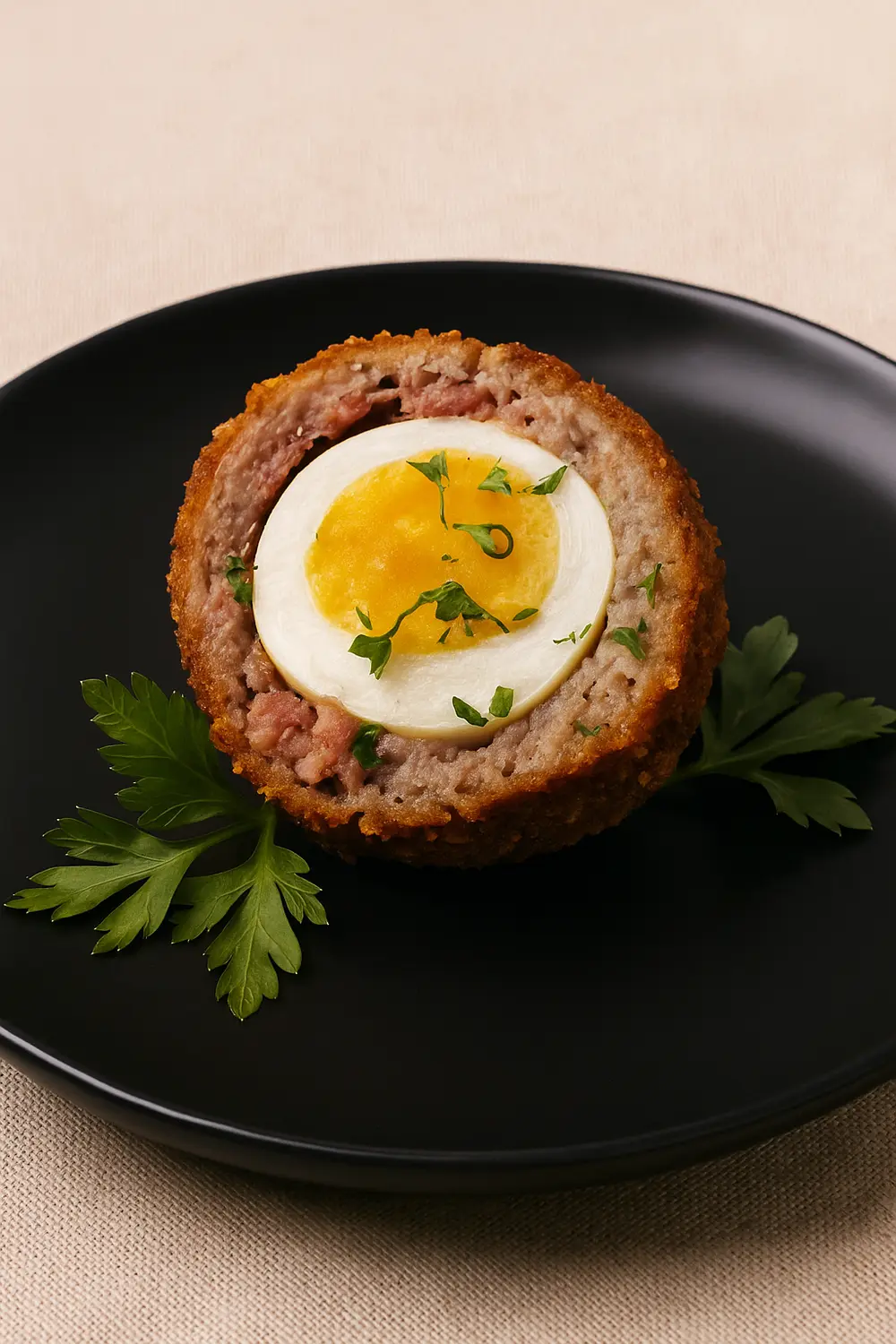
- For a luscious, jammy yolk, boiling the eggs for 6 to 7 minutes is ideal.
- A softer, runnier center can be achieved in 4 to 5 minutes.
- Firmer, hard-boiled yolk requires 8 to 10 minutes of cooking time.
2. Use Slightly Older Eggs
- Counterintuitive as it may seem, eggs that are approximately a week or two old are considerably easier to peel than very fresh ones.
- This is because older eggs have a slightly higher pH, which causes the egg white to adhere less strongly to the inner membrane, allowing for smoother peeling.
3. Don’t Skip the Ice Bath
- Immediately plunging hot, cooked eggs into an ice bath is a critical step.
- This rapid cooling halts the cooking process, preventing overcooked, rubbery whites and the undesirable green ring around the yolk.
- It also helps the egg contract slightly, further aiding in effortless peeling.
4. Pat Eggs Dry
- Before attempting to wrap the eggs in sausage, pat the eggs to ensure they are completely dry after peeling.
- Any moisture on the egg’s surface will create a barrier, preventing the sausage meat from adhering properly and potentially leading to the sausage slipping off during cooking.
5. Keep the Sausage Layer Thin & Even
- Aim for a sausage layer that is just thicker than an eighth of an inch (approximately 3-5mm).
- A layer that is too thick can overwhelm the delicate egg, creating a “sausage ball with egg” rather than a balanced scotch egg.
- Conversely, a layer that is too thin might crack during cooking, exposing the egg.
- Flattening the sausage between two pieces of plastic wrap can greatly assist in achieving this uniform thickness.
6. Chill Before Cooking
- Refrigerating the wrapped and breaded scotch eggs for at least 20-30 minutes before cooking is a highly recommended step.
- This chilling period allows the sausage meat to firm up and the breading to set securely, significantly reducing the risk of the layers falling apart during frying or baking.
7. Monitor Oil Temperature (if frying)
- If deep frying, using a thermometer to maintain the oil temperature between 350-375°F (175-190°C) is absolutely crucial.
- Oil that is too cool will lead to greasy, oil-soaked eggs, while oil that is too hot will cause the breading to burn before the sausage has a chance to cook through.
8. Do Not Overcrowd the Pan/Basket:
- When cooking, whether deep frying, baking, or air frying, work in batches of 2 to 3 scotch eggs.
- Overcrowding the cooking vessel can drastically lower the temperature, resulting in uneven cooking and a less crispy exterior.
9. Food Safety First
- Always ensure the internal temperature of the sausage reaches 160°F (71°C) using an instant-read thermometer.
- This is a critical step for food safety, ensuring the meat is thoroughly cooked.
What to Serve or Pair With Scotch Eggs
Scotch eggs are incredibly versatile and can be enjoyed in many ways, whether warm or cold. Here are some delightful serving and pairing suggestions:
- Tangy Mustard or Aioli: A dab of coarse mustard or garlic aioli cuts through richness.
- Sweet Chutney or Piccalilli: Fruity or pickled accents balance savory flavors.
- Fresh Green Salad: Peppery arugula or crisp mixed greens lighten the plate.
- Roasted Potatoes or Fries: Classic pub sides that complement the hearty egg.
- Cold Ale or Iced Tea: Refreshing beverages that wash down every savory, crunchy bite.
Final Remarks
Making homemade scotch eggs is a joyful nod to British culinary tradition with room for your creative spin.
From mastering the precise boil of the egg to experimenting with baked, fried, or air fryer methods, you’ll discover that the process is as rewarding as the results are delicious.
Whether you’re whipping up a batch for a picnic, elevating your appetizer menu, or simply craving a hearty snack, these healthy scotch eggs deliver on flavor, texture, and nostalgia.
So gather your ingredients, preheat your oven (or oil), and let the kitchen adventures begin.
Cheers to healthy eating.
Keep exploring with our golden-red inasal chicken and chilled ube ice cups, plus a ribeye cheesesteak hoagie, a tingly cucumber banchan, and a lemon-garlic baked salmon, followed by picnic-basket protein boxes and a pub-snack keto week over on Santiago Maricel.
This article is for information only and is not medical advice. Read our full disclaimer.